
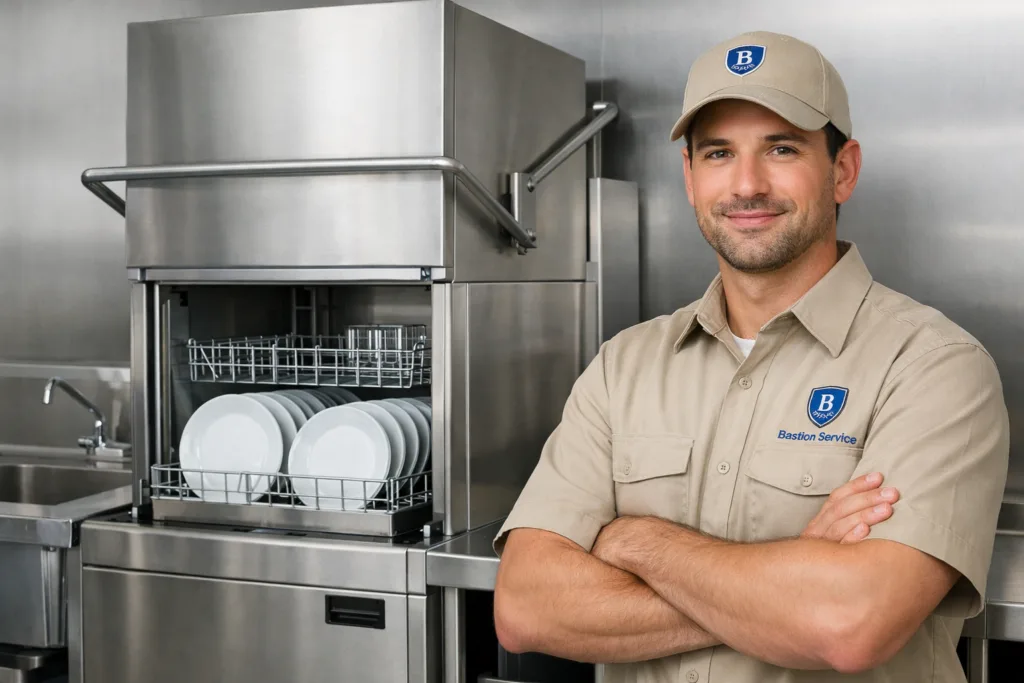





Downtime from a Hobart dishwasher problem can disrupt sanitation flow, rack turnover, and staff pacing faster than many teams expect. When the machine starts leaving soil behind, holds water, runs cold, or stops mid-cycle, the most useful next step is service that ties the symptom to the failed system and the likely repair path. Bastion Service works with businesses in Palms to inspect Hobart dishwasher issues, determine whether the unit should stay in use, and schedule repair based on the urgency of the failure.
Related commercial service paths in Palms include Hobart Commercial Repair in Palms and Commercial Dishwasher Repair in Palms.
Service-focused Hobart dishwasher repair for businesses in Palms
A dishwasher problem is rarely just a dishwasher problem in a working kitchen or food-service setting. It can affect sanitizing routines, labor time, opening prep, closing cleanup, and the ability to keep dishes, utensils, and ware moving through the day. That is why a proper service visit should begin with symptom verification, operating checks, and system-level diagnosis rather than assumptions.
On Hobart equipment, similar complaints can come from very different causes. Poor wash results may relate to wash-arm blockage, pump weakness, fill issues, heating failure, or chemical delivery problems. A drain complaint could point to a clogged path, pump issue, valve problem, or control fault. Identifying the actual cause first helps avoid unnecessary parts replacement and helps managers make better decisions about timing, cost, and downtime.
Why is my Hobart dishwasher not washing, draining, or reaching temperature?
Those three complaints often overlap because Hobart dishwashers rely on several systems working together in sequence. If water fill is off, wash performance may drop. If the drain side is restricted, dirty water may remain in the machine and affect the next cycle. If heating is not correct, cleaning results and sanitation performance can both suffer. In some cases, the visible symptom is only the end result of a fault that began somewhere else in the cycle.
That is why symptom-based diagnosis matters. A machine that appears to have a wash issue may really have a low-water condition. A unit that seems slow or inconsistent may have a heat problem affecting normal cycle progression. A dishwasher that stops on error may be reacting to an underlying mechanical or electrical issue rather than a failed control alone.
Common Hobart dishwasher symptoms and what they may indicate
Dirty, spotted, or greasy ware after the cycle
When wash quality drops, it usually means the machine is no longer delivering the right combination of water movement, temperature, and cycle performance. Possible causes include blocked spray components, weak pump output, scale buildup, low fill, heating faults, or worn internal parts. If staff are rerunning racks or prewashing more aggressively just to maintain output, the machine is already affecting workflow and should be inspected.
Standing water or failure to drain
If water remains in the tank after operation, the issue may involve obstructions, pump problems, drain-valve trouble, hose restrictions, or control failures that interrupt normal draining. Continued use can recirculate dirty water, strain pumps, and increase the chance of a larger breakdown. A Hobart dishwasher that is not draining properly should be evaluated before normal operation continues.
Low rinse temperature or poor heat performance
Heat-related problems can show up as incomplete sanitation, long cycle times, fault behavior, or inconsistent results from one rack to the next. Common causes include failed heating elements, relays, contactors, thermostats, sensors, wiring faults, or power issues affecting the heat circuit. Because temperature performance is directly tied to wash quality and safe operation, this symptom deserves prompt attention.
Leaks around the door, underneath, or near connections
Leaks may come from worn gaskets, failing seals, cracked fittings, loose clamps, damaged hoses, overfilling, or pump-related wear. Even a minor leak can lead to flooring damage, slip hazards, or corrosion around nearby components. If leaking is new or getting worse, stopping use until the source is identified is often the safer choice.
Cycle interruptions, no-start issues, or fault behavior
When the machine does not start, shuts down unexpectedly, or behaves inconsistently, the problem may involve door switches, safety interlocks, controls, boards, timers, motors, or incoming power issues. Intermittent faults are especially important because they can be difficult for staff to predict and often become more frequent under heavy daily use.
When a symptom points to a bigger repair decision
Not every problem has the same urgency. A slight decline in wash quality may allow a short service window if the cause is caught early. A machine that is leaking, tripping power, failing to heat, or stopping unpredictably can create a much more immediate operational and safety issue. For businesses in Palms, the key question is not only what is wrong, but whether continued use could increase damage or disrupt service more severely.
That decision is easier when the inspection looks at the full operating sequence: fill, wash action, drain performance, heating, controls, and cycle completion. It also helps reveal whether the problem is isolated to one failed part or reflects a broader wear pattern that may affect future reliability.
Signs it is time to schedule service now
- Racks are coming out dirty even after repeat cycles
- The unit leaves standing water or drains slowly
- Final rinse temperature is low or inconsistent
- The machine leaks during or after operation
- Cycles stop midway or the unit does not start reliably
- Staff hear unusual pump, motor, or water-flow noise
- The dishwasher shows repeated error or fault behavior
- Teams are building workarounds to keep the machine usable
Workarounds may keep operations moving for a short time, but they often hide a developing failure. The longer a Hobart dishwasher runs with a drain restriction, heat issue, or mechanical strain, the greater the chance that other components will be affected.
What to have ready before the repair visit
Good service starts faster when the operating symptoms are documented clearly. If possible, note whether the problem happens on every cycle or only sometimes, whether the unit fills normally, whether it drains fully, whether temperature appears low, and whether any leaking or unusual noise is present. If staff noticed the issue after cleaning, maintenance, or a recent interruption in operation, that timeline can also help narrow the cause.
It is also helpful to know whether the dishwasher has had recent repeat issues involving heat, pumps, draining, or controls. That history can change the repair recommendation, especially when the current complaint may be part of a larger pattern rather than a one-time failure.
Repair versus replacement on an older Hobart unit
Many Hobart dishwashers are worth repairing when the problem is specific and the rest of the machine remains sound. In other cases, repeated failures across multiple systems can make continued repair less practical. The real decision depends on overall condition, frequency of prior service, downtime exposure, and whether the current issue is isolated or part of broader wear.
For businesses in Palms, the most useful repair recommendation is one based on actual machine condition, not age alone. A targeted repair on a solid unit can restore normal operation. A machine with recurring problems in heating, pumping, controls, and water handling may justify a different plan.
What a well-run dishwasher service call should accomplish
A productive visit should do more than confirm that the machine has failed. It should identify the affected system, explain how that fault connects to the symptom your staff sees every day, and outline the next step in terms of repair priority and operating risk. That makes it easier to decide whether to pause the unit, schedule repair immediately, or prepare for a broader equipment decision.
If your Hobart dishwasher in Palms is not washing correctly, not draining, leaking, running without proper heat, or failing to complete cycles, prompt diagnosis helps protect uptime and reduce avoidable disruption. The goal is to get from symptom to repair plan quickly, with a service recommendation that fits how the machine is actually used in daily operations.


