
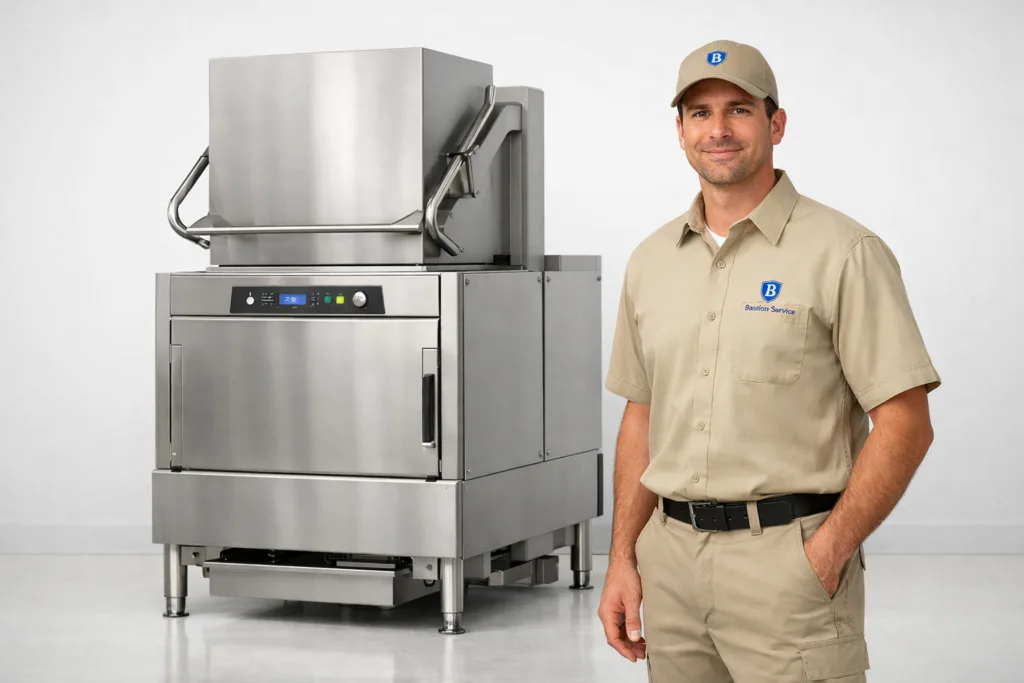




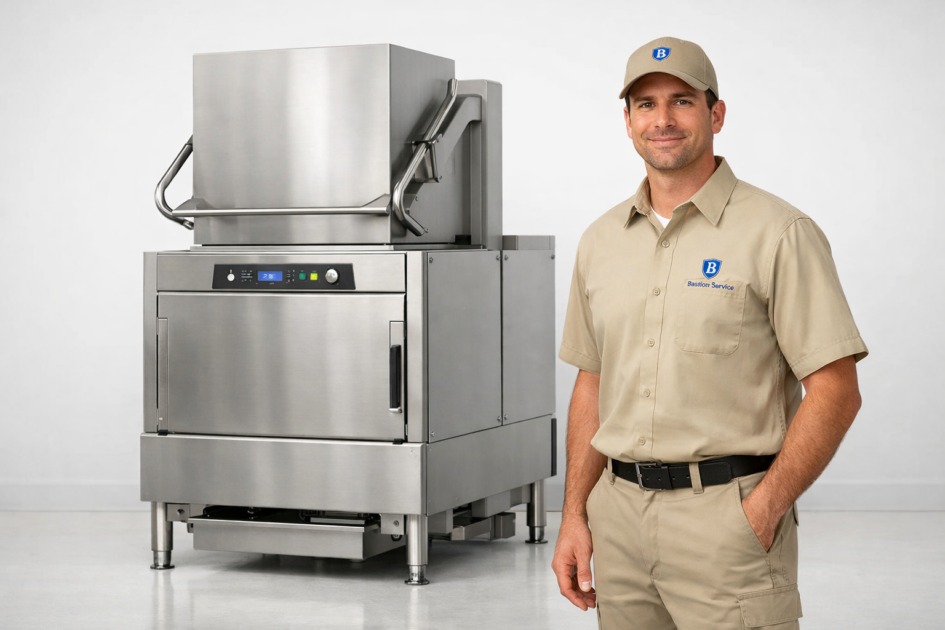
Dish machine problems rarely stay isolated for long. A drop in wash quality can turn into rack backups, extra labor, sanitation concerns, and avoidable stress on kitchen operations. For businesses in Palms, service is most useful when the symptom is tied to an actual repair decision: whether the unit can stay in limited use, needs prompt attention, or should be taken offline until the fault is corrected. Bastion Service provides Hobart warewashing equipment repair for operators who need troubleshooting that matches real operating conditions, repair scheduling, and downtime priorities.
For specific equipment paths in Palms, review Hobart Dishwasher Repair in Palms and Commercial Appliance Repair in Palms.
How warewashing problems typically show up in daily operations
Many faults begin as small inconsistencies rather than a full shutdown. Staff may notice dishes coming out cloudy, racks taking longer to finish, water staying in the tank, or the machine needing repeated resets. Those patterns matter because the same symptom can come from very different causes, including pump wear, blocked wash components, fill problems, drain restrictions, heating faults, sensor issues, or a control problem.
In Palms, businesses often call for service when warewashing equipment starts affecting throughput instead of simply looking inconvenient. Once the machine interrupts prep, dish return, or end-of-shift cleanup, the repair issue is no longer just about one component. It becomes an operations problem that needs a timely diagnosis and a realistic plan for the next step.
Wash performance issues that usually need service
Poor cleaning results
If plates, glasses, or utensils come out with food residue, film, spotting, or inconsistent results from one rack to the next, the problem may involve wash arm blockage, low wash pressure, poor water circulation, scale buildup, heating trouble, or rinse delivery issues. Sometimes a machine appears to be running normally while still failing to clean to expectation, which is why visual output matters as much as whether the cycle starts.
When poor results continue, staff often compensate by rewashing items or slowing down their pace to sort out what is clean and what is not. That added handling can hide the seriousness of the fault for a short time, but it usually means the unit should be inspected before the problem expands into a larger interruption.
Weak rinse performance and temperature concerns
Final rinse problems often show up as incomplete drying, visible residue, or inconsistency from load to load. Low rinse temperature, unstable heating, booster trouble, sensor faults, or related control issues can all contribute. If the machine is not reaching proper operating conditions, the equipment may continue cycling without producing dependable results.
Temperature-related issues deserve quick attention because they affect both machine performance and confidence in the output. A repair visit can determine whether the issue is isolated to one heating component or connected to broader electrical or control behavior within the unit.
Cycle interruptions and slow turnover
When a Hobart dishwasher runs longer than expected, stalls during a cycle, or fails to move cleanly from one stage to the next, the cause may involve timers, control boards, sensors, drain completion faults, or fill timing problems. These issues often begin intermittently, then become more frequent as the equipment warms up or runs through heavier demand periods.
For kitchens that rely on steady rack turnover, even a small delay creates pressure quickly. If staff members have to watch every cycle, restart the machine manually, or wait unpredictably for completion, service should be scheduled before the machine becomes unusable during a busy shift.
Fill, drain, and leak symptoms that should not be ignored
Slow filling or no fill
A warewashing unit that fills too slowly, partially fills, or does not fill at all may have a water supply issue, inlet valve problem, sensor fault, float-related issue, or control failure. Machines with inconsistent fill levels often produce secondary symptoms such as weak wash action, poor cleaning, or cycle disruption.
Because underfilling can look like a wash quality issue first, it is important to assess the full symptom pattern rather than focusing only on dish results. The root cause may be earlier in the sequence than staff expect.
Drain failures and standing water
If water remains in the machine after a cycle, drains slowly, or returns unexpectedly, possible causes include drain blockage, pump trouble, drain valve failure, control interruption, or a problem with how the cycle is completing. Standing water should be treated as more than a nuisance because it can affect the next rack, strain other components, and create cleanup delays.
Repeated operation with incomplete draining can also make it harder to tell whether a separate wash or rinse issue is developing. In practice, drain problems often mask other wear until the equipment is fully inspected.
Leaks around the machine
Water around the unit may come from door seals, hoses, fittings, pumps, overflow conditions, or internal components that are no longer sealing correctly. A small leak can become a larger disruption if it spreads to the surrounding floor area, affects safety, or worsens under heavier use.
Leak symptoms are worth addressing early because continued operation can increase water damage, accelerate wear on related parts, and turn a manageable repair into a broader service event.
Control faults, shutdowns, and startup problems
Some of the most frustrating warewashing calls involve equipment that will not start, stops without warning, or behaves inconsistently from one use to the next. A dishwasher that fails to power on may point to electrical supply issues, switches, latch-related faults, control failure, or a safety condition that prevents normal operation. A machine that starts but shuts down unexpectedly may indicate overheating, board issues, faulty sensors, or an unresolved fill or drain condition.
Control-related faults are especially important to diagnose correctly because they can imitate other problems. What looks like a drain issue may begin with a control failure. What appears to be a heating problem may actually be a sensor or communication fault. That is why symptom history matters when deciding how urgently to schedule repair.
Unusual noise and what it can indicate
Grinding, rattling, harsh humming, or pump noise during operation often points to obstruction, motor stress, worn pump components, loose hardware, or internal wear that is getting worse with use. Noise complaints are easy to delay if the machine still runs, but they often provide an early warning before a more expensive failure occurs.
If the sound has changed noticeably, becomes louder during the cycle, or appears together with poor cleaning, draining trouble, or leaks, the safest next step is inspection rather than continued heavy use. Catching the cause early may reduce both downtime and repair scope.
When it makes sense to stop using the equipment
Not every fault requires an immediate shutdown, but some symptoms should move the machine out of normal use until it is checked. Examples include active leaking, repeated tripping, overheating signs, unpredictable controls, failed draining, severe noise, or repeated interruptions that require manual resetting. In those situations, the risk is not just poor performance. It is the possibility of worsening damage and a longer outage.
If staff members are working around the machine instead of relying on it, the equipment is already affecting productivity. A service assessment helps determine whether temporary limited use is reasonable or whether the unit should remain off until repairs are completed.
What a repair visit is meant to clarify
The goal of service is not only to replace a failed part. It is to confirm the source of the problem, check for related wear, and identify whether the issue is isolated or connected to a larger pattern inside the machine. That distinction matters for scheduling because a straightforward repair looks very different from a unit with multiple failing systems.
For businesses in Palms, that means evaluating the symptom alongside workload, timing, and the cost of downtime. A lower-volume operation may be able to schedule work during a controlled window. A higher-volume kitchen may need faster attention because even a short interruption affects the whole shift.
When repair versus replacement enters the conversation
Many Hobart warewashing issues are repairable, especially when addressed before secondary failures develop. Replacement becomes more relevant when the machine has frequent breakdowns, key systems are failing together, repair history is growing, or the unit can no longer support daily demand reliably. The right decision depends on condition, age, parts involved, and how much disruption the equipment is causing now.
If your dishwasher is showing declining wash performance, fill or drain trouble, leak symptoms, rinse temperature concerns, or control faults, the most practical next step is to schedule service and evaluate the machine based on the actual failure pattern. For operators in Palms, timely repair can protect workflow, reduce avoidable downtime, and clarify whether the equipment should be repaired now or taken out of rotation before the problem worsens.


