
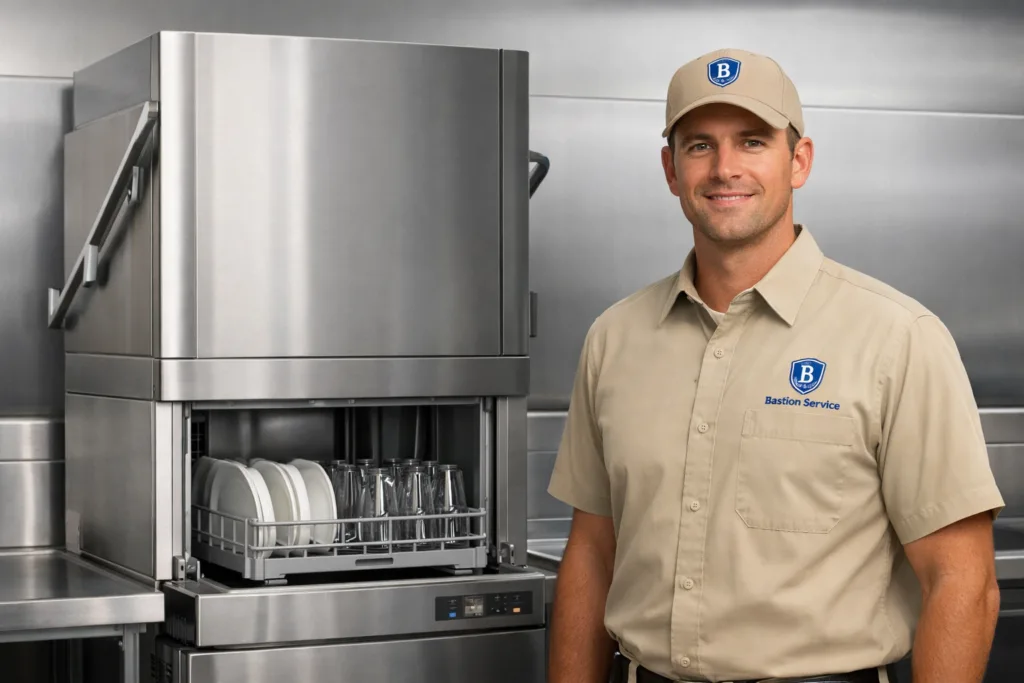




When a Hobart dishwasher starts leaving racks dirty, holding water, or stopping mid-cycle, kitchen flow can back up quickly. For businesses in Mid-Wilshire, the best next step is service that ties the symptom to the actual failed component so repair time, parts ordering, and downtime are handled efficiently. Bastion Service works on Hobart dishwasher problems with attention to wash performance, drainage, heating, controls, and the day-to-day demands of food-service operations.
Related commercial service paths in Mid-Wilshire include Hobart Commercial Repair in Mid-Wilshire and Commercial Dishwasher Repair in Mid-Wilshire.
Symptoms that usually point to needed Hobart dishwasher repair
Hobart dishwashers are designed for heavy use, but repeated cycles, scale buildup, worn components, electrical faults, and water supply issues can all change how the machine performs. A single symptom can also come from more than one fault, which is why testing matters before replacing parts.
Poor wash results, film, or residue
If wares are coming out cloudy, spotted, greasy, or still visibly soiled, the issue may involve weak wash pressure, blocked spray arms, clogged strainers, pump wear, low wash temperature, or chemical feed problems. Sometimes the machine completes the cycle but does not create the wash action or rinse conditions needed for consistent results. In a busy kitchen, that quickly leads to rewash volume, slower turnover, and added pressure on staff.
Standing water or slow draining
Water left in the unit after a cycle often points to a blocked drain path, pump problem, drain valve issue, sensor fault, or control-related interruption. Operators may also notice odors, repeated resets, or cycles that do not finish normally. If a Hobart dishwasher is not draining correctly, continued use can create sanitation concerns and place more strain on connected components.
Low rinse temperature or heating trouble
If the dishwasher is slow to heat, never reaches proper rinse conditions, or runs with inconsistent water temperature, likely causes include heating elements, thermostats, sensors, contactors, limit controls, or related electrical faults. Heating issues affect more than cleaning results. They can also disrupt throughput and lead to delays when staff are waiting on acceptable wash performance.
Leaks, overflow, or unwanted filling
Leaks around the door, base, hoses, or fill system may come from worn gaskets, damaged lines, valve failure, float issues, or internal wear. Some start as small drips and become larger repair problems once water reaches flooring, surrounding equipment, or electrical areas. Overflow or water entering at the wrong time should be addressed promptly instead of worked around during service hours.
No-start, mid-cycle stoppage, or intermittent operation
If the machine will not start, cuts out during a cycle, trips power, or behaves unpredictably at the controls, the fault may involve door switches, latches, relays, wiring, boards, motors, or safety circuits. These issues can be difficult to isolate without proper testing because the symptom may appear electrical even when the root cause is mechanical, or vice versa.
What diagnosis should cover before repair decisions are made
A useful service visit should do more than swap a likely part. It should confirm the reported complaint, inspect wear points, test the affected functions, and determine whether the failure is isolated or tied to a broader performance issue. On a Hobart dishwasher, that may include checking fill, wash circulation, drain function, heat output, rinse performance, controls, seals, and visible internal condition.
This matters because symptom overlap is common. A weak wash result may trace back to pump wear instead of chemicals. A heating complaint may actually involve sensor feedback or a control fault. A leak at the door may be only part of the problem if alignment or internal pressure issues are also present. Accurate diagnosis helps businesses in Mid-Wilshire avoid repeat service calls for the same unresolved problem.
When a dishwasher problem should not wait
Some issues allow a short window for scheduling, while others should be treated as urgent because they can interrupt operations without much warning. It is usually time to stop normal use and arrange repair when any of the following is happening:
- Water is leaking onto the floor
- The machine is not draining fully
- Wash quality has dropped enough to create rewash or sanitation concerns
- Rinse temperature is inconsistent or too low
- The pump or motor is making grinding, harsh, or unusual noises
- The unit stops mid-cycle or requires repeated resets
- Controls are inconsistent or the dishwasher will not reliably start
Using the dishwasher through these conditions can turn a contained repair into a larger parts-and-labor issue, especially when pumps, heaters, and controls continue operating under stress.
Common causes behind Hobart dishwasher performance changes
Not every failure appears suddenly. Many service calls start with gradual changes that staff notice for days or weeks before a full breakdown. Those patterns often help narrow the source of the problem.
Longer cycle times
If cycles seem to take longer than normal, the machine may be struggling with heating, fill timing, drain performance, or control response. Even when the dishwasher still finishes, a timing change often signals that a key system is no longer operating at normal efficiency.
Inconsistent cleaning from one rack to the next
When one load looks acceptable and the next does not, the issue may involve circulation problems, spray obstruction, unstable temperature, or intermittent chemical delivery. Inconsistency is a useful symptom because it often points to a system that is weakening rather than fully failed.
Intermittent fill or rinse problems
If the machine sometimes fills correctly and sometimes does not, attention should turn to valves, floats, sensors, water supply conditions, or control timing. These issues can be easy to overlook at first, but they often lead to wash quality problems and cycle interruptions.
Door sealing or water containment issues
Doors that no longer close evenly, seals that allow splash-out, or visible leakage during operation may indicate gasket wear, hinge issues, misalignment, or changes in internal wash pressure. These faults should not be ignored simply because the machine still runs.
Repair or replacement depends on the full condition of the machine
Many Hobart dishwashers are good candidates for repair when the main structure is sound and the failure is limited to serviceable components such as pumps, valves, heaters, switches, sensors, controls, or seals. Replacement becomes a more serious discussion when the machine has repeated failures across multiple systems, significant internal deterioration, major tank or frame problems, or parts limitations that make reliable restoration unlikely.
For Mid-Wilshire businesses, the decision should be based on the equipment’s overall condition rather than one symptom alone. Age, maintenance history, frequency of interruption, repair scope, and expected stability after service all matter. A proper evaluation helps determine whether the machine is likely to return to steady operation or continue creating costly interruptions.
How to prepare for a service appointment
A few details from staff can make diagnosis faster and more accurate. Before the visit, it helps to note when the problem started, whether it happens every cycle or only sometimes, what the machine does right before the fault appears, and whether any noises, odors, leaks, or temperature changes have been noticed. If the dishwasher shows specific control behavior, that information can also help narrow the issue.
It is also useful to stop using the machine if there is active leaking, electrical irregularity, or a risk of water damage. Protecting the surrounding area and preserving the symptom pattern can help shorten time to repair once service begins.
Focused Hobart dishwasher service for Mid-Wilshire businesses
On a Hobart dishwasher, the real issue is rarely just that the machine is “not working.” The more useful question is whether the fault involves wash action, drainage, heating, filling, controls, or multiple systems at once. For businesses in Mid-Wilshire, service should move quickly from symptom review to testing, repair planning, and scheduling that helps limit disruption. When a dishwasher is affecting throughput, sanitation, or staff workflow, prompt diagnosis and the right repair path are the most practical next steps.


