
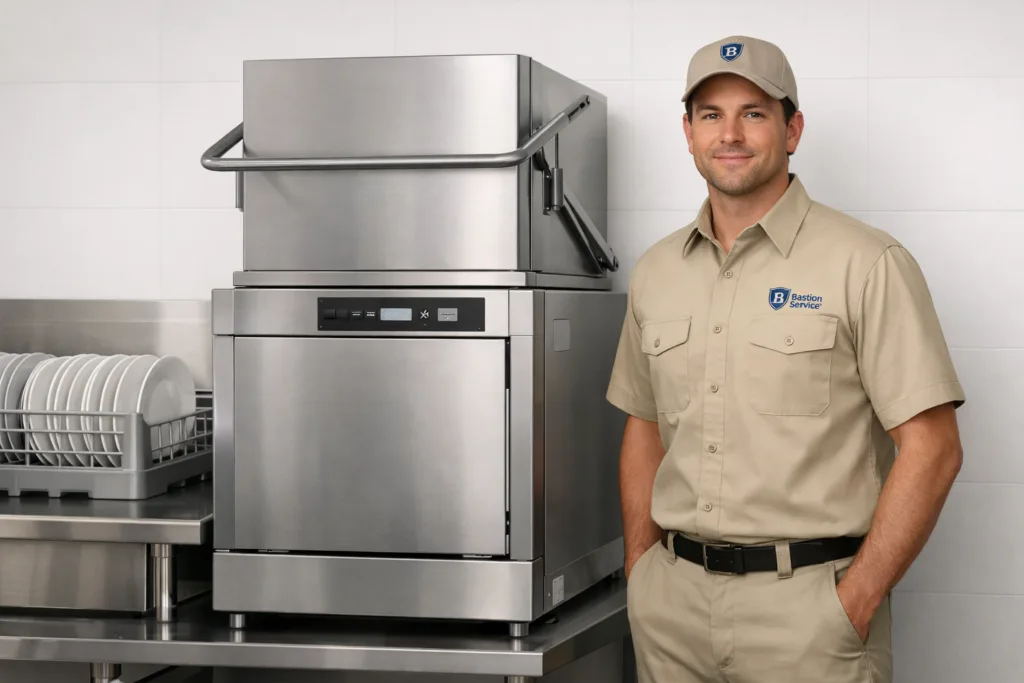




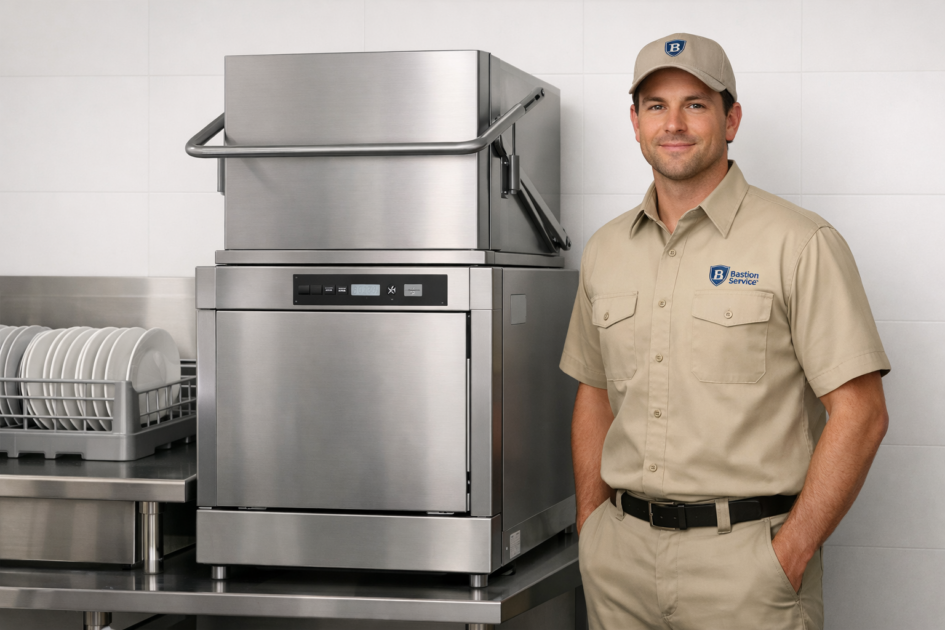
When Hobart warewashing equipment starts slowing a kitchen in Mid-Wilshire, the priority is to identify the failure quickly and schedule repair around service demands. Wash quality problems, fill and drain faults, rinse temperature issues, leaks, and control errors can all disrupt sanitation routines and labor flow. Bastion Service helps businesses determine what symptom pattern the machine is showing, how urgent the condition is, and what repair steps make the most sense before downtime spreads into the rest of the operation.
For specific equipment paths in Mid-Wilshire, review Hobart Dishwasher Repair in Mid-Wilshire and Commercial Appliance Repair in Mid-Wilshire.
For businesses in Mid-Wilshire, the most useful service visit is one that connects the complaint to an actual operating cause. A machine that seems to have a heating problem may really have a fill issue, a drain problem may be tied to a pump or sensor fault, and repeated cycle interruptions may point to controls rather than a mechanical blockage. That is why symptom-based diagnosis matters before parts decisions are made.
Common Hobart warewashing equipment problems that need repair
Warewashing equipment often shows smaller warning signs before it reaches a full shutdown. If a Hobart dishwasher is leaving residue, failing to complete cycles, not filling properly, leaking onto the floor, or producing inconsistent rinse results, those symptoms usually indicate a system that needs to be tested under normal operating conditions.
Poor wash performance and dirty racks
If dishes, utensils, or cookware are coming out with food debris, film, spotting, or uneven cleaning, the problem may involve spray arm blockage, low wash pressure, detergent delivery problems, scale buildup, or water circulation issues. In a busy kitchen, inconsistent results do more than create rewash work. They slow output, add labor, and can interfere with sanitation expectations during peak periods.
When wash performance drops off gradually, teams sometimes compensate by rerunning loads or changing routine settings. That may keep things moving temporarily, but it does not correct the underlying cause. If results vary from rack to rack, repair is usually the better step than trying to work around the problem shift after shift.
Fill problems, low water level, or no water entering
A Hobart unit that does not fill correctly may stop early, wash poorly, or fail to begin a cycle at all. Possible causes can include inlet valve problems, float or level sensing issues, supply restrictions, or control faults affecting the fill sequence. Low water conditions also change how the rest of the machine performs, so what looks like a wash issue may begin with improper filling.
Common signs include delayed starts, short or weak wash action, unusual pump sound, or intermittent operation where one load runs and the next one does not. These symptoms should be evaluated before staff continue repeated restarts or manual workarounds.
Drain issues and standing water
Slow draining or water left behind after the cycle often points to a drain restriction, pump trouble, sensor problems, or a control sequence fault. Standing water can create odor concerns, interrupt the next load, and place extra strain on internal components. If the machine is draining inconsistently, it is important to determine whether the problem is a simple obstruction or a larger failure affecting normal operation.
Drain complaints also matter because they can overlap with other symptoms. A dishwasher that will not drain properly may also stop mid-cycle, show rinse inconsistency, or trigger shutdown behavior that appears unrelated at first glance.
Leaks around the machine
Water on the floor should not be treated as a minor inconvenience. Leaks can come from hoses, seals, gaskets, pumps, internal fittings, or overflow conditions tied to fill and level problems. In addition to risking slip hazards, continued leaking can damage nearby surfaces and turn a repairable issue into a larger cleanup and equipment problem.
If the leak appears only during certain parts of the cycle, that detail is useful when scheduling service. A leak during fill, wash, drain, or rinse can point to different failure points and help narrow the repair path more quickly.
Rinse temperature and sanitation concerns
If the machine is not reaching expected rinse temperatures or the final result no longer matches normal sanitation performance, the problem may involve heating components, thermostatic regulation, sensors, relays, or control failures. Temperature-related issues should be addressed promptly because they affect more than convenience. They affect whether the equipment is supporting safe, repeatable warewashing results during daily use.
Operators may notice longer cycle times, inconsistent final results, or a machine that appears to run normally except for weak rinse performance. Those signs usually justify service before the issue becomes a full no-heat condition.
Control faults, cycle stoppage, and intermittent shutdowns
When a Hobart dishwasher starts, stops, resets, or fails to move through the cycle correctly, the issue may involve the control board, switches, relays, sensors, wiring, or a safety-related interruption. Intermittent faults are especially disruptive because the machine may seem normal during one load and fail during the next.
Repeated stop-and-start behavior often leads staff to lose time testing the machine between racks. If cycle progression is unreliable, a service call is usually the fastest route to getting back to a predictable workflow.
How symptom patterns help determine urgency
Not every equipment problem carries the same operational risk. Some issues allow for a scheduled repair window, while others suggest the machine should be taken out of use until it is inspected. The difference often depends on what the machine is doing under load.
- Schedule service soon if wash quality is inconsistent, filling is unreliable, draining is slow, or the cycle occasionally fails to complete.
- Use extra caution if the unit is leaking, producing unusual noise, running hotter than normal, or showing erratic controls.
- Stop use and arrange prompt repair if the machine repeatedly shuts down, will not drain, has severe temperature loss, or creates active water or electrical safety concerns.
For many businesses in Mid-Wilshire, the immediate question is whether the machine can keep running through service hours. That answer depends on whether continued use is merely inconvenient or likely to create added damage, sanitation problems, or a complete interruption later in the day.
Why warewashing problems often overlap
One of the reasons Hobart warewashing equipment can be difficult to self-diagnose is that several systems affect the same result. Poor cleaning may come from water level problems. A rinse temperature complaint may be tied to the cycle not advancing properly. Draining trouble can trigger shutdown behavior that appears to be a control fault. Because these symptoms overlap, replacing one obvious part without testing can miss the actual cause.
A service-based approach helps separate primary faults from secondary symptoms. That matters for planning, especially when a business is deciding whether to authorize a targeted repair, prepare for additional parts, or temporarily adjust workflow around the affected machine.
When continued operation may make the repair bigger
There are times when pushing the machine through another shift costs more than pausing for repair. Continued use may worsen damage when the dishwasher is leaking steadily, running with grinding or straining sounds, failing to drain between loads, overheating, or repeatedly stopping mid-cycle. In those cases, the machine is no longer just underperforming. It may be stressing pumps, seals, controls, or other assemblies every time it runs.
If staff are manually draining water, rerunning racks, overriding interruptions, or changing normal procedures just to keep output moving, that usually means the equipment needs attention now rather than after the next busy period.
Repair planning for older Hobart warewashing equipment
Older warewashing equipment is not automatically a replacement case. Many issues still come down to an isolated failed part or a wear-related repair that can return the unit to stable service. The better question is whether the current problem is a single repair event or part of a broader pattern of declining reliability.
Useful factors include recent breakdown history, the condition of major operating systems, how often service interruptions are occurring, and how heavily the machine is used in the daily workflow. If failures are stacking up across heating, draining, wash performance, and controls, replacement may deserve discussion. If the issue is limited and the rest of the machine remains sound, repair often remains the practical choice.
What to note before scheduling a service visit
Accurate symptom details can make diagnosis faster and help set expectations for the appointment. Before scheduling, it helps to note:
- Whether the machine fills, washes, drains, and rinses normally
- Whether the problem is constant or intermittent
- Any recent leaks, standing water, or unusual sounds
- Whether wash results changed suddenly or gradually
- Any temperature or sanitation-related concerns noticed by staff
- Whether the unit stops at the same point in the cycle each time
Even simple observations from the team can help distinguish between a mechanical issue, a water-flow problem, and a control-related fault.
Service support for Mid-Wilshire businesses
Warewashing problems affect more than one machine. They affect labor timing, dish flow, sanitation routines, and how the rest of the kitchen keeps moving. If your Hobart warewashing equipment in Mid-Wilshire is showing wash performance problems, fill and drain issues, leaks, temperature concerns, or control faults, scheduling repair while the symptoms are active is the best next step. A timely diagnosis can clarify whether the unit can remain in limited use, what repair scope is likely, and how to restore more reliable operation with the least disruption possible.


