






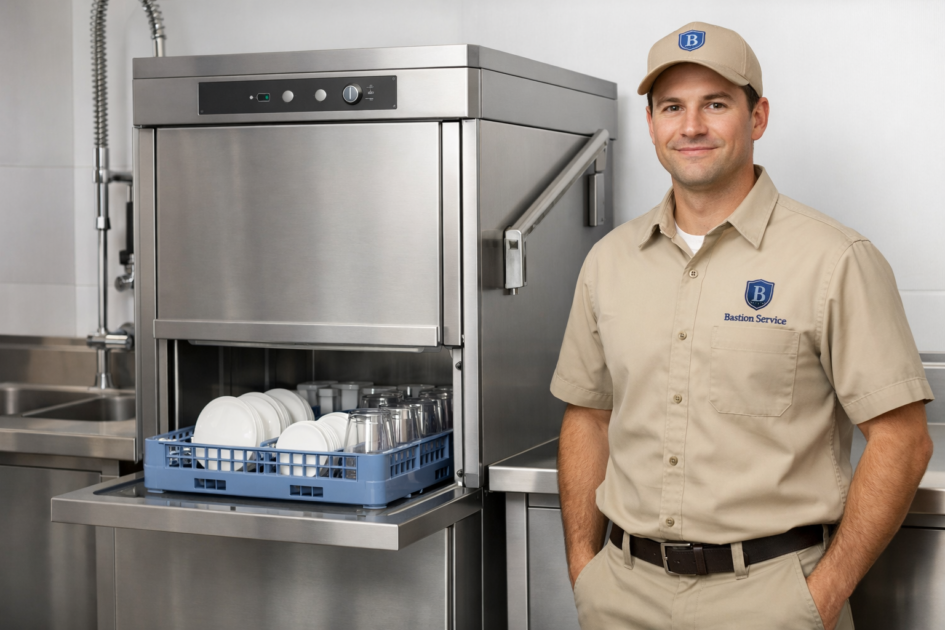
When a Hobart dishwasher starts leaving racks dirty, stopping mid-cycle, or slowing kitchen flow, the best next step is service that identifies the actual fault before parts are replaced. In Mid-City, dishwasher downtime can disrupt sanitation timing, labor efficiency, and overall back-of-house pace, so the repair process should focus on what the machine is doing during fill, wash, rinse, drain, and heat. Bastion Service helps businesses in Mid-City evaluate those symptoms, schedule repair, and decide whether the issue is a targeted fix or a larger equipment decision.
Related commercial service paths in Mid-City include Hobart Commercial Repair in Mid-City and Commercial Dishwasher Repair in Mid-City.
Common Hobart Dishwasher Problems Businesses See
Most Hobart dishwasher failures show up as a few recurring symptom patterns. The visible problem may look simple, but the root cause can involve more than one system. Grouping the symptom correctly helps move the repair process faster and reduces unnecessary downtime.
Poor wash results
If ware comes out with food residue, film, spotting, or inconsistent results from rack to rack, the problem may involve reduced wash pressure, clogged spray arms, scaling, low temperature, chemical delivery issues, or a cycle that is not completing properly. A machine that appears to be running normally can still be underperforming if circulation or rinse performance has dropped.
Drain problems or standing water
Water left in the machine after a cycle often points to a blockage, drain pump trouble, hose restriction, or a control issue that keeps the unit from advancing as it should. Slow draining can also lead to repeat cycle problems, odors, and extra stress on related components.
Low rinse temperature or heating failure
If the dishwasher is not reaching proper temperature, final rinse performance may suffer and wash results can become inconsistent. Possible causes include heating components, thermostats, sensors, controls, or utility-related conditions that affect how the unit operates. Heat-related faults are worth addressing quickly because they affect both results and daily operating standards.
Leaks during operation
Leaks around the door, underneath the machine, or near plumbing connections can come from worn gaskets, seals, lines, pump-area failures, or loose fittings. Even a small leak can become a larger floor and equipment issue when the machine is used heavily through the day.
Won’t start, stops mid-cycle, or shows control faults
When a Hobart dishwasher will not power on, pauses unexpectedly, or fails to complete a cycle, the issue may involve door switches, relays, wiring, sensors, boards, or power-related faults. Mid-cycle stoppages should be checked early because repeated restart attempts can add wear and make the original problem harder to isolate.
Why a Symptom-Based Diagnosis Matters
Dishwasher problems often overlap. Poor cleaning can begin with weak pressure, bad draining, or low heat. A temperature complaint may actually start with a fill problem or a control issue. A leak may come from a seal, but it can also be a secondary sign of pump or circulation trouble.
That is why service should evaluate the machine’s operating sequence instead of assuming the first visible symptom tells the whole story. Looking at the complete pattern helps answer three practical questions: what failed, what other parts may be affected, and whether repair makes sense for the machine’s current condition.
Why Is My Hobart Dishwasher Not Washing, Draining, or Reaching Temperature?
These three complaints often happen together because the dishwasher depends on several systems working in sequence. If the machine does not fill correctly, wash performance drops. If circulation is weak, ware will not come out clean. If draining is restricted, the next cycle may start with poor conditions. If heat is low, final results can decline even when the rest of the cycle appears normal.
For businesses in Mid-City, the useful question is not just which symptom appeared first, but which part of the sequence is failing. That distinction affects whether the repair points to a pump issue, a heating problem, a control fault, a drain obstruction, or wear in multiple areas.
Signs It Is Time to Schedule Service
Service is worth scheduling when the dishwasher is no longer cleaning consistently, takes longer than usual to complete cycles, leaks, drains poorly, runs louder than normal, fails to heat properly, or needs repeated resets. Even if the machine still runs, any drop in reliability usually means the problem is already affecting production.
- Racks need to be rewashed more often
- Staff are hand-finishing items that should come out clean
- The machine is leaving water behind after cycles
- Cycle times have changed without explanation
- Temperature performance is inconsistent
- The unit stops during busy periods
Those workarounds often mask a growing failure that is costing time and labor even before the dishwasher goes fully down.
When Continued Use Can Make the Problem Worse
Some problems should not be pushed through another shift. Continued operation can make damage worse when the machine is leaking, failing to drain, making grinding or pump noise, tripping power, overheating, or showing obvious control problems. Running in that condition can affect motors, heaters, electrical parts, and nearby surfaces.
Even when the unit still completes some cycles, repeated rewashing and extra run time can add unnecessary wear. For kitchens and other businesses in Mid-City, delaying repair often turns one correctable issue into a wider service need.
Repair or Replacement: What Usually Drives the Decision
Repair is often the sensible choice when the fault is isolated and the rest of the machine is still in workable condition. Problems involving pumps, switches, controls, heating components, seals, and drain-related parts can often be assessed as focused repairs once the failure is confirmed.
Replacement becomes more likely when the dishwasher has several active failures, repeated breakdowns, major wear across multiple systems, or repair costs that no longer match the remaining service life of the unit. The right decision depends on condition, downtime risk, and how well the machine still fits the site’s daily volume.
How to Prepare for a Service Visit
A few details from staff can make troubleshooting faster. It helps to note when the problem happens, whether it affects every cycle or only some loads, and whether there were warning signs before the failure became obvious.
- What the machine is doing wrong: not washing, not draining, not heating, leaking, or stopping
- Whether the problem is constant or intermittent
- Any unusual sounds, smells, or error behavior
- Whether staff have noticed longer cycles or weaker results
- If the issue started suddenly or worsened over time
That information helps connect the symptom to the likely system involved and can shorten the path to a repair recommendation.
Service-Focused Next Steps for Mid-City Businesses
If your Hobart dishwasher is washing poorly, leaking, not draining, not reaching temperature, or stopping during cycles, the most useful next step is to schedule an inspection based on the exact failure pattern. A service visit should clarify whether the problem is isolated, whether continued use risks more damage, and what repair path best supports your workflow. For businesses in Mid-City, that kind of focused repair decision is what helps restore uptime without guessing at the cause.


