
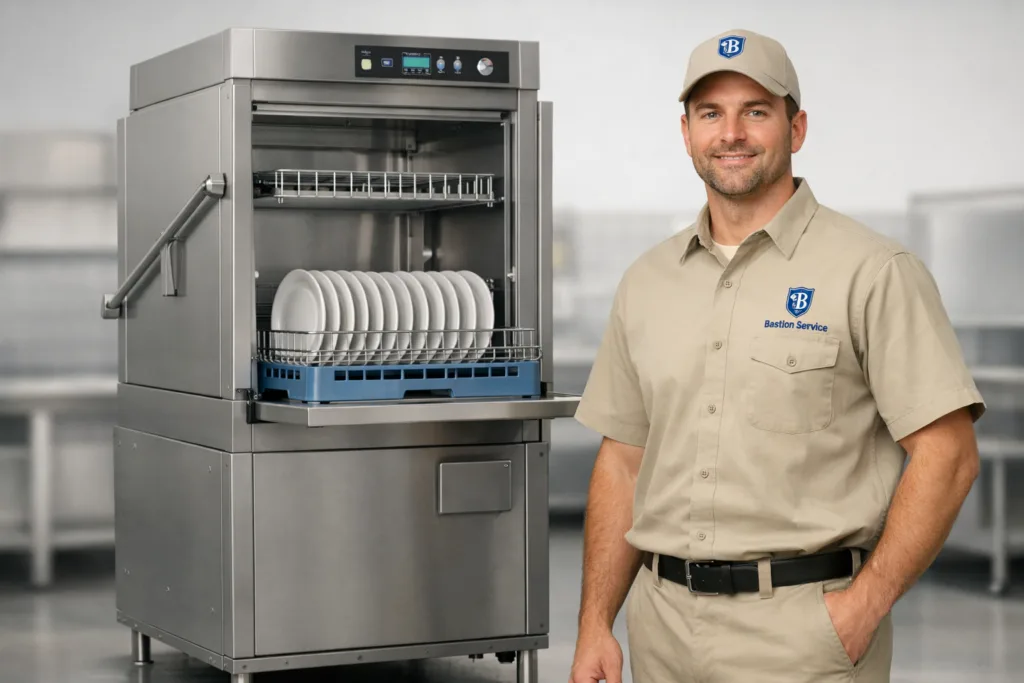




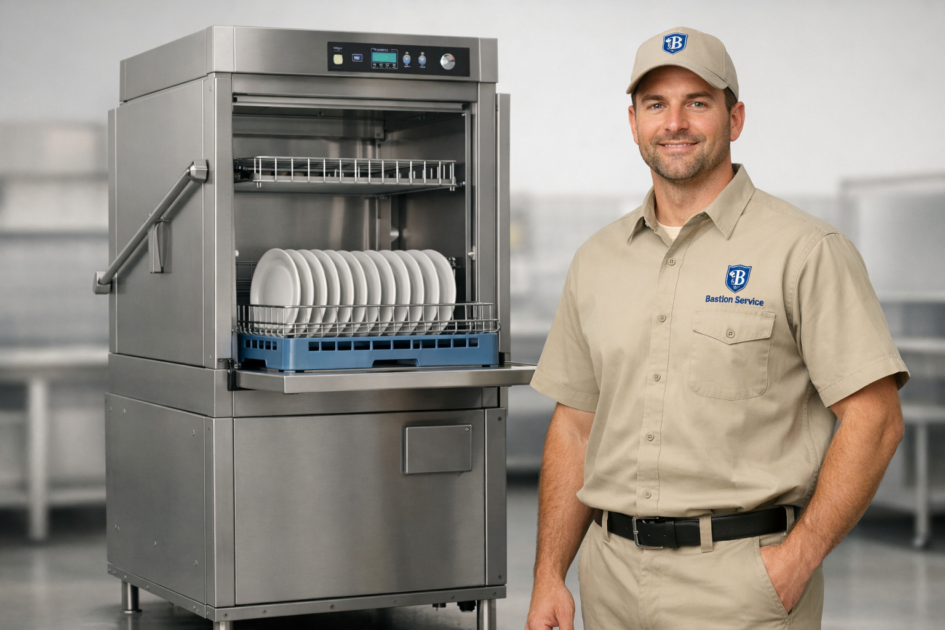
When Hobart warewashing equipment starts slowing down dish flow, creating sanitation concerns, or stopping mid-shift, service should focus on the specific symptom pattern and how it is affecting daily operations. For businesses in Mid-City, that usually means looking beyond a single complaint and determining whether the real issue involves wash action, water fill, drainage, rinse temperature, leaks, or controls. Bastion Service provides repair support for Hobart warewashing equipment with diagnosis, repair scheduling, and next-step recommendations based on how the machine is behaving in actual use.
For specific equipment paths in Mid-City, review Hobart Dishwasher Repair in Mid-City and Commercial Appliance Repair in Mid-City.
Even when a unit still runs, inconsistent performance can create extra labor, rewash volume, longer cycle turnaround, and uncertainty for staff. A repair visit helps clarify whether the problem is isolated, whether the machine should be taken out of use, and what kind of repair path makes the most sense for the location.
Hobart warewashing equipment symptoms that deserve prompt attention
Warewashing problems rarely stay minor for long in a busy kitchen. A machine that begins with occasional poor results can progress into repeated cycle failures, standing water, or temperature-related sanitation complaints. Scheduling service early is often the better move when any of the following starts affecting consistency:
- Dishware comes out spotted, greasy, cloudy, or still soiled
- The unit does not fill normally or takes too long to fill
- Water remains in the tank or drains slowly after cycles
- Final rinse temperature seems low or inconsistent
- Leaks appear around the door, underneath the machine, or near connections
- The dishwasher stops mid-cycle or will not start reliably
- Error behavior, control faults, or repeated resets interrupt operation
- Unusual noise, vibration, or pump-related sound develops during wash or drain
These symptoms can point to different faults even when they look similar from the outside, which is why symptom-based repair is more useful than guessing at a part replacement.
Wash performance problems and poor cleaning results
Residue, film, and inconsistent cleaning
If racks are coming out with leftover food soil, cloudy glassware, or uneven results from one load to the next, the issue may involve spray arms, wash pressure, filters, pump performance, water distribution, or control timing. On Hobart warewashing equipment, poor wash quality can also be tied to temperature performance that is not supporting proper cleaning during the cycle.
For businesses in Mid-City, this kind of problem usually shows up first as extra rewash work and slower back-of-house flow. If staff are rerunning loads or sorting out acceptable results manually, it is time to inspect the machine before the problem disrupts the entire dish process.
Longer cycles and reduced throughput
Sometimes the complaint is not obviously “dirty dishes” but slower overall output. If cycle times feel longer, racks are backing up, or the machine seems to hesitate between stages, the cause may be related to controls, fill behavior, drain performance, or heating delays. Throughput problems matter because even partial operation can still produce a serious bottleneck during service periods.
Fill and drain issues that affect normal operation
Machine will not fill correctly
When a unit does not fill, underfills, or fills inconsistently, the dishwasher may not be able to start or complete a cycle correctly. These symptoms can involve inlet components, level sensing, switches, control response, or supply-related conditions. A fill problem often appears as a no-start complaint even though the underlying issue is elsewhere in the water system.
If the machine only fills sometimes, that intermittent pattern is worth checking sooner rather than later. Intermittent faults can become complete shutdowns with little warning.
Standing water or slow draining
Drain problems can leave water in the machine, interrupt cycle completion, and create cleanup issues around the work area. Common symptom patterns include water left in the tank after operation, slow drain-out, repeated drain attempts, or a machine that stops because it cannot complete its programmed sequence.
Drain faults may involve restrictions, pump problems, sensors, or control-related failures. Continued use can add stress to internal components and can also create sanitation concerns if dirty water is not clearing as expected.
Rinse temperature and sanitation concerns
Water not heating properly
If the dishwasher runs but the final rinse does not appear hot enough, or the machine struggles to maintain expected heat during operation, the problem may involve heating elements, boosters, controls, limit devices, or electrical components. Temperature problems are important because a machine can appear mechanically functional while still failing to deliver the performance needed for reliable sanitizing results.
Signs that often point to temperature-related repair needs include:
- Inconsistent drying results after the cycle
- Sanitation complaints from staff
- Cycles that seem to stall during heat-related stages
- Repeated temperature alarms or fault behavior
- Performance that drops during heavier use periods
When sanitation confidence drops, the repair decision should not be delayed. A machine that washes but does not finish the process properly can create larger operational risk than a unit that fails outright.
Leaks, noise, and signs of mechanical wear
Water leaks around or under the machine
Leaks may start as a minor puddle but often indicate a seal, hose, pump, fitting, or door-related problem that can worsen with continued use. In some cases, water migration can affect nearby electrical areas or flooring conditions around the equipment. If a Hobart unit is actively leaking during operation, it is usually smart to stop using it until the source is identified.
Grinding, humming, rattling, or vibration
Changes in sound often suggest wear in moving parts or stress within the wash or drain system. A humming unit that does not advance normally, grinding during drain-out, or vibration that was not present before can all point to a developing mechanical issue. Noise complaints become more urgent when they appear alongside slow performance, leaks, or shutdowns.
Control faults, shutdowns, and intermittent operation
One of the more frustrating symptom groups is intermittent failure. The machine may work through some cycles, then stop, reset, fail to start, or show unpredictable behavior at busy times. These faults can be caused by control issues, switches, sensors, wiring problems, or electrical interruptions that are not obvious from a quick visual check.
Intermittent control behavior deserves attention because it disrupts staffing and makes it hard to trust the equipment during peak demand. If employees are restarting the machine repeatedly or adjusting workflow around unreliable operation, repair service is usually more cost-effective than continuing to work around the issue.
When to stop using the dishwasher until it is inspected
Some symptom patterns justify pausing operation instead of trying to finish out the day. That is especially true when the machine shows conditions that may increase damage or create safety and sanitation concerns.
- Active leaking that spreads beyond the normal footprint of the unit
- Burning smells or signs of electrical trouble
- Repeated breaker trips or power loss during operation
- Failure to complete cycles consistently
- Severe drain backup or overflow behavior
- Mechanical noise that suddenly becomes loud or aggressive
- Temperature performance that raises sanitation concerns
If the issue is limited to reduced wash quality or gradual performance decline without active leaking or shutdowns, there may be room to schedule service during a more manageable window. The right choice depends on how stable the machine remains from load to load.
How symptom-based repair helps with repair planning
Not every Hobart warewashing issue requires the same response. Some problems are isolated and straightforward once testing confirms the failed part or system. Others involve multiple symptoms that developed over time, such as poor wash quality combined with slow draining and control interruptions. In those cases, the service decision should consider not only the immediate fault, but also the overall condition of the equipment and how heavily it is used each day.
For Mid-City businesses, good repair planning helps answer practical questions:
- Can the unit stay in limited use until the scheduled visit?
- Is the fault likely contained to one system, or does it suggest broader wear?
- Is current downtime caused by a true shutdown or by declining performance?
- Would delaying service likely increase damage or labor disruption?
That approach is more useful than treating every dishwasher issue as either minor or urgent without looking at the operating pattern behind it.
What a service visit should clarify
A repair visit for Hobart warewashing equipment should help the operator understand what is failing, how that fault connects to the symptoms staff are seeing, and whether the machine can be returned to reliable operation with a targeted repair. It should also help identify whether the current issue is likely to remain isolated or whether additional wear is contributing to repeated downtime.
If your Hobart warewashing equipment in Mid-City is showing wash performance problems, fill and drain issues, leaks, rinse temperature concerns, sanitation complaints, or control faults, the next step is to schedule service before the disruption spreads into a larger stoppage. Early repair attention can protect dish flow, reduce avoidable downtime, and make it easier to plan around the actual condition of the equipment.


