
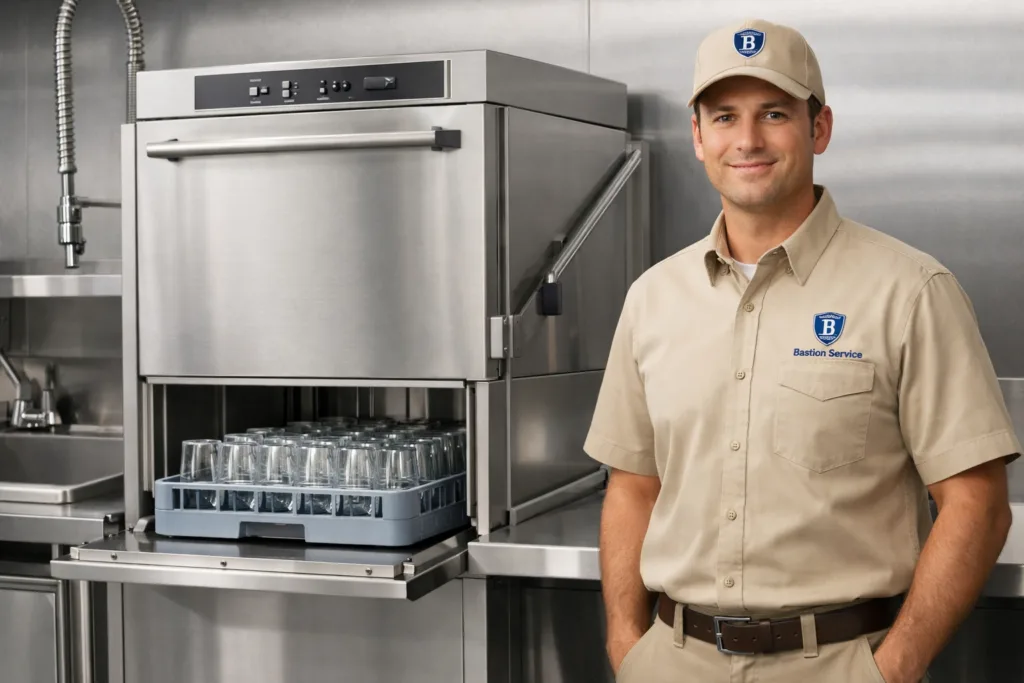




Dishwasher downtime can disrupt dish turnover, staffing rhythm, and sanitation routines fast, especially when a Hobart unit begins missing cycles, leaving items unclean, or stopping mid-shift. The most useful next step is to match the symptom pattern to the system involved so the repair decision is based on what the machine is actually doing, not on guesswork. For businesses in Marina del Rey, that usually means scheduling service when the first repeat symptom appears instead of waiting for a full shutdown.
Related commercial service paths in Marina del Rey include Hobart Commercial Repair in Marina del Rey and Commercial Dishwasher Repair in Marina del Rey.
Symptom-based Hobart dishwasher repair service
Hobart dishwashers rely on several systems working together at the same time: water fill, wash action, drain function, heating, controls, and safety switches. When one part starts failing, the visible problem may look simple even though the underlying cause is not. A unit that will not drain, for example, may have a blockage, a pump problem, a stuck valve, or a control issue preventing the drain sequence from finishing.
Bastion Service helps businesses in Marina del Rey narrow the problem down to the failed component or connected system so repair scheduling, parts planning, and downtime expectations make sense from the start. That service-oriented approach is especially important when the dishwasher is still running inconsistently, because partial operation can hide a worsening failure.
Common Hobart dishwasher problems and what they often indicate
Not washing properly
If dishes come out with residue, film, or food soil still present, the issue may involve weak wash pressure, clogged spray arms, restricted water flow, low tank temperature, pump wear, or an incomplete cycle. In some cases, the machine appears to run normally while wash performance steadily drops. That usually points to a condition that needs repair rather than a one-time reset.
Not draining or leaving standing water
Water left in the machine after the cycle can indicate a blocked drain path, failing drain pump, check valve problem, drain hose restriction, or a control sequence fault. Drain issues should be addressed quickly because they can affect the next load, increase strain on other components, and create overflow or cleanup problems around the unit.
Not reaching rinse temperature
When final rinse temperature is too low or inconsistent, likely causes include heating component failure, thermostat or sensor issues, contactor problems, control faults, or trouble in the rinse-side heating circuit. A temperature complaint is more than a convenience issue. It affects cycle performance and can make the machine unreliable during busy periods.
Leaking during or after operation
Leaks may come from worn door gaskets, split hoses, loose fittings, seal failure, overfill conditions, or cracked internal plumbing parts. Small leaks often become larger floor-safety and equipment-room issues if the unit keeps running without inspection. If staff are placing towels around the machine or noticing recurring moisture under the base, service is usually overdue.
Stopping mid-cycle or failing to start
A no-start condition or an interrupted cycle may be tied to door switches, latch alignment, electrical supply problems, control board issues, blown protective components, or faults elsewhere in the machine that trigger a shutdown. Intermittent starting problems tend to become complete startup failures, so it is better to investigate them while the symptom is still reproducible.
Noise, vibration, or harsh pump sound
Grinding, humming, rattling, or sudden changes in operating sound can point to motor strain, pump wear, loose components, foreign objects, or bearing-related problems. If the machine sounds noticeably different from its normal cycle pattern, continued use can turn a repairable issue into broader damage.
Why a Hobart dishwasher may not be washing, draining, or reaching temperature
These three complaints often overlap because the same cycle depends on multiple systems finishing in the correct order. A dishwasher that is not washing well may actually have a fill problem or a heat problem. A machine that is not draining may then fail the next cycle because water levels and timing are off. A temperature issue can also affect wash results, cycle completion, and operator confidence in the machine.
Common causes include:
- restricted wash arms or internal buildup reducing spray coverage
- weak or failing pump performance
- drain obstructions or pump-out failure
- faulty fill valves, sensors, or level controls
- heating element, thermostat, or contactor failure
- control board or timer faults interrupting cycle logic
- door switch or safety interlock problems
- electrical supply issues affecting heat or motor operation
Because several of these faults can produce similar symptoms, repair decisions are best made after the machine is tested through the affected stages of operation.
Signs the problem is getting worse
Some Hobart dishwashers continue operating in a limited way before failing completely. That can make the problem easy to postpone, even though the risk of a longer outage is rising. Warning signs that usually mean the issue is progressing include repeated resets, slower draining, longer cycle times, reduced wash force, inconsistent temperature, worsening leaks, and staff needing to rewash loads more often.
If the machine has become unpredictable rather than fully inoperable, that is often the ideal time to schedule repair. Waiting until it stops entirely can make workflow disruption harder to manage.
When to stop using the dishwasher and schedule service
It is usually time to pull the unit from regular use when operation creates spill risk, electrical interruption, or repeated incomplete cycles. Continuing to run the machine under those conditions can affect nearby components and increase repair scope.
- Water is leaking onto the floor during use.
- The machine trips power or shuts off unexpectedly.
- Standing water remains after each cycle.
- Rinse temperature will not recover.
- The pump is loud, strained, or inconsistent.
- Cycles stop halfway through or need manual restarting.
- Wash results are no longer acceptable even after routine cleaning.
Repair or replace?
Many Hobart dishwasher problems are still good repair candidates when the failure is limited to a pump component, heating part, sensor, valve, switch, gasket, hose, or control-related part. Replacement becomes more likely when the machine has multiple major failures, extensive wear across several systems, or a repair history showing repeated outages with declining reliability.
A useful repair decision usually depends on:
- which component failed and whether related parts were affected
- the overall condition of the dishwasher
- whether the repair is likely to restore stable operation
- how much downtime risk remains after the work is completed
That is why symptom review alone is not enough. The better question is whether the confirmed fault supports a lasting repair or only a short-term return to service.
How businesses in Marina del Rey can prepare for a service visit
Before scheduling repair, it helps to note exactly what the dishwasher is doing: whether the problem happens every cycle or only sometimes, when the issue started, whether the machine fills and drains normally, and whether unusual noise, odor, or leaking is present. If staff have noticed error patterns, shutdown timing, or a drop in rinse heat, those details can help narrow the diagnosis.
It is also useful to know whether the unit should remain off until inspected. If the machine is leaking, failing electrically, or producing incomplete cycles that affect operations, pausing use can prevent a more disruptive breakdown.
Focused Hobart dishwasher repair for Marina del Rey businesses
For businesses in Marina del Rey, the priority is usually straightforward: identify the fault, determine whether the dishwasher can keep operating safely, and schedule the repair path that best protects uptime. When a Hobart dishwasher is not washing, draining, heating, or completing cycles correctly, prompt service is often the most practical way to limit disruption and keep daily operations moving.


