
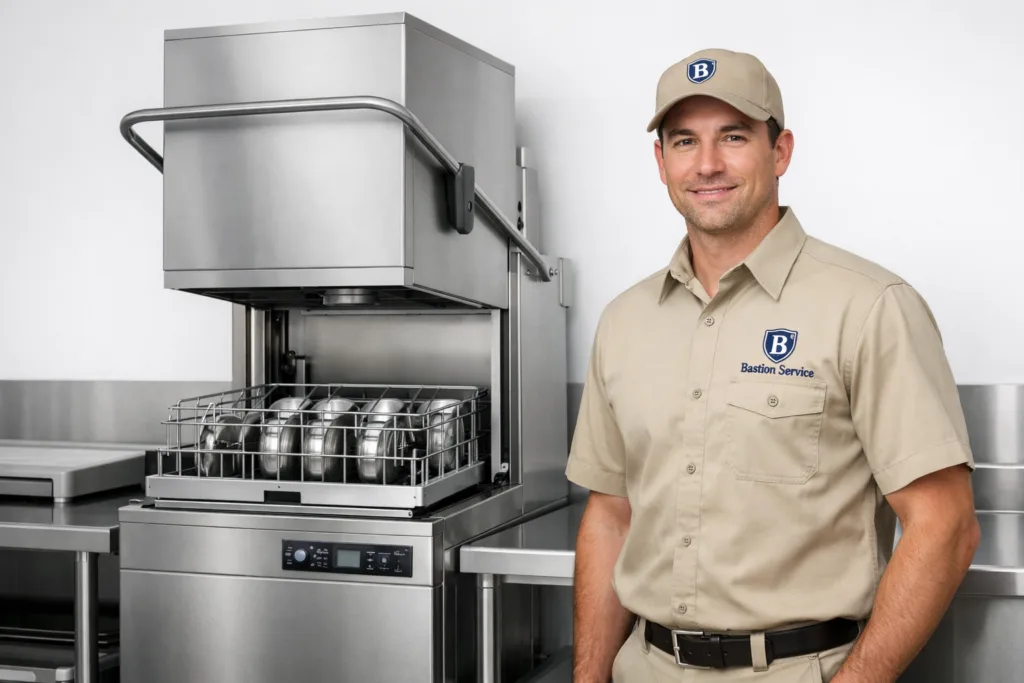





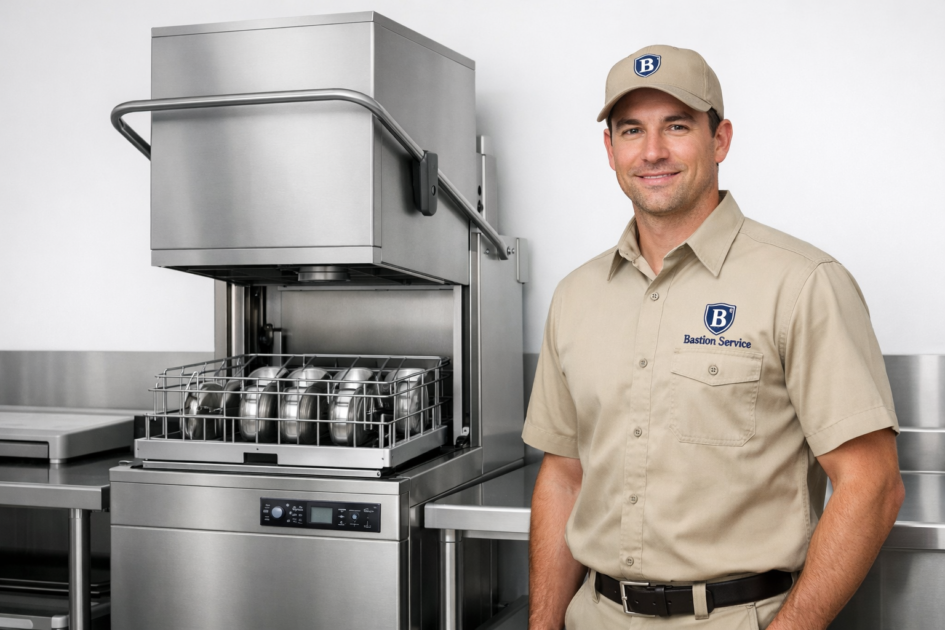
When Hobart warewashing equipment begins slowing the dish area, producing inconsistent results, or interrupting service flow, the first priority is to identify what is actually failing in the wash cycle and how quickly the issue needs to be addressed. For businesses in Marina del Rey, repair decisions are usually tied to uptime, sanitation expectations, labor disruption, and whether the machine can keep running safely until service is completed.
For specific equipment paths in Marina del Rey, review Hobart Dishwasher Repair in Marina del Rey and Commercial Appliance Repair in Marina del Rey.
Bastion Service provides Hobart warewashing equipment repair for operators dealing with dishwasher shutdowns, weak wash performance, drainage trouble, leak complaints, rinse temperature concerns, and control-related faults. The goal is not just to restore operation, but to determine whether the problem is isolated, whether continued use risks additional damage, and what repair timing makes the most sense for the business.
Symptoms that usually mean service should be scheduled
Warewashing equipment problems often start as a “still running, but not running right” complaint. That can make issues easy to delay, especially when staff can still push racks through the machine. In practice, partial operation often means higher rewash volume, longer turnaround, and more stress on pumps, heaters, valves, and controls.
- Dishes, glassware, or utensils come out with residue, film, or poor rinse results
- The unit fills slowly, overfills, or does not fill as expected
- Water remains in the machine after the cycle or drains inconsistently
- Rinse temperature is low, unstable, or not reaching expected levels
- Leaks appear around the door, underneath the machine, or near hose and pump areas
- Buttons, displays, or cycle controls respond erratically
- The machine stops mid-cycle, trips out, or needs repeated resets
- Staff notice unusual noise, vibration, or changes in cycle timing
These symptoms usually point to a real mechanical, electrical, or control problem rather than a one-time inconvenience. Early service helps limit downtime and reduces the chance that one failing part will create secondary damage elsewhere in the system.
Wash performance problems and why they matter
Items coming out dirty, spotted, or greasy
If a Hobart dishwasher is completing cycles but leaving ware visibly unclean, the issue may involve wash arm blockage, reduced pump performance, water delivery problems, temperature loss, chemical feed issues, or internal buildup affecting circulation. For kitchens and food-service businesses in Marina del Rey, this type of problem usually shows up first as rewash pressure and slower service.
Because weak cleaning performance can come from more than one source, symptom-based diagnosis matters. A machine that appears to have a wash issue may actually be dealing with low heat, restricted flow, sensor error, or a control fault affecting timing and rinse behavior.
Inconsistent results from one rack to the next
When one cycle looks acceptable and the next does not, the problem often points to an intermittent condition rather than a constant blockage. That may include fluctuating fill levels, inconsistent heating, failing relays, sensor feedback problems, or an electrical fault that only appears under load. Intermittent complaints are especially important to address before a complete no-run condition develops.
Fill and drain issues that disrupt the wash cycle
Slow fill, no fill, or overfilling
Fill problems can keep a machine from starting correctly, extending cycle time or preventing normal wash action. Operators may notice the unit waiting too long for water, filling to the wrong level, or behaving unpredictably at startup. Typical causes include inlet valve trouble, float or level-sensing problems, control issues, or restrictions affecting water flow.
When fill behavior is off, the machine may continue operating in a way that looks normal from a distance while still delivering poor results. That is one reason these complaints should be inspected promptly instead of treated as a minor nuisance.
Standing water or incomplete draining
If water remains in the tank or base after a cycle, the problem may involve the drain pump, blockage, drain valve, sensor input, or control timing. Standing water can affect sanitation, create odor concerns, and place extra stress on the machine during the next cycle. In some cases, poor draining also leads to overflow risk or causes staff to shut the unit down between uses.
A drain complaint is not always just a simple obstruction. On warewashing equipment, poor drain performance can be the visible symptom of a larger issue in the way the machine is sensing or managing the cycle.
Rinse temperature and sanitation-related concerns
Low or unstable rinse temperature
Temperature complaints are among the most important warewashing symptoms to evaluate because they affect final results and confidence in the output. If rinse heat is inconsistent, operators may see poor drying, repeat cycles, or questions about whether the machine is performing as expected. The underlying cause may involve heating components, sensors, relays, wiring, boards, or other control-side failures.
Temperature issues also tend to worsen under continued daily use. What starts as occasional low-heat behavior can become repeated cycle interruption or a full loss of heating function, which is why these calls are usually better handled quickly.
Sanitation complaints tied to machine performance
When staff raise concerns about final rinse performance, cycle completion, or the condition of items coming out of the machine, the right next step is to inspect the equipment rather than rely on guesswork. Sanitation-related complaints can be tied to heat, flow, timing, chemical delivery, or a combination of factors affecting the wash process together.
Leaks, noise, and shutdown symptoms
Water leaks around the unit
Leaks may come from worn seals, hose problems, pump-related wear, valve issues, or overflow conditions tied to fill control problems. Even a small recurring leak can become a larger operational issue if it reaches surrounding flooring, creates slip risk, or signals pressure and sealing problems inside the machine.
Leak diagnosis should focus on where the water is originating and when it appears in the cycle. A machine that leaks only during fill may point to a different repair path than one leaking during wash circulation or drain-down.
Grinding, rattling, or sudden changes in sound
New noise is often one of the earliest signs of wear inside warewashing equipment. Pumps, bearings, motors, wash components, and moving assemblies can all create abnormal sound before they fail more dramatically. Noise paired with weak cleaning, longer cycles, or intermittent stopping is a strong indicator that service should not be postponed.
Mid-cycle stops and control faults
If the dishwasher freezes, resets, shows erratic control behavior, or fails to complete cycles consistently, the fault may be in sensors, boards, switches, relays, wiring, or related electrical components. Control problems can be difficult to pin down from surface symptoms alone because they often imitate other failures, including fill, drain, and heat complaints.
Why diagnosis matters before approving repair work
On Hobart warewashing equipment, the visible symptom is not always the failed part. A no-heat complaint can originate from a control issue. A poor drain complaint may be linked to sensing or cycle logic rather than the drain path itself. A wash performance issue may be caused by low water level, not the wash pump. Accurate diagnosis helps the business avoid unnecessary parts replacement and supports smarter scheduling.
It also clarifies risk. Some problems mainly reduce efficiency for a short period, while others should move the machine out of service because they can lead to water damage, sanitation concerns, or broader component failure. That distinction matters when managers are deciding whether to limit use, shift workflow, or stop using the unit until repair is completed.
When repair is usually the better move
Many warewashing issues can be corrected without replacing the machine, especially when the problem is caught before repeated operation causes larger failures. Repair is often the practical choice when the fault is isolated, parts support is reasonable, and the rest of the unit remains in solid working condition.
Replacement discussions become more relevant when the equipment has recurring major failures, chronic reliability problems during peak use, or multiple repair needs stacking up at the same time. A service assessment helps separate a manageable repair from a machine that is becoming harder to keep dependable in daily operation.
What Marina del Rey operators can do before the technician arrives
Before service is scheduled, it helps to note the exact operating symptom rather than a general “not working” description. Useful details include:
- Whether the issue affects every cycle or only some cycles
- Whether the problem appears during fill, wash, rinse, or drain
- Any visible leaks, standing water, or unusual noises
- Whether the machine has low heat, no heat, or inconsistent rinse performance
- Any resets, interruptions, or display/control irregularities staff have noticed
This kind of symptom history can speed diagnosis and help businesses in Marina del Rey prepare for the likely repair path, especially when the dishwasher is essential to daily kitchen flow.
Repair support focused on uptime
For Marina del Rey businesses relying on Hobart warewashing equipment every day, the most useful next step is to schedule service when the machine starts showing repeatable performance, drain, leak, temperature, or control issues rather than waiting for a full shutdown. A repair visit can identify the fault, explain whether the unit should remain in use, and outline the practical next steps to restore reliable operation with the least possible disruption.


