





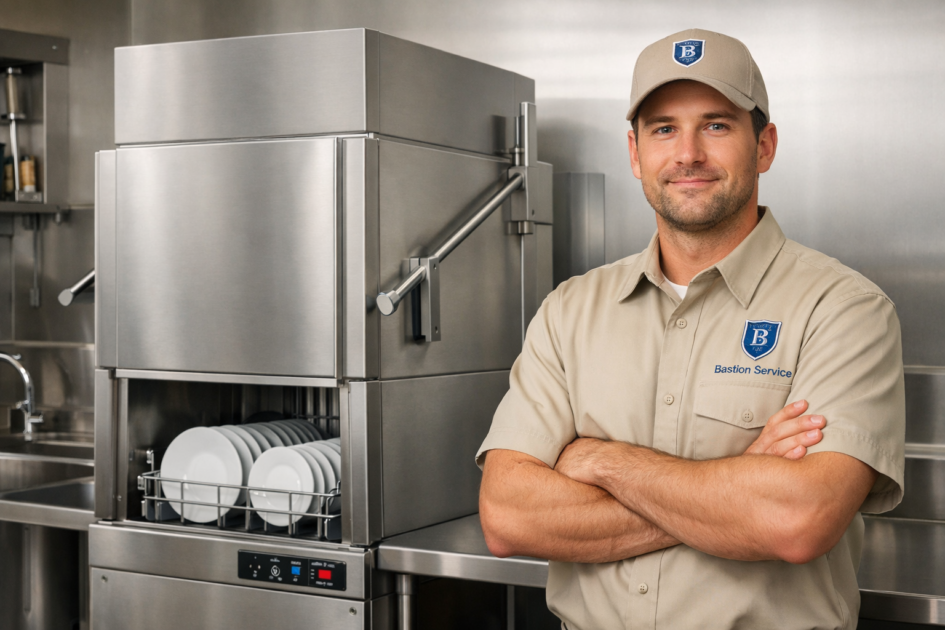
When a Hobart dishwasher starts leaving racks dirty, stopping mid-cycle, leaking, or missing rinse temperature, the repair decision should be based on how the unit is actually behaving during operation. For businesses in Manhattan Beach, dishroom problems quickly affect turnaround time, sanitation flow, labor planning, and the ability to keep service moving. Bastion Service works from the symptom pattern first so the repair plan matches the real fault instead of a guess based on one visible issue.
Related commercial service paths in Manhattan Beach include Hobart Commercial Repair in Manhattan Beach and Commercial Dishwasher Repair in Manhattan Beach.
Start with the symptom pattern, not the loudest complaint
Dishwasher failures often overlap. A machine that seems to have a heating problem may actually have low fill, weak circulation, a sensor issue, or a cycle interruption that prevents normal operation. A drain complaint can also be tied to a control fault, pump problem, or obstruction that affects how the cycle finishes. The more specific the operating symptoms, the easier it is to narrow the likely cause and decide whether the unit can stay in use until service or should be taken offline.
Helpful details include whether the dishwasher fills normally, whether wash arms seem to be moving water with force, whether the drain cycle completes, whether the final rinse is hot enough, and whether the problem happens every cycle or only under heavier use. That information supports faster troubleshooting and helps avoid replacing parts that are not actually causing the failure.
Why a Hobart dishwasher may not be washing, draining, or reaching temperature
These symptoms often point to one of a few core systems: fill, circulation, heating, draining, or controls. On Hobart units, one fault can create secondary symptoms that make the machine look worse in more than one area. For example, low water level can reduce wash performance and interfere with heating expectations. A drain issue can leave dirty water behind and make the next cycle appear to be a wash problem. A control or sensor fault can interrupt timing and create inconsistent results from rack to rack.
That is why service should focus on the relationship between symptoms rather than treating each complaint as an isolated issue. If a dishwasher is not washing, draining, or reaching temperature, the goal is to determine which system failed first and whether other components have been stressed by continued operation.
Common Hobart dishwasher problems and what they can indicate
Poor wash results, residue, or dishes coming out dirty
If dishes are not coming out clean, the issue may involve weak wash pressure, blocked spray components, low fill, pump wear, heating trouble, or inconsistent cycle operation. This is not always a detergent or loading issue. When the same problem continues across multiple loads, it usually points to a performance fault that needs service attention.
- Cloudy or spotted results can be linked to temperature or rinse problems.
- Food soil left behind may indicate circulation or spray issues.
- Inconsistent results from one cycle to the next can suggest an intermittent control or fill problem.
Standing water or slow draining at the end of the cycle
Drain failures can be caused by blockages, pump issues, tank debris, hose restrictions, or a cycle that never reaches the proper drain stage. If water remains in the unit after operation, that can lead to foul recirculation, overflow risk, and added strain on components that were designed to operate with normal tank turnover.
Repeated drain problems should be addressed before they begin affecting wash quality, odor, and usable cycle capacity during the day.
Low rinse temperature or water that is not heating properly
If the dishwasher is not reaching expected temperatures, likely causes can include failed heating components, sensor or thermostat problems, relay or control issues, or operating conditions that prevent the heating circuit from doing its job. Temperature-related complaints matter because they affect both wash performance and confidence in the unit’s output during busy service periods.
Warning signs often include longer-than-normal cycles, inconsistent results, error conditions, or a machine that appears to run but never performs at its usual standard.
Cycle failures, shutdowns, or a unit that will not start
When a Hobart dishwasher stops mid-cycle, will not begin, or resets unexpectedly, the problem may involve door switches, wiring, timers, control boards, interlocks, or another system fault that interrupts safe operation. Intermittent shutdowns are especially important to address early because they often become more frequent as the machine heats up or as demand increases during the day.
Leaks, unusual noise, or vibration
Water around the machine, grinding sounds, humming, rattling, or abnormal vibration can indicate pump wear, seal failure, loose internal components, restricted flow, or drain-related stress. These symptoms should not be ignored. A dishwasher that is leaking or making new mechanical noise may still run for a while, but each additional cycle can increase damage and expand the scope of repair.
When continued use can make the repair more expensive
Some problems allow for short-term operation while service is being scheduled, but others are more likely to worsen with every cycle. If the dishwasher is leaking, failing to drain, running with weak wash action, tripping protective shutoffs, or making harsh mechanical noise, continued use can turn a contained issue into a broader failure. The same is true when the machine repeatedly stops before completing the cycle, because incomplete operation can place extra stress on pumps, heaters, and controls.
For businesses in Manhattan Beach, the practical question is not only whether the dishwasher still turns on, but whether continued use risks downtime at a worse moment. If the unit is already affecting throughput or sanitation flow, early service is usually the better move.
What to note before scheduling Hobart dishwasher service
Before service is scheduled, it helps to document what the dishwasher is doing in real operating terms. That makes diagnosis more efficient and gives the technician a better starting point.
- Does the unit fill with water normally?
- Does it wash with normal pressure, or do cycles sound weak?
- Does it drain fully at the end of the cycle?
- Is the rinse hot enough, or are temperatures clearly low?
- Does the problem happen every cycle or only sometimes?
- Are there leaks, error displays, unusual sounds, or sudden shutdowns?
If the issue began after a gradual decline rather than a sudden stop, that is also useful to mention. Slow deterioration often points to wear, buildup, or a component losing performance over time rather than a single abrupt electrical failure.
Repair or replacement depends on the machine’s condition, not just the current symptom
Many Hobart dishwasher issues are repairable, including failures involving pumps, heating circuits, switches, sensors, fill parts, controls, and drain components. Replacement usually becomes the stronger option when the machine has repeated major failures, severe wear, corrosion, poor overall reliability, or repair costs that no longer make sense in relation to its condition and service history.
The best decision comes from looking at the current fault together with the unit’s age, recent breakdown pattern, and the cost of downtime for the business. A single pump or control problem is different from a dishwasher that has been producing recurring wash, drain, and temperature complaints for an extended period.
Service should support uptime, not just part replacement
Businesses in Manhattan Beach usually need more than a basic diagnosis of one bad component. They need to know what failed, whether related systems have been affected, whether the dishwasher should stay offline, and what repair path makes sense for daily operations. That is especially important when the unit supports steady kitchen workflow and rack turnover throughout the day.
If your Hobart dishwasher is producing poor wash results, drain issues, leaks, low temperature, pump trouble, or cycle failures, the next step is to schedule service based on those exact symptoms and current operating condition. That approach helps limit downtime, avoid unnecessary parts changes, and move the unit back toward reliable day-to-day use.


