
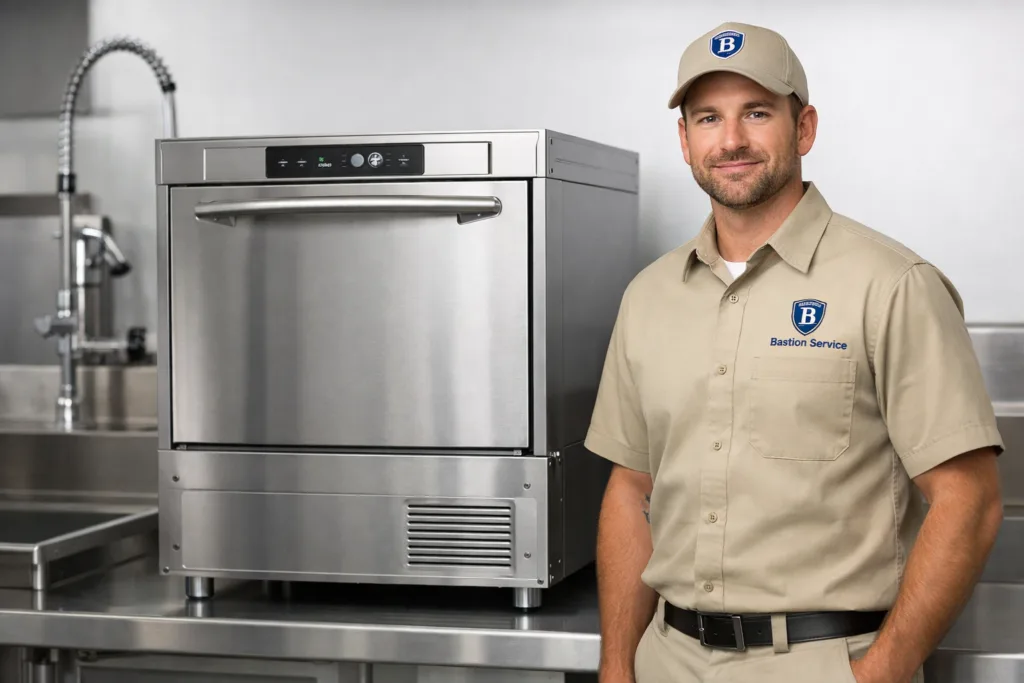




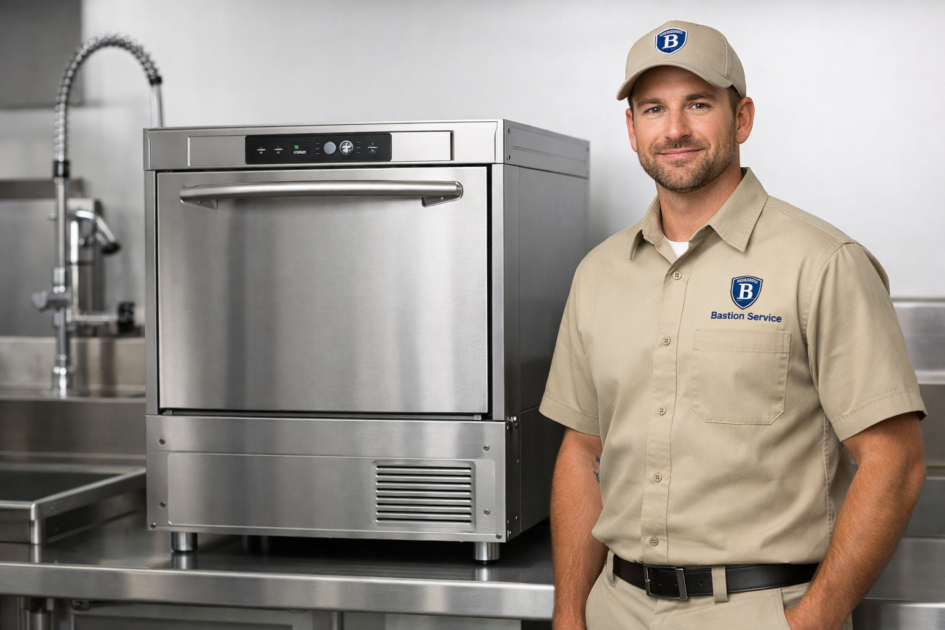
Unreliable warewashing equipment can slow the entire back-of-house workflow, especially when racks are backing up, staff are rewashing items, or a unit starts shutting down during active service. For businesses in Manhattan Beach, the most useful next step is service that identifies whether the problem is tied to wash action, fill and drain performance, rinse temperature, leaking, or an electrical or control-related fault before downtime spreads into the rest of the operation.
For specific equipment paths in Manhattan Beach, review Hobart Dishwasher Repair in Manhattan Beach and Commercial Appliance Repair in Manhattan Beach.
Bastion Service helps businesses in Manhattan Beach evaluate Hobart warewashing equipment symptoms, schedule repair around operating demands when possible, and determine whether a machine can remain in limited use or should be taken offline right away. That service-focused approach matters when sanitation, labor efficiency, and dishroom throughput are all affected by the same equipment problem.
What Hobart warewashing equipment problems do technicians troubleshoot?
Hobart warewashing equipment issues often begin with symptoms that seem minor at first, then become disruptive once output drops or staff must compensate for the machine. The most common calls involve poor cleaning results, interrupted cycles, failure to fill or drain correctly, water leaks, rinse temperature concerns, and control problems that make operation inconsistent or unpredictable.
These problems can come from one failed part, a developing wear pattern, or multiple conditions happening at once. That is why symptom-based diagnosis matters more than guessing from a single visible issue.
Poor wash performance and dirty dishware
If dishes, glasses, utensils, or pans are coming out with residue, spotting, film, or food left behind, the issue may involve spray arms, pump performance, water circulation, rinse delivery, or temperature-related faults. In some cases, the equipment is technically running a cycle but not producing the wash action needed for consistent results.
When wash performance declines, businesses often lose time to rewashing, sorting, and checking loads by hand. Service is usually warranted once staff notice repeat cleaning failures instead of an isolated rack problem.
Fill and drain problems
A machine that fills too slowly, overfills, fails to fill, drains poorly, or leaves standing water can create immediate workflow issues. Fill and drain symptoms may point to valves, pumps, sensors, drain restrictions, float-related issues, or control problems that prevent normal cycle progression.
These conditions matter beyond convenience. Poor draining can leave wash water where it should not remain, while poor filling can reduce wash effectiveness and interrupt normal operation from one load to the next.
Leaks around the unit
Water on the floor, moisture near panels, or recurring drips during or after a cycle should be evaluated quickly. Leaks may come from hoses, seals, pumps, door areas, fittings, internal water path components, or damage caused by vibration and wear over time.
Even a small leak can become more serious if the equipment continues running through long shifts. In addition to the repair itself, operators may be weighing slip hazards, water damage, and the risk of a larger failure developing during peak use.
Rinse temperature and sanitizing concerns
If the equipment is not reaching or maintaining the right rinse conditions, the problem may involve heating elements, thermostats, boosters, sensors, relays, or control components. Temperature instability can also appear as inconsistent results from load to load, slow recovery between cycles, or a machine that appears to run but does not perform as expected.
For a business that depends on steady warewashing output, temperature problems should not be treated as a minor annoyance. They affect decision-making about whether the machine can keep running normally while repair is arranged.
Control faults and shutdowns
When a unit will not start, freezes mid-cycle, displays erratic behavior, trips protection devices, or only runs after repeated resets, the fault may involve switches, boards, sensors, wiring, contactors, or other electrical components. Control issues are especially disruptive because they can mimic other failures and create intermittent symptoms that are hard to predict during service hours.
If staff are changing their routine just to keep the machine going, that is usually a sign the problem needs prompt repair attention rather than continued trial-and-error operation.
How to tell when a warewashing issue is becoming a repair decision
Not every symptom means an immediate full shutdown, but recurring problems usually indicate that the equipment is no longer operating reliably enough for normal daily demands. A repair visit makes sense when any of the following are happening:
- Loads regularly need to be washed again
- Cycle times are becoming inconsistent
- The machine stops partway through operation
- Staff notice standing water or weak draining
- Rinse performance is questionable
- Water is leaking onto the floor or around the cabinet
- The unit only works after resets or operator intervention
- Noise, vibration, or mechanical strain is getting worse
Once these symptoms begin affecting labor, service flow, or sanitation confidence, waiting usually increases the chance of longer downtime later.
Why symptom patterns matter during diagnosis
Warewashing equipment problems are often connected. For example, poor cleaning results may not be just a wash issue; they can also relate to fill performance, drain restrictions, rinse delivery, or heat. A leak may be a simple seal problem, or it may reflect internal wear elsewhere in the system. A cycle interruption may be caused by a control fault, but it can also be the equipment responding to another operating condition it cannot complete correctly.
Looking at the full symptom pattern helps narrow down whether the repair is likely to involve a single failed component, multiple worn parts, or a condition that should place the machine out of service until work is completed. That gives managers a better basis for scheduling, staffing, and short-term workflow adjustments.
When continued use may make the problem worse
Some machines can remain in limited use while waiting for repair, but others should be shut down to avoid larger damage or safety concerns. Extra caution is usually warranted when the equipment is leaking, losing temperature control, failing to drain, stopping unpredictably, or showing signs of electrical trouble.
Continued operation may also be a poor choice when employees are forced to bypass normal workflow just to keep the unit moving. Manual workarounds can hide the seriousness of the fault for a short time, but they rarely reduce the underlying repair need.
Repair planning for businesses in Manhattan Beach
For businesses in Manhattan Beach, warewashing repair decisions are usually tied to more than the machine itself. Managers often need to know how urgently the issue affects daily volume, whether the fault is likely to escalate, and whether scheduling can be coordinated around slower periods or requires immediate attention. That is especially true when dishroom capacity supports the pace of the whole kitchen or service operation.
A useful service visit should help answer practical questions: what system is failing, whether additional wear is present, whether parts are likely to be involved, and whether short-term continued use is realistic without increasing risk.
Repair versus replacement considerations
In many cases, repair is the sensible option when the problem is isolated to serviceable components and the rest of the equipment remains structurally sound. Replacement becomes a stronger consideration when breakdowns are stacking up, reliability has been declining for an extended period, or several major systems are showing age at the same time.
The key issue is not just whether the machine can be made to run again, but whether it can return to dependable operation without repeated disruption. A proper assessment helps separate a straightforward repair from a broader equipment lifecycle decision.
If your Hobart warewashing equipment is showing wash performance problems, fill or drain issues, leaking, rinse temperature trouble, or control faults, scheduling service promptly is usually the best way to protect uptime and avoid a more disruptive failure. For businesses in Manhattan Beach, the next practical step is to have the symptom pattern evaluated, confirm whether the unit should remain in service, and move forward with the repair plan that best supports daily operations.


