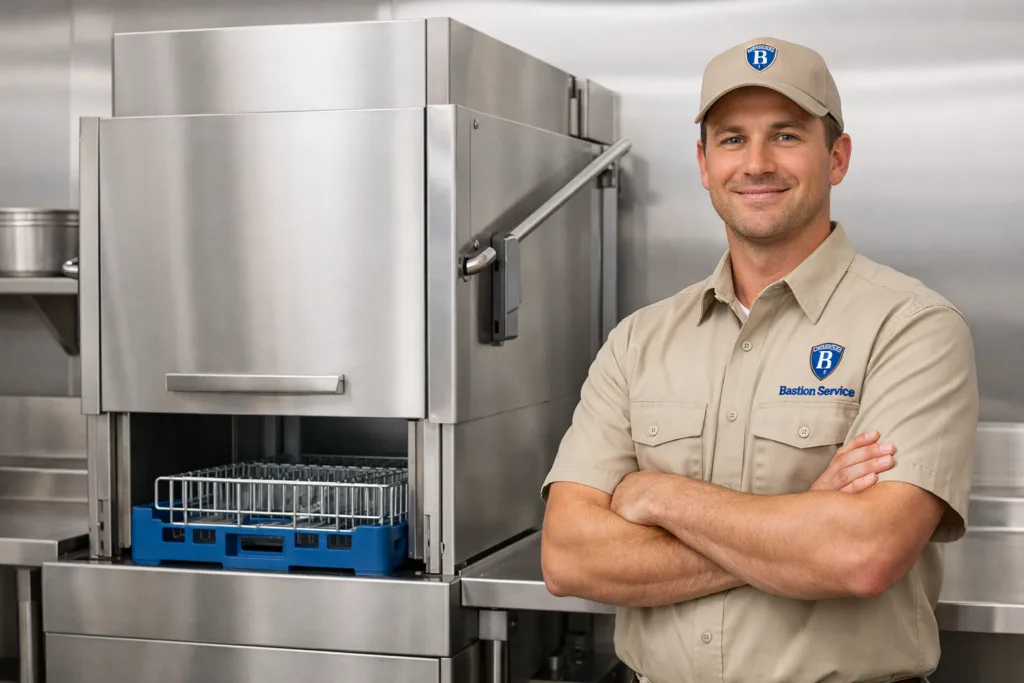





When a Hobart dishwasher starts missing wash results, holding water, leaking, or stopping mid-cycle, the service priority is to identify what is failing and how quickly the issue is likely to affect operations. For businesses in Inglewood, dishwasher problems can slow dish turnover, create extra rewash labor, and interrupt sanitation routines during the busiest parts of the day. Bastion Service handles Hobart dishwasher repair with symptom-based troubleshooting so the repair plan fits the actual machine condition instead of guesswork.
Related commercial service paths in Inglewood include Hobart Commercial Repair in Inglewood and Commercial Dishwasher Repair in Inglewood.
A useful visit should connect the complaint staff are seeing with the part of the machine that controls that function. Poor cleaning can come from wash pressure or temperature issues. Drain complaints may point to restrictions, pump trouble, or a control problem. Leaks can come from seals, hoses, overfilling, or internal wear. Because similar symptoms can have different causes, the goal is to narrow the fault quickly and determine whether the unit needs immediate repair, parts replacement, or a broader recommendation based on age and condition.
What service should evaluate on a Hobart dishwasher
On a busy unit, the most helpful diagnosis starts with the full cycle sequence rather than a single visible symptom. That usually means checking how the machine fills, washes, rinses, drains, heats, and shuts down, along with any abnormal noise, odor, or delay during operation. If staff have noticed the problem only at certain times of day or only on certain cycles, that pattern can help isolate whether the issue is mechanical, electrical, or related to water and temperature performance.
- Wash action and spray performance
- Drain speed and standing water at end of cycle
- Rinse temperature and heating response
- Door, latch, switch, or interlock behavior where applicable
- Leaks at seals, hoses, valves, pump areas, or beneath the machine
- Error patterns, interrupted cycles, or failure to start
That kind of inspection helps businesses avoid replacing parts based only on the most obvious symptom while the underlying cause remains unresolved.
Common Hobart dishwasher symptoms and what they may indicate
Poor wash results, spotting, or residue left behind
If racks come out dirty, cloudy, or inconsistent from one load to the next, the problem may involve weak wash action, blocked spray components, improper fill, low rinse temperature, heater failure, or wear inside the pump system. Sometimes the machine still runs through a full cycle but is no longer delivering the pressure or heat needed for reliable results. That is why poor cleaning should be treated as a repair issue, not just a nuisance for staff to work around.
Slow draining or water left in the machine
A Hobart dishwasher that does not drain properly can leave standing water in the tank, interrupt the next cycle, and increase cleanup time around the unit. Common causes include drain obstructions, pump problems where equipped, control faults, or parts that are no longer opening and closing as they should. If the machine regularly ends with water still inside, continued use can contribute to overflow risk and added strain on other components.
Low rinse temperature or failure to heat
When the dishwasher is not reaching expected temperature, businesses may notice poor final results, sanitation concerns, extended cycle behavior, or inconsistent operation from one run to the next. Possible causes include failed heating components, sensors, contactors, booster-related issues where applicable, or electrical supply problems. This symptom matters because a machine can appear operational while still underperforming in a way that affects daily use and compliance expectations.
Leaks, drips, or water on the floor
Water around the machine should be checked promptly. A leak may come from a worn door gasket, loose hose connection, damaged valve, cracked fitting, pump seal wear, drain issue, or an overfill condition. Even a small recurring leak can create slip hazards, damage surrounding surfaces, and lead to corrosion inside the machine if ignored over time.
Cycle stops, start failures, or intermittent operation
If the dishwasher will not start, stops before completing a cycle, or behaves unpredictably, the cause may involve switches, controls, electrical connections, interlocks, motor issues, or a failing component that drops out only under load. Intermittent faults are especially important to document. If staff can note whether the problem appears during fill, wash, rinse, drain, or heat-up, that information can make diagnosis faster and more accurate.
Why these problems should not be left to worsen
Some dishwasher issues begin as a performance complaint and then become a larger failure. A minor leak can turn into water damage. A weak wash system can lead to repeated rewashing and labor waste. A heating problem can leave the machine running without producing acceptable results. A drain issue can create overflow or force shutdown during service hours. In each case, the direct repair cost is only part of the impact; the larger issue is lost throughput and disrupted workflow.
Signs that should be scheduled sooner rather than later include grinding or unusual motor noise, repeated tripping, active leaks, failure to drain, obvious heat loss, burning smell, or cycle interruptions that are becoming more frequent. When a unit is being pushed through daily use with one of those symptoms, secondary wear often follows.
Preparing for a Hobart dishwasher repair visit
Businesses can help speed up service by gathering a few practical details before the appointment. Knowing whether the problem started suddenly or developed gradually is useful. So is noting whether the machine fails on every cycle or only under heavy use. If there are visible leaks, unusual sounds, temperature complaints, or recent interruptions to power or plumbing, that information can point the diagnosis in the right direction.
- Describe what the machine is doing and what it should be doing instead
- Note whether the issue is constant or intermittent
- Record when in the cycle the problem appears
- Identify whether wash quality, draining, heating, or leaks are involved
- Mention any recent changes in performance, noise, or cycle time
Even simple observations from staff can help separate a pump issue from a heating problem, or a drain restriction from a control fault.
Repair or replacement: how businesses usually decide
Many Hobart dishwashers remain good repair candidates when the fault is isolated and the rest of the machine is still in solid operating condition. A targeted repair often makes sense when the issue is limited to a valve, heater, seal, switch, pump component, sensor, or control-related part and the unit otherwise supports the operation well.
Replacement becomes a stronger consideration when the machine shows broad deterioration across multiple systems, ongoing corrosion, frequent repeat failures, or a pattern of downtime that keeps disrupting staff and scheduling. The right decision usually comes down to the scale of the current repair, the age and condition of the dishwasher, and how much reliability the business needs from the unit day to day.
Service-focused next steps for businesses in Inglewood
For businesses in Inglewood, the best next step is to schedule repair based on the exact symptom pattern rather than waiting for a complete shutdown. Whether the problem is poor washing, drain trouble, low temperature, leaking, or a cycle that will not finish, timely diagnosis helps protect uptime and gives operators a realistic path forward. A machine-specific inspection makes it easier to decide whether the Hobart dishwasher needs a targeted repair now or a larger equipment decision before the problem affects more of the workday.