
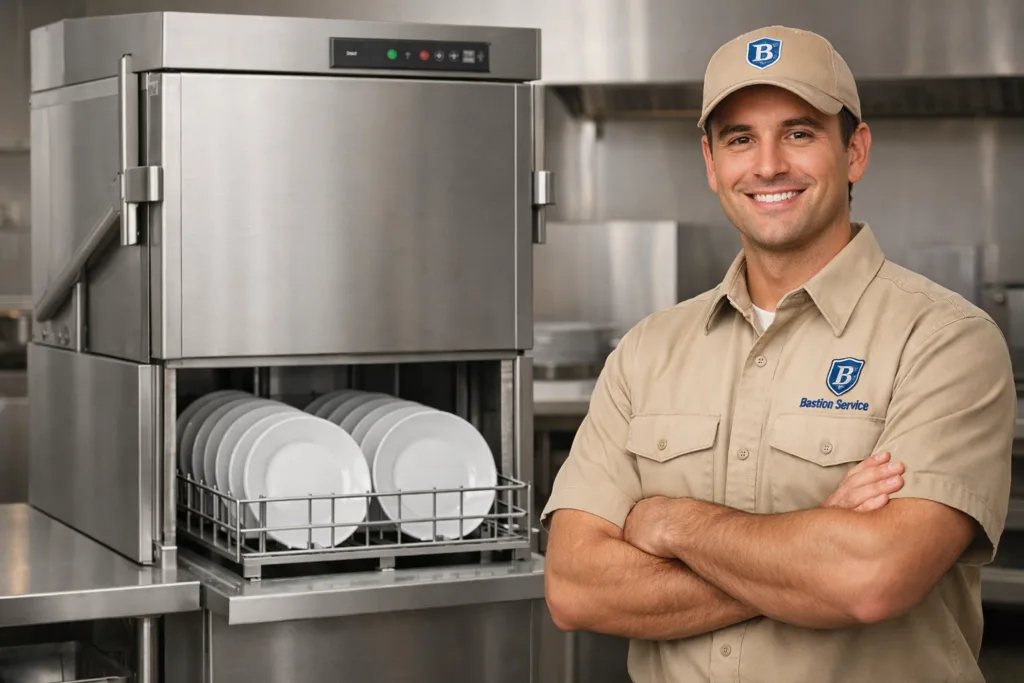




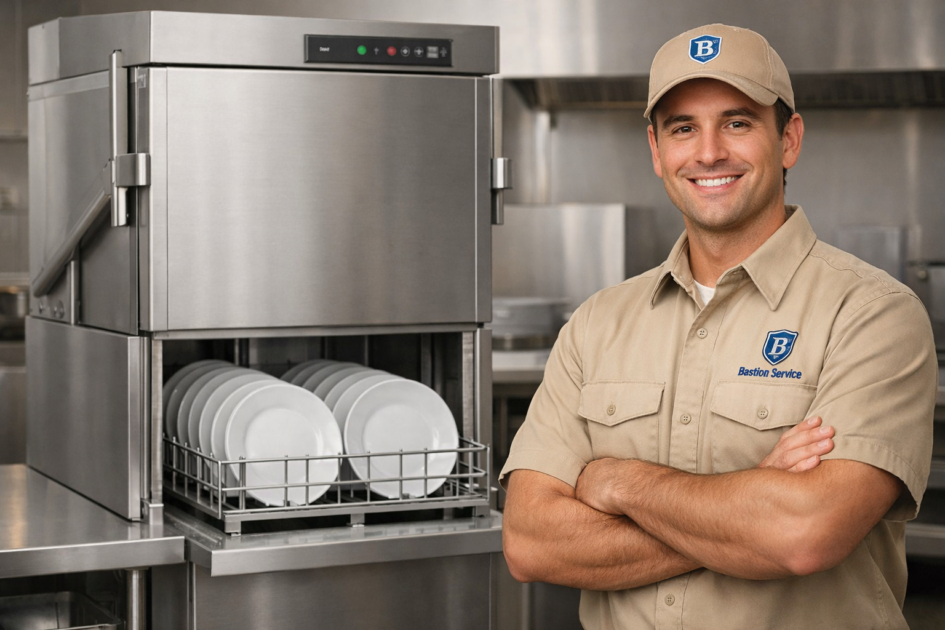
Dishwasher problems can disrupt an entire workday when racks start coming out dirty, cycles stall, or the machine will not hold proper temperature. In kitchens and other busy operations in Culver City, Hobart dishwasher issues often affect sanitation flow, labor time, and service speed long before the unit stops completely. Bastion Service works with businesses that need the problem identified, the repair scope explained, and service scheduled around the realities of daily operations.
Related commercial service paths in Culver City include Hobart Commercial Repair in Culver City and Commercial Dishwasher Repair in Culver City.
The most useful repair visit usually starts with the exact symptom pattern. A machine that seems to have one obvious issue may actually have related problems with water fill, wash pressure, drainage, heating, controls, or door safety circuits. Looking at how the dishwasher behaves from startup through rinse and drain helps determine whether the fault is isolated or part of a larger performance decline.
Common Hobart Dishwasher Symptoms and What They Often Mean
Poor wash results, residue, or repeat rewashing
If dishes, utensils, or ware come out with film, food particles, or inconsistent results, the cause may be reduced wash pressure, blocked spray arms, mineral buildup, low water level, incorrect chemical feed, or a heating problem that prevents proper wash performance. In a business setting, this often shows up first as staff running items through a second time or sorting out racks that did not clean evenly.
When poor results happen only during busy periods, the issue may point to performance under load rather than a constant failure. That distinction matters because it can help narrow the repair to a pump, fill system, booster issue, or control problem instead of guessing based on one incomplete cycle.
Standing water or slow draining
A Hobart dishwasher that leaves water in the tank or drains slowly may have a blocked drain path, debris in the pump area, a drain valve problem, or a failing drain component. Operators may also notice the cycle taking longer than normal or stopping before completion because the machine is not clearing water as expected.
Drain issues are worth addressing early. What starts as slow draining can lead to cycle faults, odor concerns, added strain on internal components, and a machine that becomes unreliable from one shift to the next.
Leaks around the door or underneath the machine
Leaks can come from worn door gaskets, loose fittings, damaged hoses, overflow conditions, cracked components, or internal seals beginning to fail. A small amount of water on the floor may not seem urgent at first, but repeated leaking can create safety concerns and lead to corrosion or damage around the installation area.
If the source is not obvious, it helps to note whether the leak happens during fill, wash, rinse, drain, or only at the end of the cycle. That timing often helps separate a door-seal problem from a pump, hose, or overflow-related issue.
Low rinse temperature or weak sanitizing performance
When the dishwasher is not reaching proper temperature, staff may notice poor drying, cycle interruptions, or inconsistent final results even when the rest of the machine seems to run. Possible causes include heating elements, thermostats, temperature sensors, relays, booster components, wiring faults, or control failures that prevent the machine from heating at the right point in the cycle.
Temperature complaints should not be dismissed as minor. In many operations, stable heat is central to acceptable washing and rinse performance, and a machine that runs cool can create both workflow and compliance concerns.
Machine will not start or stops mid-cycle
If the dishwasher does not respond when activated, powers on but does not begin washing, or stops unexpectedly during operation, the problem may involve door switches, control boards, motors, overload protection, wiring, or power supply faults. Intermittent shutdowns can be especially disruptive because the machine may seem usable one cycle and fail on the next.
It is also common for staff to describe this as a cycle failure even when the real cause is elsewhere, such as drainage not completing, temperature not being reached, or a safety circuit preventing the next stage from starting.
Why Symptoms Need to Be Matched to the Full Cycle
Many dishwasher failures look similar from the outside. Poor cleaning can be caused by low temperature, weak pump output, restricted water flow, or control issues. A stopped cycle can trace back to drainage trouble, a door-switch fault, or overheating. Replacing parts based only on the visible symptom can lead to delays, added cost, and a machine that still does not perform correctly.
For that reason, repair decisions are usually more accurate when the machine is evaluated by stage: fill, wash, rinse, drain, and shutdown. Useful details include whether the problem happens every cycle, whether it started suddenly or gradually, whether it appears more often after the machine has been running for a while, and whether unusual sounds, odors, or fault behavior appeared at the same time.
Signs the Dishwasher Should Be Serviced Soon
- Wash results have become inconsistent or noticeably worse.
- Water remains in the machine after the cycle ends.
- The unit leaks during operation or after draining.
- Cycle times are longer than normal or fail to complete.
- The dishwasher is not heating properly or rinse temperature is unstable.
- Staff are rerunning racks to compensate for weak performance.
- The machine shuts down, trips, or needs repeated restarting.
- Grinding, buzzing, or other abnormal sounds have started.
These are often signs that the problem is developing rather than isolated. Scheduling service before the dishwasher fully stops can help limit downtime and prevent a smaller fault from turning into a more disruptive repair.
When Continued Use Can Make the Problem Worse
Some machines can operate in a reduced state for a short time, but others should be taken out of use as soon as the fault becomes repeatable. Active leaking, electrical interruption, burning smell, repeated overfilling, complete drain failure, and clear temperature loss are all signs that continued use may increase damage or create operating risk.
For businesses in Culver City, the decision often comes down to whether the machine is merely underperforming or whether it is now unsafe or too unstable to rely on. If the dishwasher is causing backups in the dish area, stopping the line, or forcing staff into constant workarounds, a planned repair visit is usually easier to manage than waiting for a full outage during a busy period.
Repair or Replacement: How the Decision Usually Gets Made
Repair is often the better path when the machine is structurally sound and the problem is limited to serviceable parts such as pumps, valves, switches, sensors, seals, or heating-related components. In many cases, a targeted repair restores normal operation without the cost and disruption of replacing the unit.
Replacement becomes more likely when there is severe corrosion, repeated major failures, extensive internal wear, obsolete parts limitations, or a service history showing that breakdowns are becoming routine. The right call depends on the current failure, machine condition, prior repairs, and how critical the dishwasher is to the operation’s daily volume.
How to Prepare for a Hobart Dishwasher Service Visit
Before scheduling service, it helps to gather a few practical details:
- What the dishwasher is doing wrong: not washing, not draining, leaking, not heating, or stopping mid-cycle.
- Whether the problem happens every time or only during certain loads.
- Any fault lights, unusual sounds, or burning odors.
- When the issue first started and whether it has been getting worse.
- Any recent changes in cleaning results, cycle time, or water behavior.
This kind of information can make the visit more efficient and help set expectations for whether the repair appears straightforward or may require deeper testing.
Service-Focused Help for Businesses in Culver City
When a Hobart dishwasher begins affecting wash quality, drainage, heating, or cycle completion, the next step is not guesswork but symptom-based service that addresses the actual failure. For businesses in Culver City, that means evaluating the machine’s behavior, identifying whether continued use is reasonable, and moving quickly toward the repair needed to restore normal workflow with as little downtime as possible.


