
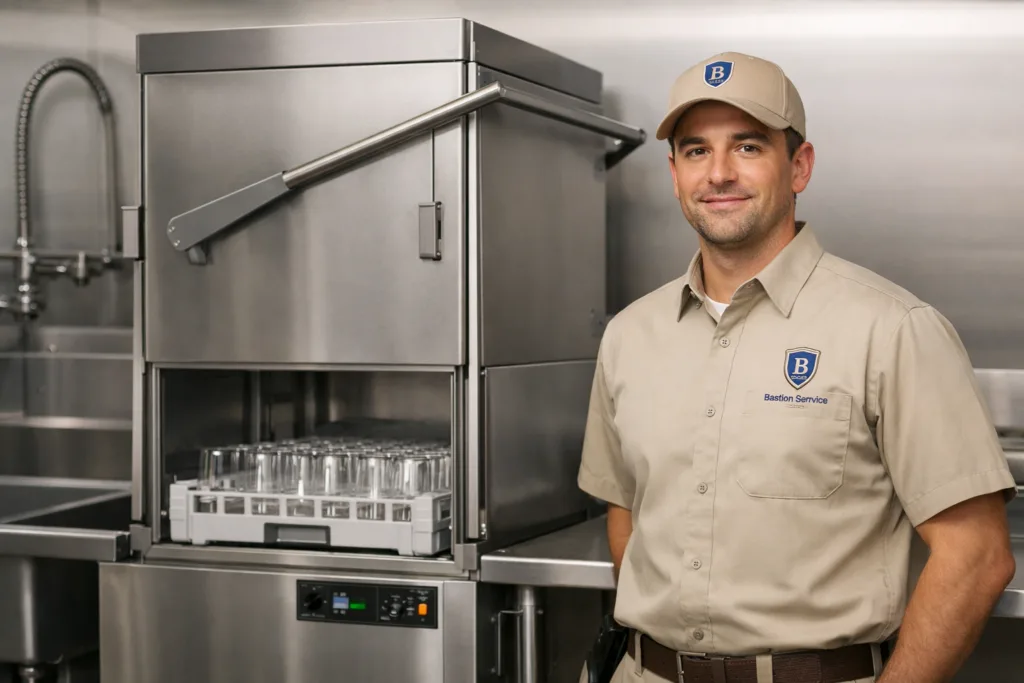




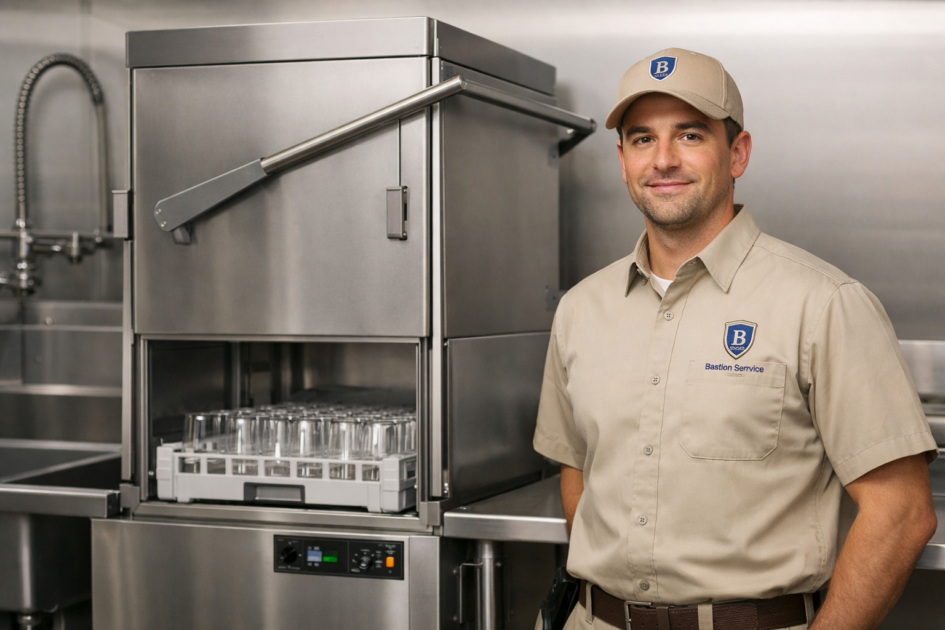
When Hobart warewashing equipment starts missing cycles, leaving residue, leaking, or falling out of temperature range, the effect shows up quickly in dish flow, labor efficiency, and day-to-day kitchen operations. For businesses in Culver City, repair service is most helpful when the symptom is matched to the actual failure point so scheduling, parts approval, and downtime planning are based on what the machine is really doing. Bastion Service works with local operators to inspect the equipment, identify the fault pattern, and move the repair process forward without unnecessary guesswork.
For specific equipment paths in Culver City, review Hobart Dishwasher Repair in Culver City and Commercial Appliance Repair in Culver City.
How warewashing problems affect daily operations
Dishwasher trouble is rarely limited to one bad cycle. A unit that underfills, drains slowly, overheats, or stops mid-cycle can create backup at the dish station, pull employees away from other tasks, and make it harder to keep pace during busy service periods. Even when the machine still runs, reduced wash performance or inconsistent rinse conditions often mean the equipment is no longer operating the way the kitchen needs it to.
That is why service decisions usually need to account for more than whether the unit powers on. Operators often need to know:
- whether the machine can continue operating safely until repair,
- if the problem is likely mechanical, electrical, or water related,
- what symptoms suggest a larger shutdown risk, and
- how soon repair should be scheduled to avoid a bigger interruption.
Common Hobart warewashing equipment symptoms
Poor wash performance and dirty ware after cycles
If dishes, utensils, racks, or cookware come out with food soil, film, cloudiness, or spotting, the issue may involve weak wash action, spray arm blockage, pump wear, circulation problems, water supply issues, scale buildup, or chemical delivery faults. This symptom often gets blamed on one simple cause, but weak cleaning results can come from several systems working poorly together.
Service is usually the right next step when wash quality drops across multiple loads, when staff have to rewash items repeatedly, or when the results vary from cycle to cycle without a clear pattern.
Fill problems, low water level, or failure to start a cycle
A dishwasher that does not fill correctly may not begin the wash sequence at all, or it may run with weak cleaning because the water level is too low. Possible causes can include inlet valve issues, float or level control problems, supply restrictions, sensor faults, or control board failures. In some cases, the machine appears to start normally but never reaches the conditions needed for proper wash action.
If employees are noticing delayed starts, unusual pauses before filling, or repeated attempts to restart the machine, that usually points to a fault that needs inspection rather than continued resets.
Drain issues and standing water in the machine
Water left behind after a cycle, slow draining, or repeated drain errors can indicate a blocked drain path, pump trouble, hose restrictions, or a control problem preventing the drain sequence from completing. Standing water also tends to affect the next load, since wash conditions can become inconsistent and the machine may not reset cleanly for continued use.
Drain problems should be addressed promptly when they lead to overflow risk, recurring interruptions, or manual workarounds that staff have to repeat throughout the day.
Leaks under or around the unit
Visible water on the floor can come from worn door gaskets, damaged seals, cracked hoses, loose fittings, pump-related leaks, or overflow conditions tied to filling and draining faults. Some leaks are small at first and only appear during certain portions of the cycle, which can make them easy to overlook until the problem grows.
Repair becomes more urgent when leaking water is spreading beyond the machine footprint, returning after cleanup, or happening together with fill, drain, or wash performance complaints.
Rinse temperature and sanitation concerns
If the machine is not reaching expected rinse conditions, cycles seem cooler than normal, or sanitation performance is in doubt, the cause may involve heating components, thermostats, sensors, relays, booster-related issues, or control faults. Temperature complaints can also overlap with circulation and fill problems, so the visible symptom does not always identify the failed part by itself.
This is one of the most important issues to diagnose correctly because temperature-related performance problems affect both process consistency and confidence in daily operation.
Control faults, shutdowns, and intermittent operation
A Hobart unit that stops mid-cycle, displays erratic behavior, trips protective devices, fails to respond to inputs, or runs only intermittently may have a control issue, wiring problem, switch failure, or another electrical fault affecting operation. Intermittent symptoms are especially disruptive because the machine may appear normal for part of the day and then fail again under load.
When the equipment becomes unpredictable, repair planning should focus on stopping repeat downtime rather than waiting for a complete no-start condition.
What these symptoms can indicate during diagnosis
One visible problem does not always equal one obvious repair. A no-wash complaint may trace back to low fill, a circulation failure, a blocked spray system, or a control issue. A temperature complaint may actually begin with a sensor problem or a fault that prevents the machine from completing the proper cycle sequence. A leak may be caused by a simple seal issue, but it can also be tied to overfill or drain failure.
That is why a service visit should separate symptom from root cause before repair approval. For a business operator, that helps answer the practical questions: what is failing, what work is required, and whether the unit should remain in service until the repair is completed.
When it makes sense to schedule repair right away
Prompt scheduling is usually the better choice when warewashing equipment shows any of the following:
- the machine will not start or complete a full cycle,
- water remains in the tank after operation,
- wash results are inconsistent enough to slow production,
- the unit is leaking onto the floor,
- rinse temperature is not holding where expected,
- controls are unresponsive or faulting repeatedly,
- staff are relying on resets or manual draining to keep working.
Waiting can turn a manageable repair into a larger disruption, especially when pumps, heating components, sensors, and controls are continuing to run under abnormal conditions.
Repair planning for restaurants and other business kitchens
For Los Angeles area operators managing busy food-service workflows in Culver City, the key issue is usually not just the part that failed. It is how the failure affects service pace, staffing, and the ability to keep dish turnover moving. A well-planned repair approach considers the machine’s symptom history, whether the problem is constant or intermittent, and how the timing of service fits daily volume.
That can be especially important when the dishwasher still operates part of the time. Partial operation often creates the temptation to delay service, but recurring low performance, weak rinsing, and cycle interruptions usually mean the equipment is already moving toward a larger stoppage.
Repair or replacement considerations
Replacement may be worth discussing when the machine has a long pattern of major failures, when key components have been repaired repeatedly, or when the overall condition no longer supports reliable daily use. In many cases, though, targeted repair is still the better option if the core equipment remains sound and the present issue is limited to serviceable parts.
The best decision usually comes after inspection of the current fault, the machine’s condition, and the likely impact on ongoing operations rather than from the symptom alone.
Scheduling Hobart warewashing equipment repair in Culver City
If your Hobart warewashing equipment is showing wash performance problems, fill and drain issues, leaks, rinse temperature concerns, sanitation complaints, or control faults, the next step is to schedule service based on the symptoms the machine is showing now. That makes it easier to decide whether the unit should stay in use, what the repair path is likely to involve, and how to limit downtime for your Culver City operation.


