
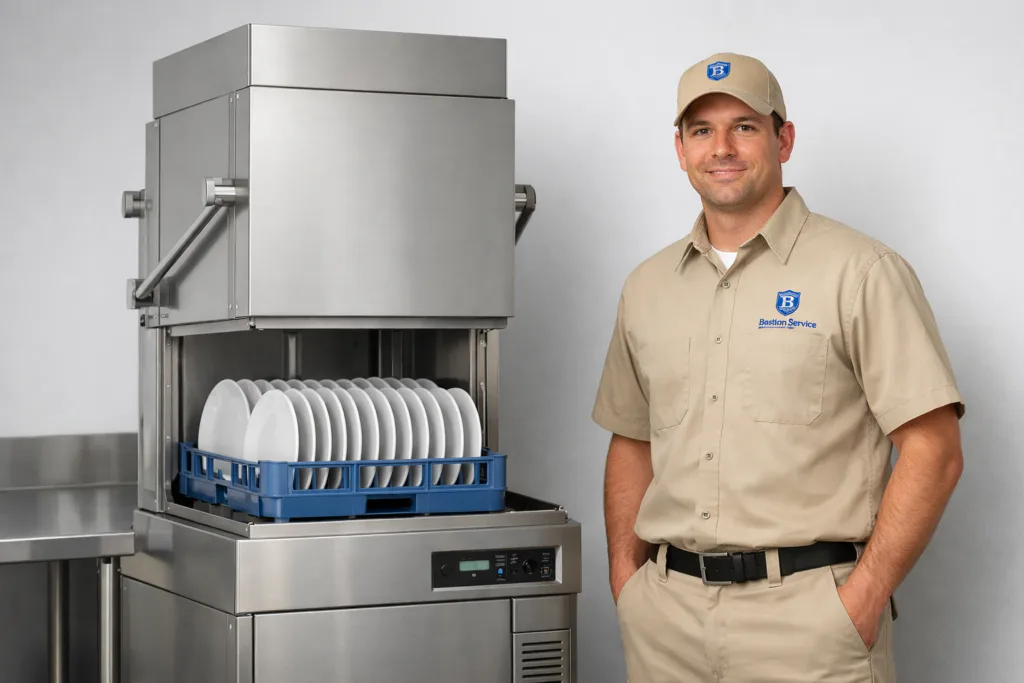




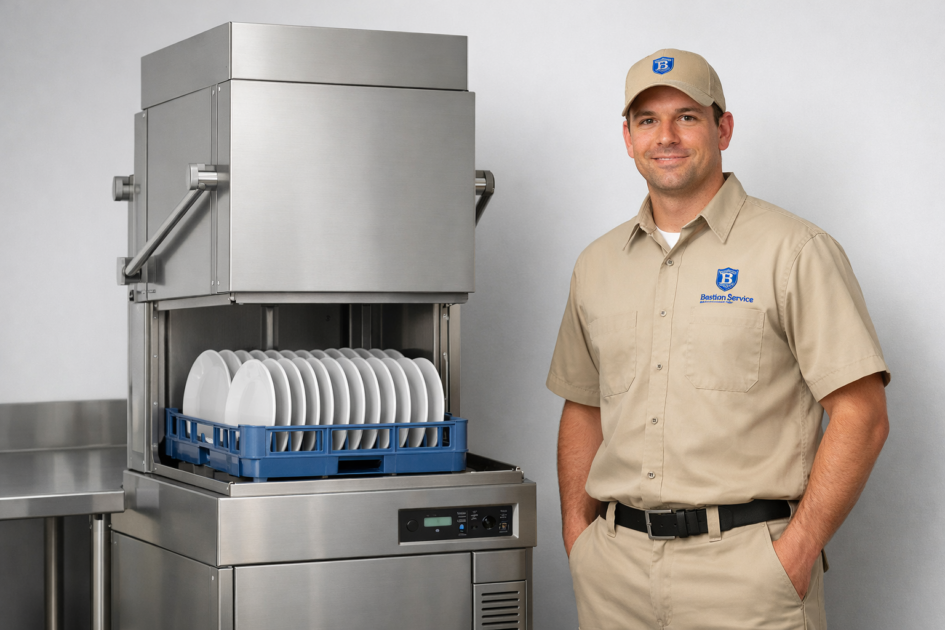
Warewashing problems tend to escalate quickly once cycles become unreliable. In businesses in Palos Verdes Estates, a Hobart machine that is not washing, filling, draining, or heating correctly can slow service, create rewash volume, and put daily sanitation routines under pressure. Bastion Service schedules repair based on the actual symptom pattern so the equipment can be inspected, the likely source of failure can be identified, and managers can decide whether to keep the unit in limited use or take it offline pending repair.
For specific equipment paths in Palos Verdes Estates, review Hobart Dishwasher Repair in Palos Verdes Estates and Commercial Appliance Repair in Palos Verdes Estates.
That service approach matters because similar complaints often come from different causes. A dishwasher that leaves residue may have wash-pressure trouble, a heating issue, blocked spray components, or a control fault. A unit that stops mid-cycle may have a latch problem, a drain issue, or an electrical interruption. The goal of a service visit is not just to confirm that the machine is failing, but to connect the symptom to the most practical repair path and schedule.
What Hobart warewashing equipment problems do you troubleshoot?
Most repair calls center on operating problems that interfere with normal dishroom flow and consistent results. Typical issues include:
- Poor wash performance or residue left on ware
- Fill problems, slow fill, or failure to bring in water
- Drain faults, standing water, or incomplete emptying
- Water leaks from the door area, under the machine, or around fittings
- Low rinse temperature or inconsistent heat during the cycle
- Sanitation complaints tied to rinse performance or interrupted cycles
- Machine shutdowns, error conditions, or controls that do not respond normally
- Unusual noise, pump strain, or cycle interruptions during operation
These symptoms can appear one at a time or together. When they overlap, repair decisions should be based on what system is actually failing rather than on surface symptoms alone.
Wash performance problems and why they matter
If a Hobart dishwasher is not cleaning properly, the immediate effect is usually visible on glasses, plates, utensils, pans, or racks that need to be sent through again. In a busy operation, that creates labor drag and slows the return of clean ware to the line. It can also hide a larger issue inside the machine, especially when performance changes suddenly instead of declining gradually.
Residue, spotting, or incomplete cleaning
When wash results become inconsistent, the cause may involve restricted spray action, reduced pump performance, temperature loss, filter blockage, rinse problems, or cycle timing faults. Staff may first notice that some loads come out acceptable while others do not. That kind of inconsistency often points to a condition that is progressing rather than a one-time operating error.
Service is especially useful when the machine appears to run a full cycle but the result is still poor. That usually means the issue is not simply whether the unit turns on, but whether the machine is delivering the wash pressure, rinse action, and temperature needed for normal operation.
Weak wash action or longer-than-normal cycle recovery
Operators may also notice that racks are taking longer to process, the machine sounds different during the wash portion of the cycle, or results get worse during heavier use periods. Those clues can help narrow the repair path. A machine that struggles most during peak demand may be dealing with a failing component that still works intermittently but cannot keep up consistently.
Fill and drain issues that disrupt the entire workflow
Water movement problems are some of the most disruptive warewashing complaints because they affect whether the cycle can start, complete, and reset for the next load. A machine that does not fill correctly may not wash at all, while a machine that will not drain can leave standing water and force staff to stop using it.
Slow fill, no fill, or inconsistent water intake
If the dishwasher takes too long to fill or fails to fill at all, the problem may involve valves, sensing components, controls, or related water-entry parts. In some cases the machine starts but does not progress normally. In others, the unit appears ready but cannot move into a usable cycle because water levels are not being reached as expected.
Repeated restarts are usually a sign that the issue should be inspected rather than worked around. Temporary operation under those conditions can turn a manageable repair into a longer outage if other components are stressed in the process.
Standing water, incomplete drain, or backup after the cycle
When water remains in the machine after use, businesses often face a choice between pushing through one more cycle or stopping service to avoid a larger problem. Standing water can point to a blockage, pump trouble, drain wear, or a control-related failure that prevents proper cycle completion. If the unit drains only sometimes, that intermittent pattern is still a repair issue, not a sign that the machine is healthy.
Drain faults should be addressed early because they can affect sanitation, create cleanup around the dish area, and increase the chance of an unexpected shutdown during a busy period.
Leaks, heat problems, and sanitation-related complaints
Some warewashing problems are obvious because water is on the floor or the machine shuts itself down. Others show up through temperature inconsistency or reports that the machine is no longer performing as expected. Both types deserve prompt attention because they affect safe, repeatable operation.
Water leaks around the machine
Leaks may appear at the door, underneath the cabinet, or around hoses and connected components. Even a small recurring leak can become a larger maintenance issue when it spreads to surrounding flooring or creates slip risk in the work area. If leaking is paired with unusual sound, reduced wash performance, or fill and drain trouble, the problem may involve more than one failing part.
A repair visit helps determine whether the leak is isolated or part of a broader mechanical issue that should be corrected before the machine returns to full use.
Low rinse temperature or inconsistent heat
Temperature problems often show up as poor finishing results, questionable cycle consistency, or a machine that seems to run without reaching proper operating conditions. On warewashing equipment, heat is tied closely to expected rinse performance and day-to-day sanitation routines. A heating fault can involve elements, sensors, limits, wiring, or control issues, and those failures are not always obvious from the display alone.
If staff have begun monitoring the machine closely, waiting longer between racks, or questioning whether the unit is reaching proper rinse conditions, it is a good time to schedule service instead of relying on repeated manual checks.
Control faults and intermittent shutdowns
Not every repair call starts with a complete failure. Many Hobart units begin by showing intermittent symptoms: a cycle that pauses unexpectedly, controls that do not respond normally, a machine that starts only after several tries, or a unit that powers up but does not complete the sequence it should. These control-related complaints can be difficult to judge from the outside because the dishwasher may still work part of the time.
Intermittent operation usually means the equipment is at risk of becoming less predictable, not more reliable. In Palos Verdes Estates, businesses often schedule service at this stage to avoid losing the machine entirely during a high-demand shift. Inspecting the issue early can also help separate a localized repair from a broader control-system problem.
When to schedule repair instead of waiting
It makes sense to book service when staff are compensating for the machine rather than simply using it. Warning signs include repeated restarts, extra rinse or wash attempts, visible water left behind, ongoing leaks, irregular cycle timing, or uncertainty about temperature performance. Even if the dishwasher has not fully stopped, those signs usually indicate that normal operation is already compromised.
Scheduling earlier can reduce downtime by identifying whether the machine needs immediate repair, monitored short-term use, or removal from service until parts and labor are in place. That kind of planning is often critical for kitchens and food-service businesses trying to protect workflow while avoiding a full breakdown.
Repair or replacement: how businesses usually decide
Replacement is usually considered when the machine has multiple significant failures, repeated downtime across different systems, or a repair scope that no longer fits the needs of the operation. In many cases, though, the better option is still a targeted repair that restores stable operation without changing out the equipment.
The deciding factors are usually the condition of the unit, the severity of the current fault, the urgency of getting back online, and whether the repair addresses the root cause rather than only the latest symptom. A proper inspection helps management weigh those factors with real findings from the machine.
What a service visit should help you determine
A well-structured repair visit should answer the practical questions that matter most to a business: what is failing, how the symptom affects use right now, whether continued operation could cause additional damage, and what the next scheduling step should be. For warewashing equipment, that clarity helps managers plan labor, sanitation workflow, and timing for the repair itself.
If your Hobart warewashing equipment in Palos Verdes Estates is leaking, failing to drain, losing temperature, stopping mid-cycle, or no longer delivering reliable wash results, the next step is to schedule service so the problem can be diagnosed and the repair can be planned around the impact on daily operations.


