
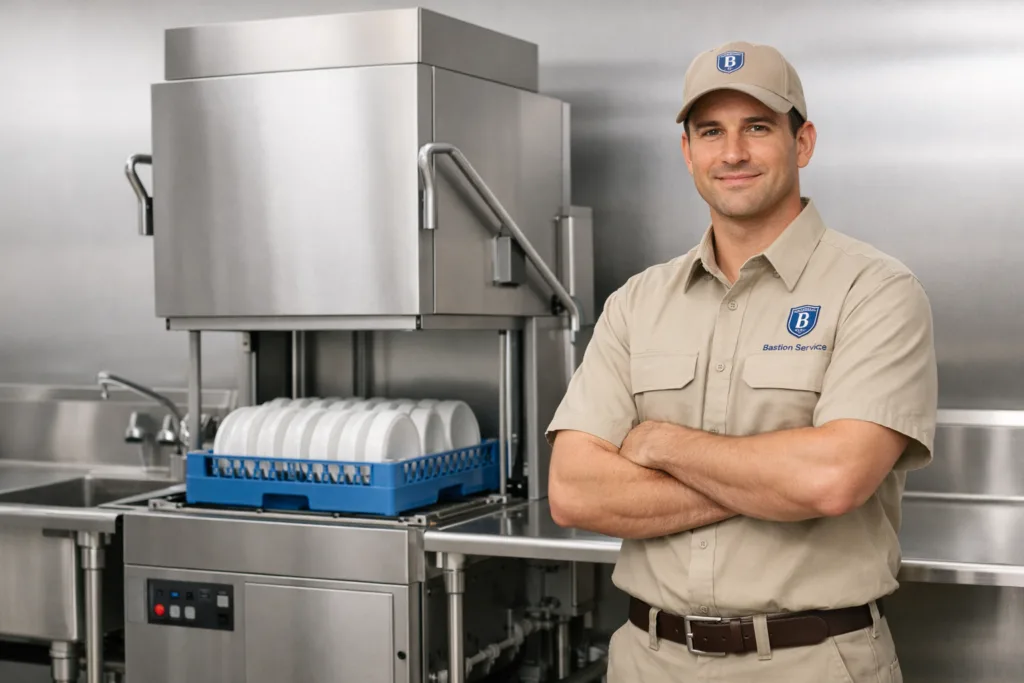




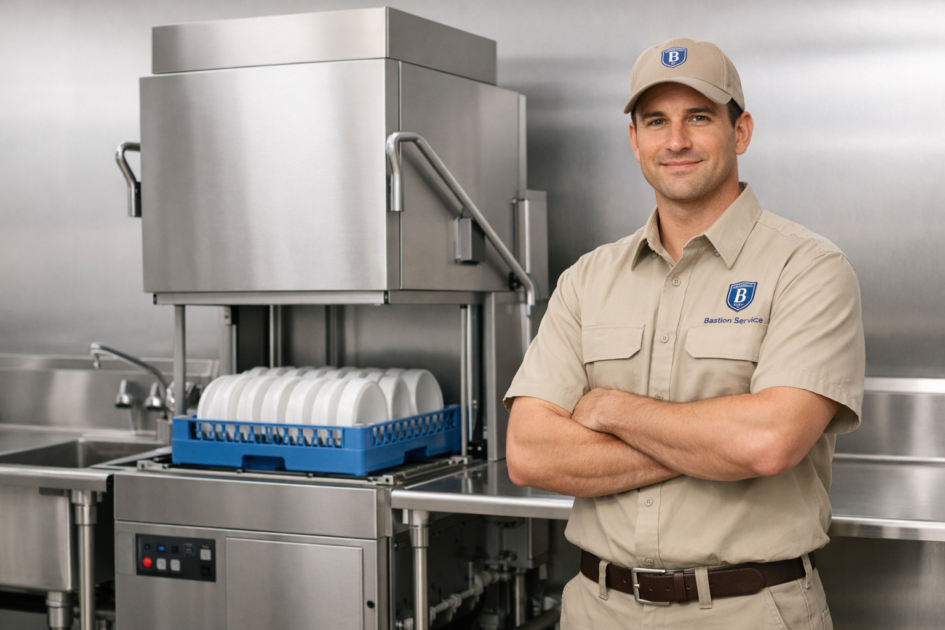
When Hobart warewashing equipment starts disrupting dish flow, rewash volume, or sanitation routines, the right response is a service visit focused on the symptom pattern, operating risk, and repair timing. For businesses in El Segundo, that means looking beyond a single complaint and determining whether the unit can keep running for a short window, needs prompt repair, or should be taken out of service to avoid a larger interruption.
For specific equipment paths in El Segundo, review Hobart Dishwasher Repair in El Segundo and Commercial Appliance Repair in El Segundo.
Bastion Service works with local operators who need straightforward repair scheduling, informed diagnosis, and realistic recommendations for Hobart dishwasher issues affecting daily kitchen output. The goal is to restore dependable operation while helping managers plan around staffing, meal periods, and cleanup demands.
Warewashing Problems That Usually Need Repair Attention
Hobart warewashing equipment often shows warning signs before a full shutdown. A machine may still power on and complete part of a cycle while performance continues to slip. In a busy operation, that can be just as disruptive as a complete failure because staff lose time to repeat washes, manual intervention, and inconsistent rack turnover.
Poor Wash Results and Repeat Racks
If dishes, utensils, or cookware come out with residue, spotting, film, or inconsistent cleanliness, the issue may involve wash arm blockage, pump problems, weak water circulation, scale buildup, temperature loss, or a control-related fault. Poor cleaning performance is not just an appearance issue. It slows service, increases labor, and creates uncertainty about whether the machine is doing its job consistently enough for normal operations.
When these symptoms keep returning, repair is usually more productive than asking staff to compensate with lighter loads, extra rinsing, or repeated cycles.
Fill Problems, Low Water, or No Start Condition
A Hobart dishwasher that does not fill correctly may pause before the cycle begins, run with low water, or fail to advance as expected. Possible causes can include inlet valve trouble, float or level sensing issues, supply restrictions, electrical faults, or control problems. Because proper fill levels affect wash pressure, timing, and heat performance, even a machine that still runs can produce poor results if water intake is not right.
Drain Issues and Standing Water
Water remaining in the unit after a cycle often points to a drain pump problem, obstruction, valve issue, hose restriction, or control fault. Standing water can create cleanup problems and delay the next load, but it can also be a sign that the machine is straining through a condition that will worsen with continued use. If staff are waiting on the machine, restarting it, or working around incomplete draining, service should move up in priority.
Leaks Around the Machine
Leaks may come from door gaskets, pump seals, hoses, fittings, internal components, or drain-related failures. Even small leaks matter in a work environment because they can affect flooring, create slip hazards, and signal wear that spreads to other parts of the unit. A leak that appears only during certain stages of the cycle can still indicate a repair need that should not be postponed.
Rinse Temperature and Heat Performance Problems
If final rinse temperature is inconsistent, cycles seem cooler than normal, or the machine struggles to maintain proper heat, likely causes may include heating elements, thermostats, limit components, sensors, relays, or board issues. Temperature-related symptoms can affect wash consistency and normal sanitation workflow. They also tend to create confusion because operators may first notice the result rather than the actual source of the fault.
Control Faults, Cycle Interruptions, and Shutdowns
Buttons that do not respond, cycles that stop mid-process, recurring fault indications, or machines that reset unexpectedly often point to electrical or control-related problems. These issues can be intermittent at first, which makes them easy to underestimate. In practice, intermittent faults often become some of the most disruptive because the machine cannot be trusted during peak demand.
How Symptom Patterns Help Guide Repair Decisions
One visible problem does not always mean one failed part. A dishwasher that is not cleaning well may also have a fill issue or weak heating performance. A leak may be tied to a broader pump or circulation problem. A no-start complaint may trace back to water level sensing, safety switches, or control failure rather than the power supply alone.
That is why repair planning should be based on the full symptom pattern rather than a guess about one component. For El Segundo businesses, this matters when downtime has to be managed around prep schedules, dish volume, and back-of-house workflow. A technician can identify whether the problem is isolated, whether related parts should be addressed at the same time, and whether immediate repair is the better choice than waiting for a full outage.
Signs the Dishwasher Should Not Be Pushed Through Another Shift
Some conditions create more risk if the equipment keeps running. It is usually smart to stop use and arrange repair service promptly when you notice:
- active leaking that spreads beyond the unit
- burning smells or electrical irregularities
- loud grinding, harsh vibration, or sudden mechanical noise
- repeated tripping of protection devices
- failure to drain combined with overflow or backup concerns
- consistent rinse temperature problems affecting normal sanitation procedures
- faults that require repeated resets just to finish cycles
Continuing to operate through these symptoms can increase repair scope, create safety concerns, or turn an intermittent issue into a complete shutdown during a busier service period.
When Service Should Be Scheduled Even If the Unit Still Runs
Not every repair need looks urgent at first. Many businesses call only after the machine stops completely, but earlier scheduling is often the better operational decision. If staff are already adjusting loads, rerunning racks, mopping around a leak, or watching the machine to make sure it finishes a cycle, the equipment is already costing time and consistency.
Service should be scheduled when the unit shows recurring performance changes, not just total failure. That includes slower cycle recovery, inconsistent wash results, irregular fills, occasional drain delays, temperature drift, or controls that respond unpredictably.
Repair Versus Replacement Considerations
Many Hobart warewashing issues are repairable, including problems involving seals, pumps, valves, switches, heaters, sensors, and controls. The better question is usually not whether a part can be replaced, but whether the full repair path makes sense for the machine’s overall condition and the business’s operating needs.
Replacement becomes a more serious discussion when the equipment has repeated failures across multiple systems, downtime is becoming frequent, or repair costs are stacking up without restoring confidence in daily use. A proper assessment helps owners and managers compare immediate repair with longer-term planning instead of making the decision based only on the latest visible symptom.
What El Segundo Operators Should Have Ready Before a Service Visit
A few details can help speed up diagnosis and reduce delays in authorizing work. It helps to note:
- the exact symptom staff are seeing most often
- whether the issue is constant or intermittent
- what part of the cycle is affected
- whether the unit leaks, overheats, stops, or leaves water behind
- any recent change in cleaning quality or cycle timing
- whether the machine can still be used in a limited way
This information helps connect the complaint to likely system faults and supports faster scheduling decisions when the dishwasher is affecting daily operations.
Service Support Focused on Uptime and Kitchen Flow
For businesses in El Segundo, Hobart warewashing equipment repair should support more than the technical fix alone. It should help answer whether the machine can remain in use, how urgent the repair is, and what next step best protects service flow. If your Hobart dishwasher is leaking, not draining, washing poorly, running at the wrong temperature, or stopping mid-cycle, scheduling repair is the practical way to limit added downtime and move toward a reliable operating plan.


