
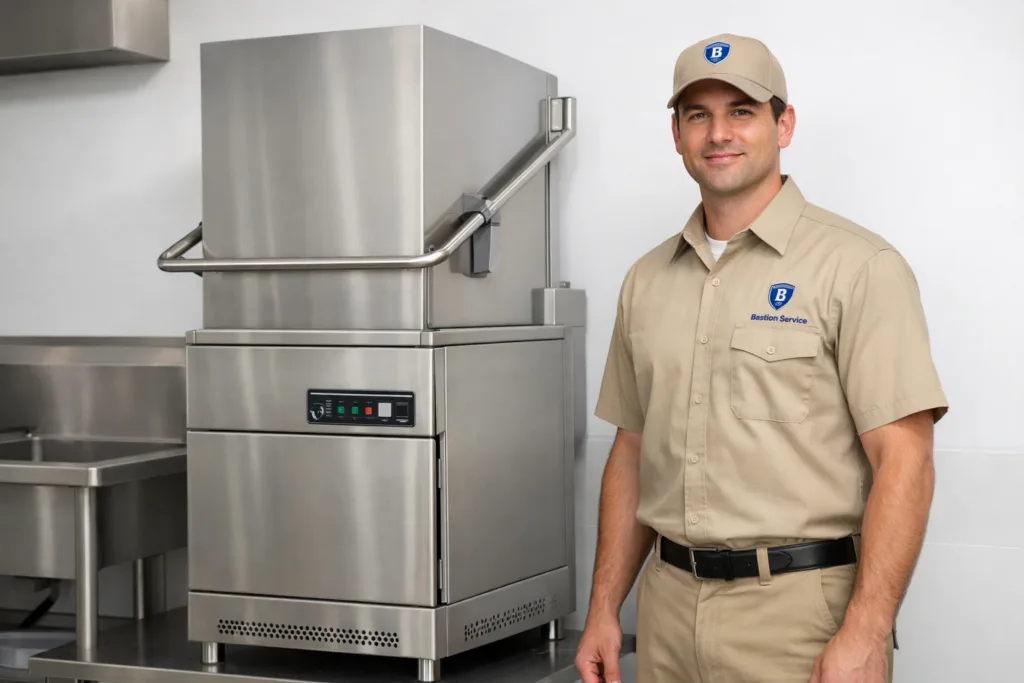




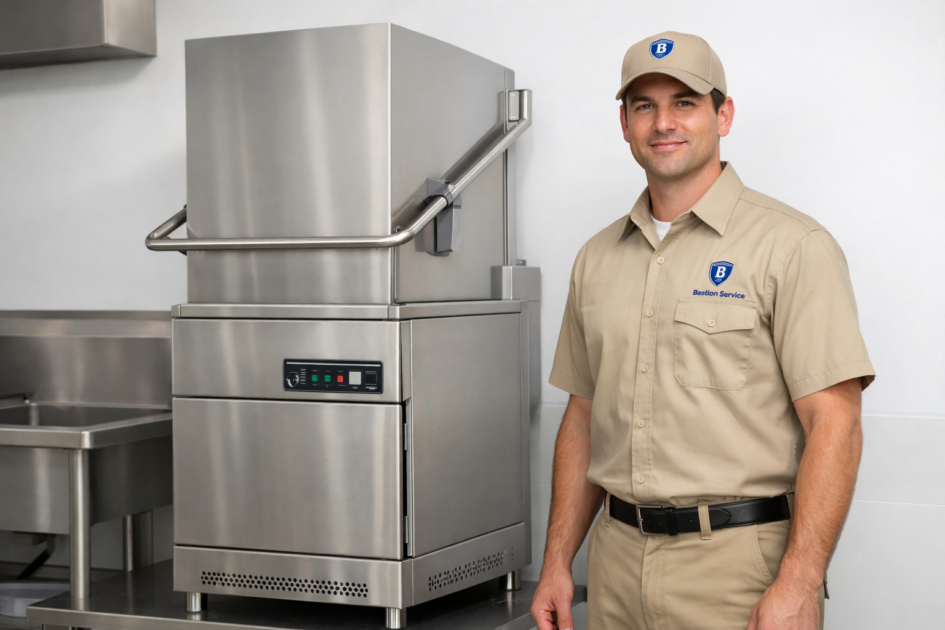
When Hobart warewashing equipment begins missing wash results, stopping mid-cycle, or leaving water behind, the problem can quickly affect dish flow, staffing, sanitation routines, and service speed. For restaurants and other food-service operations in Century City, repair decisions usually need to happen fast, but the best next step is still a symptom-based inspection that identifies whether the fault is tied to water fill, draining, rinse temperature, pumps, sensors, controls, or wear in key moving parts.
For specific equipment paths in Century City, review Hobart Dishwasher Repair in Century City and Commercial Appliance Repair in Century City.
Bastion Service works with local businesses that rely on Hobart warewashing equipment every day. The goal is not just to respond to a shutdown, but to determine what is actually failing, what risks come with continued operation, and how to schedule repair work in a way that limits disruption to kitchen operations.
What Hobart warewashing equipment problems do you troubleshoot?
Most service calls come from a smaller set of operating complaints that show up before a full no-run condition. Even when symptoms seem straightforward, several different failures can produce the same result, which is why testing matters before major parts decisions are made.
Poor wash performance and dirty wares
If racks come out with food soil, residue, film, or inconsistent cleaning, the issue may involve blocked spray components, weak wash action, detergent delivery problems, reduced water pressure, heating trouble, or cycle-control faults. In daily operations, poor cleaning does more than create rewash volume. It slows turnaround, increases labor, and can force staff to work around equipment instead of relying on it.
Wash-performance complaints are especially important when they appear only during heavier demand. That pattern can point to a developing component problem rather than a one-time loading or supply issue.
Fill problems, low water, or no water entering the machine
When a machine does not fill correctly, cycle timing and cleaning results usually suffer right away. Common causes include inlet valve issues, float problems, sensor faults, control failures, or water supply restrictions affecting operation. Low fill conditions can also create noisy pump operation, weak wash action, and inconsistent cycle results from load to load.
If the machine is filling too slowly, overfilling, or failing to recognize water level properly, service should be scheduled before the symptom leads to additional wear or repeated shutdowns.
Drain issues and standing water
A Hobart dishwasher that will not drain fully or leaves water in the tank often points to blockage, pump trouble, drain-actuation failure, or a control-related problem that prevents the machine from completing the cycle sequence properly. Standing water can affect sanitation routines, delay the next load, and create confusion for staff trying to determine whether the machine is safe to keep using.
Repeated drain complaints are rarely something to ignore. Even if the unit drains eventually, slow or incomplete draining usually means a component or flow problem is developing.
Leaks under or around the machine
Water on the floor may come from hoses, fittings, seals, pump components, door-area leakage, internal overflow, or installation-related movement that has started affecting connections. In a working kitchen, even a small leak matters. It can create slip risk, damage nearby surfaces, and signal wear that becomes more expensive once additional parts are exposed to moisture.
Leak diagnosis should focus on where the water is starting, when it appears during the cycle, and whether the source is pressure-related, drain-related, or tied to a failed seal or connection.
Rinse temperature and heating concerns
When warewashing equipment is not reaching proper rinse or wash temperature, the result can be poor cleaning, repeat cycles, sanitation complaints, and uncertainty about whether the unit is operating as intended. Heating problems may involve boosters, elements, thermostats, sensors, relays, contactors, wiring faults, or control-board issues.
Temperature-related symptoms can also appear inconsistent at first. A machine may run acceptably for one period and then fall off during busy service, which is often a sign that a component is weakening rather than failing all at once.
Sanitation complaints and inconsistent final results
Sometimes the machine seems to run, but the final outcome is still not acceptable. Complaints about spotty results, lingering soil, questionable final rinse performance, or repeated operator concerns often mean the problem is broader than a single dirty load. These symptoms may connect to chemical delivery, water temperatures, pressure, cycle timing, or internal component wear affecting consistency.
When sanitation is in question, it is important to treat the symptom as an equipment service issue rather than just an operator inconvenience.
Control faults, stalled cycles, and no-start conditions
If the unit will not start, stops mid-cycle, flashes errors, fails to advance, or behaves unpredictably, the source may be electrical supply issues, door-switch faults, timer or board failures, sensor problems, damaged wiring, or component communication faults within the control system. Intermittent behavior is often one of the hardest symptom groups for staff to work around because the machine may appear usable until it drops out during a busy period.
Early service is helpful here because control faults often progress from occasional interruption to full shutdown.
How symptom patterns help guide repair decisions
Warewashing equipment problems often overlap. A machine that appears to have a drain problem may actually be failing to complete the cycle because of controls. A wash-performance complaint may be caused by fill level or heating issues. A leak may turn out to be related to overflow or internal wear rather than a simple loose connection. Looking at the full symptom pattern helps narrow the repair scope and prevents replacing parts based on guesswork.
It also helps operators decide whether the equipment can remain in limited use until service is completed or whether taking it out of operation is the safer choice. That distinction matters in Century City kitchens where downtime affects dish availability, labor allocation, and front-of-house pacing.
Signs the machine should be serviced sooner rather than later
- Loads are coming out dirty more than once per shift
- The dishwasher is holding water after cycles
- Rinse temperature is inconsistent or lower than expected
- Water is leaking onto the floor
- Cycle times are longer than normal
- The unit stops, resets, or fails to start reliably
- Staff are rewashing items to compensate for poor results
- Noise, vibration, or humming has recently changed
Any one of these symptoms can indicate an isolated repair. Several appearing together usually suggest a machine that needs prompt attention before service flow is affected more severely.
Repair versus replacement considerations
Not every Hobart warewashing problem points to replacement. In many cases, the better decision depends on the age and overall condition of the machine, the failed system, expected parts availability, and how strongly downtime is affecting the business. An isolated pump, valve, sensor, or control issue may be worth repairing if the rest of the unit is in solid working condition.
Replacement becomes a bigger discussion when breakdowns are recurring across multiple systems, repair scope keeps expanding, or the machine can no longer support the pace of daily operations. A proper service visit helps clarify that choice with real findings instead of assumptions.
Scheduling service for Hobart warewashing equipment in Century City
For businesses in Century City, the most useful service call is one that connects the symptom to an actionable repair plan. Whether the issue involves dirty racks, fill trouble, drain failure, leaking, low rinse temperature, sanitation concerns, or erratic controls, the next step is to have the machine evaluated before the problem creates broader interruption. Timely repair scheduling helps protect uptime, reduces workarounds for staff, and gives operators a clearer path toward stable day-to-day performance.


