GE Washer Repair in Westwood

GE washer repair in Westwood for not draining, poor wash results, leaks, fill problems, heating issues, and cycle failures.

Local Westwood service 90-Day warranty Licensed & insured
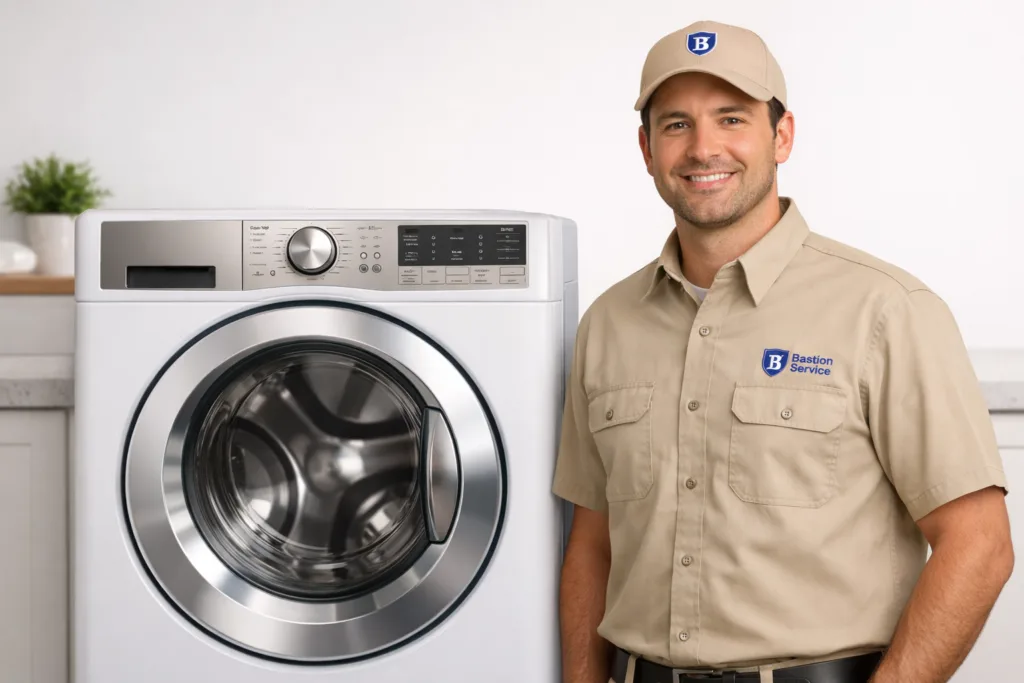
GE Washer repair technician in Westwood
Elias review profile photo Peezy Flowers review profile photo Diane Witherspoon review profile photo Kira Morris review profile photo NICOLAS ZAVALA review profile photo
Real Google feedback 5.0 out of 5 80+ Google reviews
  • GE washer support in Westwood
  • Clear diagnosis before repair decisions
  • Warranty for labor and parts
  • Fast scheduling based on availability
GE Washer Repair

GE Washer repair in Westwood for focused household appliance problems

When a GE washer starts acting up in Westwood, the most helpful first step is a clear diagnosis and a practical repair plan based on the exact symptom pattern.

Bastion Service helps Westwood homeowners diagnose GE washer problems and decide whether repair is practical based on the symptom, appliance condition, and repair path.

GE washer repair support for Westwood homes.

Washer problems are easier to solve when the exact symptom is matched to the stage of the cycle where the failure happens. A machine that fills but never starts washing points to a different repair path than one that washes normally and fails only at spin. Paying attention to what the washer does, what it does not do, and when the problem appears can quickly narrow down the likely cause.

Start with the cycle stage, not just the symptom

Many GE washer issues seem identical from a distance. Clothes may come out wet, the cycle may stop early, or the unit may sit full of water. But the underlying cause often depends on whether the failure happens during fill, agitation, drain, spin, or lid lock. That distinction matters because a drain pump problem, a balance issue, and a control fault can all produce similar end results.

If you have noticed a change in behavior over several loads, that pattern is often more useful than a single error code. Intermittent starting, occasional failure to lock, delayed draining, or a spin cycle that sounds rough only under heavier loads can all point to a developing problem rather than a one-time glitch.

Common GE washer problems and what they often mean

Washer will not drain

Standing water at the end of the cycle usually means the drain system is the first place to check. Common causes include a clogged pump, an obstruction in the drain path, a kinked hose, or a drain pump that has weakened or failed. In some cases, the washer may also pause because the control is not receiving the feedback it expects during the drain stage.

If the machine hums when it should be draining, that can suggest a pump struggling against a blockage. If there is no drain activity at all, the problem may involve the pump circuit, lid lock, or main control response. Repeatedly restarting a full washer can put extra strain on the system without solving the root issue.

Washer spins poorly or leaves clothes too wet

Weak spin performance often shows up before a complete failure. Towels may stay heavy, cycle times may seem longer, or the washer may attempt to rebalance the load over and over. Possible causes include lid lock trouble, worn suspension parts, drive system problems, motor issues, or a control that is interrupting high-speed spin.

Load size matters too. Overloading can exaggerate a suspension or balance problem, but a washer that regularly struggles with normal household loads in Westwood may need service rather than a change in loading habits.

Leaks during fill, wash, or drain

The timing of a leak is one of the best clues. Water appearing right after the cycle begins may point to inlet hoses, valves, or fill-related connections. Leaks during the wash portion can suggest an issue around the tub area or internal seals. Water that appears later, especially near drain or spin, is often connected to the pump, drain hose, or related fittings.

Even a small leak should be taken seriously. What looks minor on the floor can still lead to cabinet swelling, damaged flooring, or moisture problems around the laundry area if the washer keeps running that way.

Washer will not start or stops mid-cycle

When a GE washer does nothing after you press start, the problem may involve the power supply, lid lock, user interface, control board, or a safety condition the machine detects before it allows the cycle to continue. If it starts and then quits partway through, the diagnosis often depends on the exact point where the interruption happens.

A unit that consistently stops at the same stage gives a stronger clue than one that fails randomly. For example, stopping before spin can indicate lock, drain, or balance-related issues, while stopping immediately after fill can suggest a drive or control problem.

Noise, vibration, or banging

Not all washer noise means the same thing. A brief thump from an uneven load is different from grinding, scraping, or repeated banging against the cabinet. Loud spin vibration can come from worn suspension components, leveling issues, internal wear, or a tub assembly problem. A humming sound without movement may indicate a motor, pump, or mechanical restriction.

If the washer has started moving across the floor, shaking hard, or making metal-on-metal sounds, it is best to stop using it until the source is identified. Continued operation can turn a limited repair into a larger one.

Poor wash results or incomplete cycles

Sometimes the complaint is not a total breakdown but noticeably worse performance. Detergent residue, clothing that does not come clean, cycles that take too long, or loads that stay uneven can all reflect a mechanical or control issue. Fill problems, weak agitation, sensor faults, and drain interruptions can all reduce wash quality even if the washer technically still runs.

What error codes can and cannot tell you

GE washers often display codes or flashing light patterns that help point service in the right direction. They are useful, but they rarely tell the full story by themselves. The same code can appear because of a failed part, a wiring issue, an intermittent connection, or a secondary problem elsewhere in the system.

The code matters most when it is matched with the machine’s behavior. Whether the tub is full of water, whether the lid locks, whether the motor tries to start, and whether the problem is constant or occasional all help determine what the washer is actually doing wrong.

Signs the washer should not be used again until it is checked

Some symptoms deserve a pause before another load:

  • Water leaking onto the floor
  • A burning smell or signs of overheating
  • Violent shaking or repeated banging in spin
  • Grinding, scraping, or other harsh mechanical sounds
  • A tub that stays full of water
  • A lid that will not lock or unlock correctly

Using the washer in these conditions can increase wear on the pump, motor, suspension, controls, and other connected parts. It can also create avoidable water damage in the home.

When service makes sense even if the washer still runs

Waiting for complete failure is not always the best move. A washer that sometimes finishes and sometimes does not is often in the early stage of a larger problem. Slower draining, inconsistent spin, longer cycle times, new noises, and occasional control interruptions are all signs that service may be worthwhile before the machine becomes unusable.

That is especially true when the issue has repeated over multiple loads. A one-time interruption may be unusual loading or a brief electrical hiccup. A pattern usually means a component is wearing out or a system is no longer operating within normal range.

Repair or replace?

For many households in Westwood, the answer depends on the age of the GE washer, its overall condition, prior repair history, and the specific part that has failed. A targeted repair is often reasonable when the washer is otherwise in good shape and the fault is limited. Replacement becomes more likely when the machine has several developing issues, significant internal wear, or a repair cost that is too close to the value of the appliance.

The goal of service is not just to swap a part. It is to determine whether the problem is isolated and worth fixing or whether the washer is showing signs of broader decline. That kind of diagnosis gives homeowners a better basis for deciding what to do next.

What to have ready before a service visit

If you are scheduling service, a few details can make the process more efficient:

  • Whether the washer is top-load or front-load
  • The model number, if available
  • Any code or flashing pattern shown on the display
  • The cycle stage where the problem happens
  • Whether the issue is constant or intermittent
  • Any recent leaks, unusual smells, or loud noises

Those details help connect the symptom pattern to the most likely repair path and reduce guesswork during diagnosis.

Focused help for GE washer problems in Westwood

When a GE washer starts missing steps in the cycle, leaving clothes wet, leaking, or making new noise, the most useful next step is to identify the exact failure and whether any related components have been affected. That makes it easier to decide if repair is the right move, how urgent the issue is, and whether continued use risks making the problem worse.

Service options

GE appliances we service in Westwood

Choose the GE appliance type you need serviced in Westwood.

Customer reviews

Real customer feedback

Recent customer feedback for Bastion Service.

Jason review profile photo
Jason
Google review

“Andy repaired my refrigerator recently Was very professional and worth every dollar. Jason”

Pablo Arreola review profile photo
Pablo Arreola
Google review

“Great service! Used couple of times already!”

michael kovach review profile photo
michael kovach
Google review

“Highly recommend! Andrei was fast, friendly, communicative and transparent, and highly competent. Went the extra mile for us. We’ll definitely use him again”

David Bail review profile photo
David Bail
Google review

“Frigidaire Ice Maker Repair @ my Dads house. Very professional experience! I received a confirming text that Andrew was on his way and would arrive with in 20 minutes. Andrew arrived earlier than expected. He quickly pulled out a new pair of shoe covers and immediately went to work. He quickly diagnosed the refrigerator ice maker problem and got it fixed. Very impressed with honesty and integrity. I would absolutely recommend as well use this company again. Thank you!!”

Heather Dowell review profile photo
Heather Dowell
Google review

“My washing machine broke over the weekend so I called AndyFix Appliance Repair on Sunday around 11am. I asked if they could please send a technician out today, and they did! The technician (Andy) got here shortly after 2pm, had the part needed to fix my washing machine, and was done by a little after 3pm. Andy was friendly, quick, and fairly priced. I would use this company again!”

Larry Wagenseller review profile photo
Larry Wagenseller
Google review

“Andy himself did the work. He was punctual and polite. Answerd all my concerns and was guick and fair. He is now my go to for all future repairs. Found their diagnostic fee to be about $20 cheaper than everyone else's.”

FAQ

GE Washer Repair questions

Answers about diagnosis, repair options, timing, and next steps.

What are the most common reasons a GE washer stops spinning in Westwood?

Common causes include a faulty lid lock, out-of-balance sensing, worn suspension parts, drive problems, or a motor or control issue. If clothes are consistently coming out wet, the washer should be diagnosed before continued use causes more wear.

Should I keep using my GE washer if it is leaking?

No. A leaking washer can damage flooring and may worsen the underlying problem. Stop using it and have the leak source identified, especially if the water appears during every cycle.

Why does my GE washer drain slowly or leave water in the tub?

Slow or incomplete draining can be caused by a blocked drain path, a failing drain pump, a hose issue, or a control problem. The exact cause depends on when the draining problem happens and whether the pump is trying to run.

How do I know if my GE washer in Westwood should be repaired or replaced?

Consider the washer's age, condition, repair history, and the cost of the specific repair. If the problem is isolated and the machine is otherwise in good shape, repair is often reasonable. If there are repeated failures or major wear, replacement may make more sense.

Ready to schedule?

Schedule GE Washer Repair in Westwood

Schedule GE washer repair in Westwood with clear diagnosis, practical repair guidance, and dependable local service.

Call (323) 433-6360