





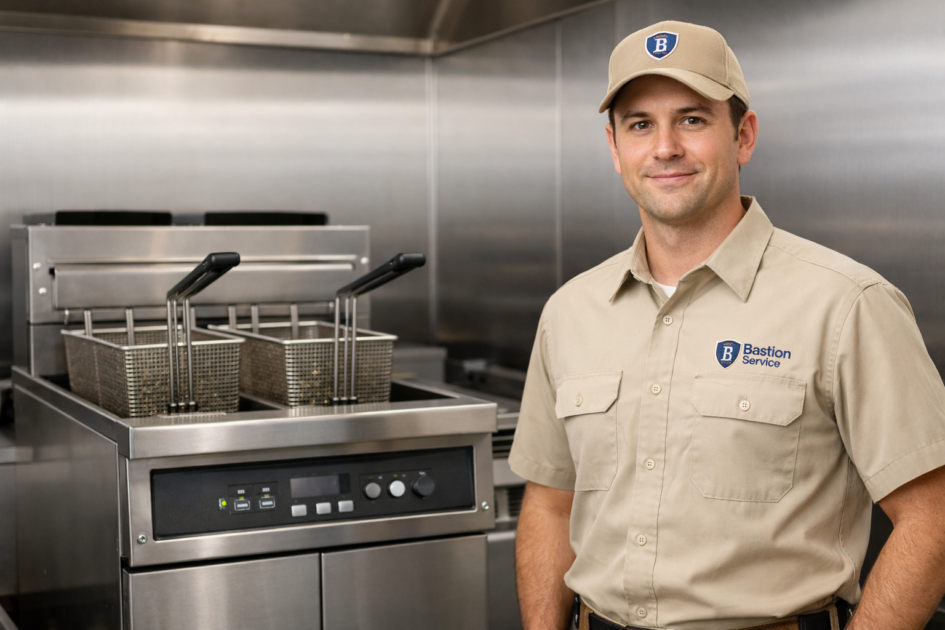
When a Frymaster fryer starts lagging on heat, cycling unpredictably, or dropping out during service, the fastest path back to normal operation is a service visit built around the exact symptom pattern. In Westwood kitchens, similar fryer complaints can come from very different causes, including controls, ignition components, temperature sensing, gas flow problems, safety trips, or wear in high-use assemblies. Bastion Service works from the operating complaint first so the repair decision is based on what the fryer is actually doing, not on guesswork.
Related commercial service paths in Westwood include Frymaster Commercial Repair in Westwood, Commercial Fryer Repair in Westwood, and Pitco Fryer Repair in Westwood.
For businesses in Westwood, fryer problems usually affect more than one station. A unit that will not recover, overheats, or shuts down without warning can slow ticket times, create inconsistent product, and force staff to work around equipment that should be reliable. Describing the issue in real kitchen terms, such as no heat, slow recovery, burner drop-out, error display, oil leak, or unstable temperature, helps narrow the cause and speeds up repair planning.
Common Frymaster fryer problems and what they may indicate
Unit will not heat
If the fryer powers on but does not produce heat, the fault may involve the ignition sequence, a tripped high-limit, control failure, flame sensing, wiring, or gas delivery. A fryer that appears completely down is not always facing the same type of failure as one that powers up normally but never lights. That difference matters because the repair path can change significantly depending on where the heating process stops.
Slow heat-up or weak recovery
Slow recovery often shows up first during busy periods when the fryer cannot keep up with batch demand. Possible causes include weak burner performance, sensor drift, control issues, restricted flow, or conditions that reduce normal heat transfer. In day-to-day operation, this usually appears as longer cook times, uneven results, or staff needing to pause between loads to let the oil come back up to temperature.
Overheating or oil temperature swings
If the oil runs hotter than the setpoint, overshoots, or fluctuates noticeably, service should be scheduled quickly. Temperature instability can point to sensor problems, calibration drift, controller faults, or switching components that are not responding correctly. Continued operation under these conditions can affect food quality and may increase stress on other parts of the fryer.
Ignition failure or unstable burner operation
Delayed lighting, repeated ignition attempts, burner short-cycling, or flame loss during operation can indicate issues with ignitors, flame sensing, gas valves, wiring, or the control system managing the heat cycle. These symptoms often become more frequent before the fryer stops heating entirely. If ignition behavior has changed, it is usually a sign that the unit is moving toward a more disruptive failure.
Error codes and unexpected shutdowns
A displayed fault code is useful, but it is only the start of diagnosis. The underlying cause may still be electrical, thermal, ignition-related, or tied to a safety condition. A fryer that resets temporarily and then faults again usually needs more than a quick restart, especially if the same shutdown pattern keeps returning during production hours.
Oil leaks or drainage and filtration problems
Oil around the base of the fryer, slow draining, valve issues, or trouble completing filtration steps can indicate seal wear, restricted lines, or problems in the filtration system. These issues should be addressed early. Even when the fryer still heats, leaks and poor oil handling can create cleanup problems, safety concerns, and added wear on surrounding components.
Why a Frymaster fryer may stop heating or recover poorly
Heating complaints usually fall into a few categories: the fryer does not ignite, it ignites but cannot maintain normal heat, or it reaches temperature too slowly to support production. In practice, these complaints may involve the controller, temperature sensor, ignition hardware, gas-related components, safety circuits, or wiring faults. The symptom matters because a fryer that never lights is different from one that heats but cannot hold setpoint.
Recovery problems are especially important in high-output kitchens. When the fryer drops too far after a load and takes too long to come back, the result is often inconsistent product and slower line flow. That type of complaint should be evaluated before it becomes a complete outage, because the underlying issue may already be affecting burner performance or temperature control.
When to schedule service
Schedule fryer repair when the unit is no longer heating normally, is recovering slowly, is showing repeat fault conditions, or is requiring staff workarounds to stay usable. Waiting can turn a manageable repair into a larger interruption, especially when the fryer is central to daily output. Repeated thermal cycling and continued use under abnormal conditions can make small faults harder on the rest of the system.
It also makes sense to book service when the fryer is still operating but behavior has changed. Common early warning signs include longer preheat times, unusual burner sounds, temperature mismatch, intermittent shutdowns, controls that respond irregularly, or filtration steps that no longer work smoothly. These are often the symptoms that show up before a full no-heat failure.
When continued use may make the repair more involved
Some fryer problems remain limited for a short period, while others tend to escalate quickly. Overheating, repeated ignition failure, visible oil leaks, recurring safety trips, and electrical intermittence should not be ignored. Running the fryer through busy shifts in that condition can increase wear, affect product consistency, and complicate the eventual repair.
Repeated restart attempts can also make diagnosis less straightforward. If the fryer is shutting down mid-cycle or failing to ignite consistently, continuing to push it through service may create secondary symptoms that were not part of the original problem. In many cases, scheduling repair sooner helps preserve both uptime and a cleaner diagnostic path.
Repair versus replacement considerations
Most repair decisions come down to the condition of the fryer, the systems involved, the effect on downtime, and whether the unit can return to stable day-to-day operation after the fault is corrected. Repair is often the sensible choice when the issue is isolated to controls, sensors, ignition components, wiring, switches, valves, or other serviceable assemblies and the rest of the fryer remains in solid working condition.
Replacement becomes a stronger consideration when there are multiple recurring failures, extensive wear across key systems, or stacked repair needs that still leave the kitchen with questionable reliability. The most useful question is not just how old the fryer is, but whether fixing the present fault will realistically return it to consistent, safe, production-ready performance.
How to prepare for a fryer repair visit
Before service is scheduled, it helps to note exactly how the fryer is failing. Useful details include whether the unit powers on, whether it ignites at all, how long it takes to heat, whether the oil overshoots or drops below set temperature, whether any code appears, and whether the issue happens all day or mainly under heavier load. The more precise the operating complaint, the easier it is to target the likely fault.
- When the problem started and whether it has become more frequent
- Whether the fryer is fully down or still partly usable
- Any visible leaks, unusual sounds, or repeated shutdowns
- Whether the issue affects heat-up, recovery, or filtration
- Any recent resets, workarounds, or temporary restarts that changed behavior
That information helps turn a broad complaint into an actionable repair visit and reduces time spent chasing symptoms that only appear under certain operating conditions.
Service-focused next steps for Westwood kitchens
If your Frymaster fryer is not heating properly, recovering too slowly, showing faults, or dropping out during service, the most practical next step is to schedule diagnosis before the problem affects more of the shift. For businesses in Westwood, timely fryer repair is about restoring stable temperature control, dependable heating, and normal kitchen flow with a repair plan that fits the actual failure and the demands of daily operation.


