
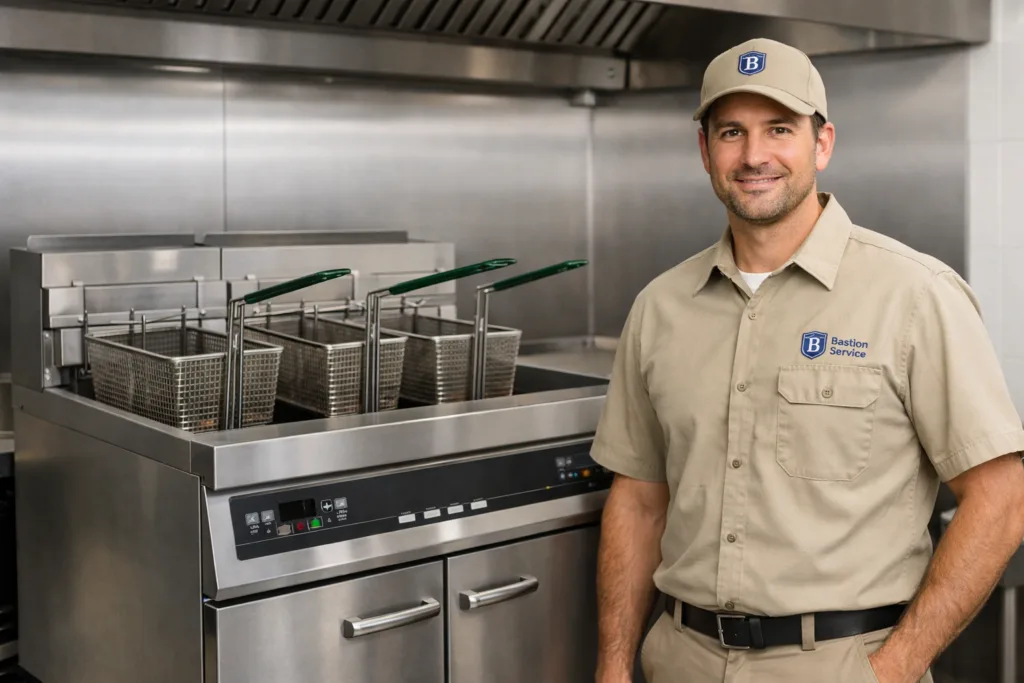




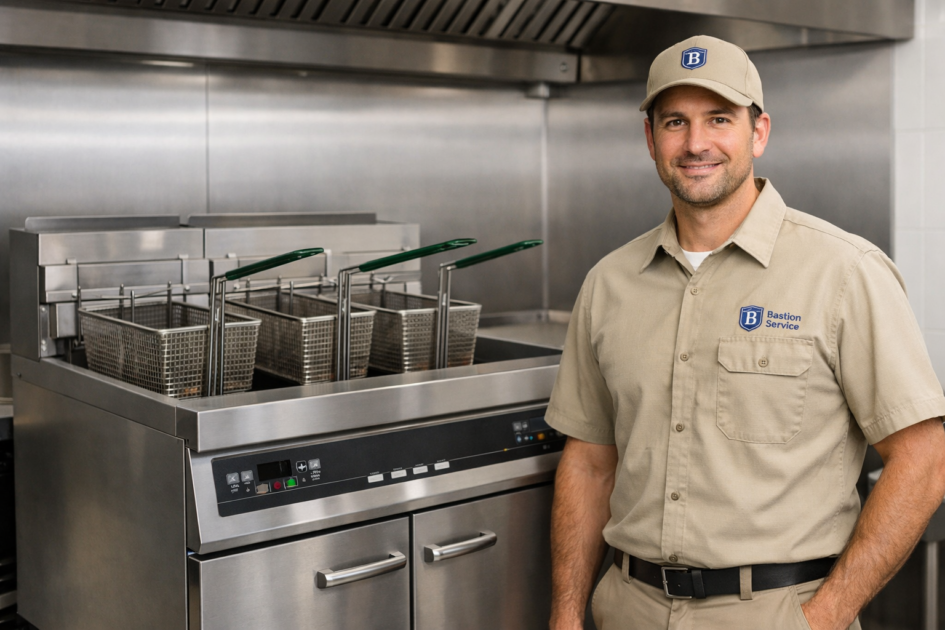
When Frymaster cooking equipment starts acting unpredictably during service, the main priority is understanding whether the problem is isolated, worsening under load, or likely to cause a full stop during a shift. For businesses in Westwood, repair decisions are often tied to ticket times, food quality, staff workflow, and whether the unit can stay in rotation safely until service is completed. Bastion Service provides Frymaster equipment diagnosis and repair support based on the symptom pattern, operating condition, and the real impact on daily production.
For specific equipment paths in Westwood, review Frymaster Fryer Repair in Westwood and Commercial Appliance Repair in Westwood.
Because Frymaster equipment is often central to hot-line output, even a “still running” unit can already be creating hidden costs. Longer recovery times, burner inconsistency, unstable temperatures, repeated resets, or intermittent shutdowns usually point to faults that need more than surface-level troubleshooting. A service visit helps identify whether the issue involves ignition components, sensors, controls, gas flow, electrical supply, heat transfer, or a combination of systems working poorly together.
Heating problems that affect consistency and output
One of the most common reasons businesses schedule Frymaster cooking equipment repair in Westwood is poor heat performance. In day-to-day operation, this can show up as equipment that heats too slowly, fails to hold set temperature, overshoots, or cycles in a way that creates uneven cooking results. Even when the unit appears usable, unstable heat can reduce throughput and make kitchen timing harder to manage.
These symptoms may be tied to temperature probes, thermostatic controls, high-limit components, burners, airflow conditions, or control-board issues. The exact cause matters because different failures create different risks. A sensor problem can cause inaccurate heat readings, while a burner or gas-delivery problem may reduce recovery and leave the equipment struggling during heavier production periods.
- Longer than normal heat-up time at startup
- Temperature drifting above or below the set point
- Uneven cooking results from batch to batch
- Frequent temperature alarms or protective trips
- Equipment that seems to work better at light volume than at rush volume
When those patterns start affecting service flow, repair should be scheduled before staff begin compensating with manual workarounds that mask the actual fault.
Ignition and burner faults that lead to no-heat or intermittent operation
Ignition issues can stop production immediately or create a more disruptive problem: equipment that starts sometimes, fails other times, and cannot be trusted during a rush. Frymaster cooking equipment may show this as delayed ignition, repeated clicking, failure to light, flame dropout, or lockout after an attempted startup.
In many cases, the problem is not just one failed part. Ignition performance can be affected by ignitors, flame sensing, burner condition, gas supply, safety devices, wiring, or control sequencing. That is why symptom-based diagnosis matters. Repeated reset attempts may get the equipment running temporarily, but they do not confirm that the underlying cause has been corrected.
Businesses in Westwood usually benefit from prompt service when operators notice:
- Burners that do not ignite on the first attempt
- Flame that drops out after the unit has started
- Startup sequences that stall or lock out
- Units that require repeated power cycling or resetting
- Intermittent no-heat conditions during active use
These symptoms can escalate quickly, especially when the equipment is needed continuously over the course of a shift.
Temperature control and sensor-related complaints
Not every Frymaster problem is a complete failure. Many service calls involve equipment that still operates but no longer responds accurately to settings. This can create inconsistency that affects cook times, product quality, and staff confidence in the line. If the displayed temperature does not match actual performance, or if the unit swings too widely before reheating, the issue may involve sensors, calibration drift, control logic, or related electrical faults.
From a repair standpoint, these complaints matter because they often develop gradually. A business may first notice subtle differences in browning, hold times, or recovery behavior before the equipment begins showing obvious alarms or shutdowns. Catching the issue early can prevent a larger interruption later.
Signs the control system may need attention
- Display readings that do not match cooking results
- Controls that lag, freeze, or respond inconsistently
- Unexpected changes in heat cycle behavior
- Error messages that return after being cleared
- Protective shutdowns without a clear operating reason
When control and sensor problems are left unresolved, the business often ends up dealing with both quality issues and a rising risk of unplanned downtime.
Slow recovery that creates production delays
Slow recovery is one of the clearest signs that cooking equipment is no longer keeping pace with demand. For Frymaster units, recovery problems may come from weak burner performance, restricted heat transfer, inaccurate sensing, control faults, or other conditions that limit how quickly the equipment returns to target temperature after a cooking cycle.
In practical terms, slow recovery can force changes in load size, batch timing, and station workflow. Businesses may notice longer ticket times, inconsistent output during peak periods, or pressure on staff to adapt around equipment limitations. Even if the unit never fully shuts down, reduced recovery can have a measurable effect on daily service.
Repair becomes the smart next step when the equipment performs noticeably worse under normal demand than it did previously. That pattern usually means the issue is affecting production capacity, not just operator convenience.
Unexpected shutdowns and intermittent electrical behavior
Shutdown complaints are often the most difficult for operators because the equipment may restart and appear normal for a while before failing again. Frymaster cooking equipment can experience this pattern when there are control-board issues, loose or deteriorating electrical connections, power-supply problems, overheating protection events, or communication faults between components.
If the display goes blank, the unit powers off during operation, or the equipment drops out and later comes back, those are service issues rather than normal operating quirks. Intermittent faults are especially important to address because they are easy to misjudge until they become full failures.
A proper inspection helps answer key questions:
- Is the shutdown being triggered by a safety condition or by a failing component?
- Is the problem limited to the control system, or is another subsystem causing the fault?
- Can the equipment remain in use temporarily, or should it be taken offline?
- Is the issue likely to worsen quickly under normal kitchen demand?
Those answers help businesses plan around service rather than being surprised by a stoppage during a busy period.
When continued use is likely to increase downtime
Some equipment issues remain relatively stable for a short time. Others get worse with every shift. Repeated ignition failures, high-limit trips, burner dropout, unstable temperatures, fluid leaks, and recurring shutdowns are all signs that continued operation may increase component damage or create a more expensive repair later.
This is especially true when staff have already changed procedures to keep the equipment going. Common workarounds include restarting the unit multiple times a day, reducing batch size, extending cook times, avoiding certain settings, or shifting production to other stations. Those adjustments may keep service moving temporarily, but they also indicate that the equipment is no longer operating as intended.
At that stage, scheduling repair is usually more cost-effective than waiting for a complete failure. The goal is not only to restore operation, but to prevent a manageable issue from turning into a broader outage that affects the whole line.
Repair planning for Frymaster equipment in Westwood
Repair planning is not only about whether a part can be replaced. Businesses also need to know how the fault affects uptime, whether the equipment can safely remain in use, and what kind of scheduling makes the most sense around service hours. That is particularly important when the unit supports core menu output and any downtime has immediate operational consequences.
A thorough service assessment typically helps clarify:
- What symptom is primary versus what symptoms are secondary
- Whether the failure is isolated or part of a larger wear pattern
- What repair scope is likely based on the equipment condition
- Whether short-term operation is realistic before parts or follow-up work
- Whether repair remains the sensible path for the unit’s role in production
That information helps managers make informed decisions instead of reacting only after the equipment stops completely.
Service timing and next steps
For many businesses in Westwood, the best time to schedule Frymaster service is when performance first changes in a noticeable way, not when the equipment fails outright. Heating irregularities, ignition trouble, slow recovery, control errors, leaks, and shutdown patterns are all worth evaluating before they interrupt a full day of production.
If your Frymaster cooking equipment is affecting consistency, speed, or reliability, the next step is to schedule service based on the symptoms you are seeing now. Early repair attention can reduce disruption, improve planning, and help determine whether the unit should stay in service, be limited temporarily, or be taken offline until repairs are completed.


