





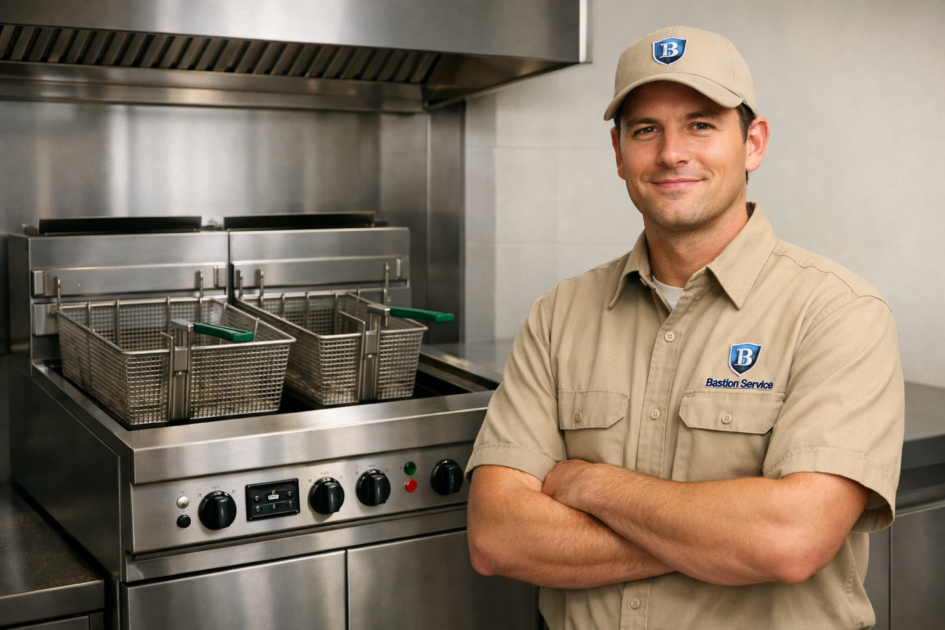
Fryer problems rarely stay isolated to one shift. When a Frymaster unit starts missing ignition, heating unevenly, or recovering too slowly, the issue can quickly affect ticket times, batch consistency, oil life, and labor flow. For businesses in Mid-City, the most useful next step is service built around the exact operating symptom so the repair plan matches the failure instead of chasing likely parts. Bastion Service works with Mid-City businesses to diagnose Frymaster fryer issues, schedule repair based on urgency, and help reduce avoidable downtime.
Related commercial service paths in Mid-City include Frymaster Commercial Repair in Mid-City, Commercial Fryer Repair in Mid-City, and Pitco Fryer Repair in Mid-City.
How Frymaster fryer problems usually show up in daily operation
Many fryer failures begin as small changes that staff notice before the unit stops completely. A fryer may still run, but take longer to heat, cycle unpredictably, or require repeated resets to stay in service. Those changes matter because they often point to developing faults in the ignition system, temperature sensing, controls, gas-related components, safety circuits, or filtration-related operation.
Instead of treating every heating complaint as the same problem, it helps to look at when the issue appears:
- At startup, when the fryer will not power on or ignite
- During production, when recovery falls off between batches
- During cooking, when oil temperature drifts or swings
- During draining or filtering, when leaks or valve problems appear
- After extended use, when the fryer shuts down or locks out intermittently
What specific symptoms can indicate
No heat or ignition failure
If the fryer does not begin heating, fails to ignite, or starts and then drops out, the fault may involve the control system, ignition components, safety limits, wiring, or gas delivery-related parts. In a busy kitchen, repeated restart attempts usually waste time without solving the underlying problem. A no-heat fryer should be checked based on whether the unit powers up normally, whether ignition is attempted, and whether the shutdown happens immediately or after partial operation.
Slow recovery during rush periods
Slow recovery is one of the most disruptive fryer complaints because the unit may seem acceptable during prep but struggle when volume increases. That symptom can point to weak heating performance, sensor or control issues, restricted airflow, or other conditions that keep the fryer from returning to target temperature fast enough between loads. The result is often slower output and pressure on staff to adjust batch timing to compensate.
Oil temperature swings and inconsistent product
When food comes out too dark, too light, or inconsistent from batch to batch, temperature stability becomes the main concern. A Frymaster fryer with unstable oil temperature may have a sensing problem, control fault, intermittent heating condition, or calibration-related issue. Kitchens sometimes work around this by changing cook times, but that can mask the equipment problem while increasing waste and reducing consistency.
Burner problems or intermittent heating
Burners that do not stay engaged correctly, cycle irregularly, or fail under load can create heating complaints that seem random to staff. In practice, these issues often follow a pattern tied to startup, extended use, or peak demand. Intermittent heating is especially important to diagnose carefully because it can be mistaken for a control problem when the root cause is elsewhere in the heating system.
Control faults, resets, or error conditions
When a fryer displays faults, locks out, or needs repeated resets, the visible code is only one piece of the diagnosis. The same shutdown behavior can come from different causes depending on what the fryer was doing at the time. Service is usually more effective when the actual complaint is documented clearly: whether the error appears on startup, after a filter cycle, during recovery, or only after several batches.
Leaks, drain issues, and filtration-related problems
Oil leaks and drain valve concerns should be addressed early, even if the fryer still heats normally. Leakage can create sanitation concerns, slip hazards, and operational disruption around the station. If filtration performance is also affected, businesses may see shortened oil life, more debris in the frypot, and less consistent cooking results. What looks like a minor leak can become a larger repair if continued use causes additional wear or contamination.
Why symptom-based diagnosis matters
Fryer complaints often overlap. A unit described as “not heating right” may actually be dealing with inaccurate sensing, an ignition-related failure, unstable control response, or a shutdown caused by a safety condition. Replacing parts based only on the most obvious symptom can increase cost and still leave the fryer unreliable.
A better repair approach is to match the service visit to the fryer’s behavior in real operation. That means considering startup sequence, heat-up time, recovery under load, temperature stability, filtration performance, and any pattern in the shutdowns. For Mid-City kitchens that depend on steady frying capacity, this kind of diagnosis helps support faster decisions about repair, continued use, or taking the unit out of rotation.
When to schedule service instead of waiting
It makes sense to schedule fryer service when any of these conditions are becoming routine:
- The fryer needs frequent resets to keep running
- Recovery time is slowing enough to affect production
- Oil temperature is inconsistent from one batch to the next
- Ignition is unreliable or startup behavior has changed
- The unit shuts down unexpectedly during service
- Leaks or drain issues are interfering with safe operation
- Staff are changing cook times to work around equipment performance
Waiting for complete failure can turn a manageable repair into a larger interruption. If the fryer is already affecting line speed or forcing production changes, the problem is no longer minor from an operations standpoint.
When continued use can increase downtime risk
Some fryer issues become more expensive when the unit is pushed through additional shifts. Running with unstable temperature can reduce food quality and shorten oil life. Repeated ignition attempts can hide a worsening startup problem. Ongoing shutdowns can interrupt production at the worst possible time and may place extra stress on related components.
If a Frymaster fryer is no longer operating in a stable, predictable way, it is often better to move quickly on repair scheduling than to rely on temporary workarounds. That is especially true when the fryer is central to daily output and there is little margin for production loss.
Repair or replacement considerations
Not every fryer problem points to replacement. Many issues are repairable when the fryer is otherwise in solid condition and the failure is limited to a specific system. Repair is often the right choice when the unit’s overall condition supports continued use and the problem can be isolated to a manageable fault.
Replacement becomes a more serious discussion when breakdowns are recurring, downtime keeps returning, or the cost of restoring reliable operation no longer makes sense compared with the unit’s condition and service history. In most cases, the decision should be based on whether the next repair is likely to restore stable performance rather than simply buy a short period of operation.
What helps prepare for a service visit
Businesses can speed up diagnosis by noting the fryer’s actual behavior before service is scheduled. Useful details include:
- Whether the fryer fails at startup or after heating begins
- How long heat-up and recovery now take compared with normal use
- Whether shutdowns happen during peak production or at idle
- Any visible error messages or control behavior
- Whether leaks appear during draining, filtering, or normal operation
- How the symptom affects food quality, throughput, or staffing
These details help move the call from a general “fryer problem” to a more focused repair decision, which is especially helpful when downtime is already affecting service.
Service-focused next steps for Mid-City kitchens
When a Frymaster fryer begins showing no-heat conditions, poor recovery, oil temperature swings, burner issues, or control-related shutdowns, the priority is to identify the failure pattern and schedule repair around the operational impact. For businesses in Mid-City, that means looking at whether the fryer can stay in service safely, whether the issue is likely to worsen quickly, and what repair path offers the best chance of restoring reliable output with the least disruption.


