
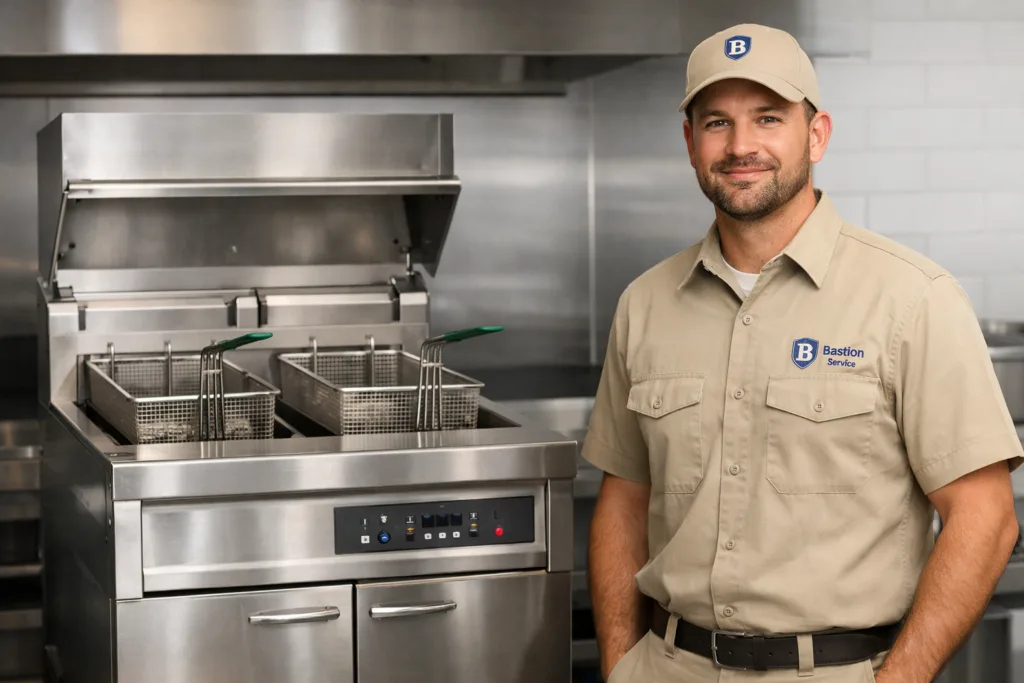




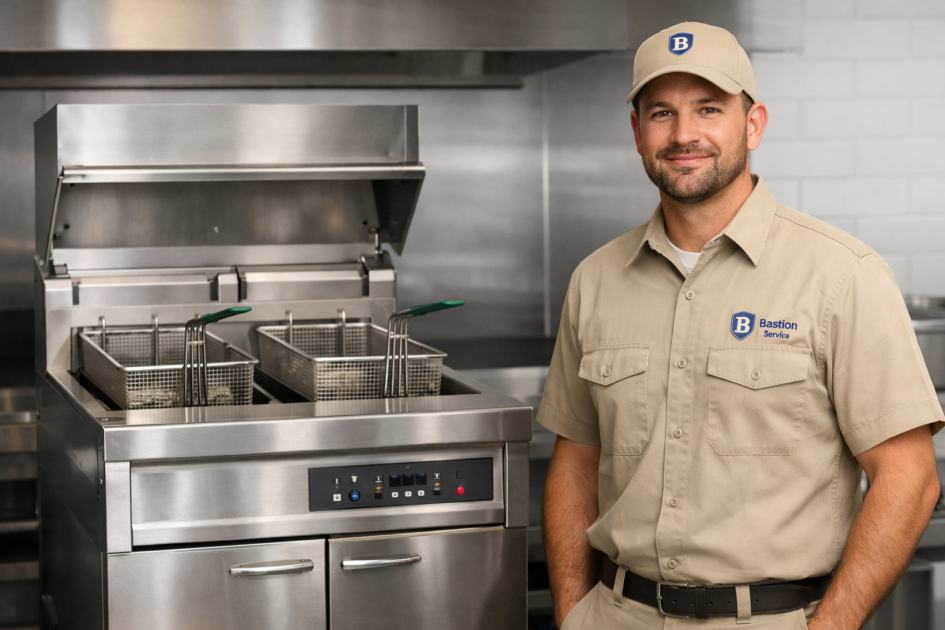
Equipment issues on a Frymaster unit rarely stay isolated for long. A fryer that recovers slowly, misses temperature, drops out during service, or fails to ignite can interrupt ticket flow, affect food consistency, and force staff to work around unreliable kitchen equipment. For businesses in Mid-City, service is most useful when the visit focuses on the actual symptom pattern, the urgency of the downtime, and the fastest realistic path back to stable operation. Bastion Service handles Frymaster cooking equipment repair with that service-first approach, helping operators decide whether the unit should stay in use, be taken offline, or be scheduled for immediate repair.
For specific equipment paths in Mid-City, review Frymaster Fryer Repair in Mid-City and Commercial Appliance Repair in Mid-City.
What Frymaster cooking equipment problems usually lead to repair
Frymaster equipment problems often begin as performance complaints rather than total failure. A unit may still turn on, heat intermittently, or run for part of the day while showing signs that a larger fault is developing. In busy kitchens, those early warning signs matter because they often appear before a shutdown, lockout, or production delay.
Common service-call symptoms include:
- Slow heat-up or slow recovery between batches
- Oil temperature running too low or too high
- Ignition failure or delayed burner lighting
- Burners cycling irregularly or not staying lit
- Unexpected shutdowns during active use
- Error conditions involving controls, sensors, or safety devices
- Inconsistent product results caused by unstable heating
- Oil leaks or signs of heat-related wear around the unit
These symptoms do not all point to the same failed part. Similar complaints can come from controls, probes, ignition components, gas flow problems, burner assemblies, wiring faults, or high-limit interruptions. That is why symptom-based diagnosis is more useful than guessing based on one visible issue.
Heating and temperature problems that affect production
Temperature performance is one of the most common reasons businesses schedule Frymaster repair. If the unit cannot reach set temperature, takes too long to recover, or drifts during active cooking, the result is usually slower output and inconsistent food quality. Kitchens may try to compensate by extending cook times or reducing batch size, but that only masks the problem temporarily.
Slow recovery between loads
When recovery slows down, the fryer may seem usable during light periods but struggle once volume increases. This often shows up as longer wait times between batches, uneven browning, or staff complaints that the equipment is “falling behind.” Possible causes include burner performance issues, sensor drift, control faults, restricted gas delivery, or heat transfer problems inside the unit.
Temperature overshooting or running cold
A fryer that overshoots temperature can scorch product and shorten oil life. One that runs cold can leave food greasy, pale, or inconsistent from batch to batch. In both cases, the issue may involve probes, thermostatic control behavior, calibration problems, or electronic control failure. Because these faults can overlap, testing the full operating cycle is often necessary before a repair decision is made.
Erratic cycling during service
If the burner cuts in and out unpredictably or the temperature swings more than normal, the equipment may be dealing with an intermittent control or safety issue. This kind of behavior is disruptive because it does not always fail on command. Units can appear normal during setup, then begin acting up once the kitchen is under load.
Ignition and burner faults that should not be ignored
Ignition complaints tend to become urgent quickly because they can stop a line with little warning. If the fryer fails to light, lights inconsistently, or locks out after repeated attempts, the problem may be tied to the ignitor, flame sensing, gas valve performance, burner contamination, wiring issues, or a control communication fault.
Operators often notice ignition trouble in one of these ways:
- The fryer clicks or attempts to start without lighting
- The burner lights and then drops out
- The unit must be reset repeatedly to keep running
- The fryer starts reliably when cold but fails later in the day
- The equipment shuts down after short cycles of burner operation
Because ignition and burner problems can involve both operating reliability and safety-related controls, repeated resets are usually a sign to schedule service rather than continue forcing the unit through a shift.
Unexpected shutdowns and intermittent operation
Intermittent shutdowns are among the hardest problems for staff to manage. The unit may work long enough to create a false sense of reliability, then quit during peak demand. In many kitchens, this leads to rushed troubleshooting by employees, delayed orders, and uncertainty about whether the equipment can stay in rotation.
Shutdowns may be connected to overheating protection, unstable electrical connections, failing controls, flame-sensing problems, or internal components that break down only after the equipment has been running. A symptom like “works for a while, then stops” is especially important to document because it often points to a failure pattern that only appears under real operating conditions.
Oil leaks, wear, and signs of broader equipment stress
Not every service issue begins with temperature or ignition. Leaks, unusual odors, visible residue around key components, or signs of excessive heat exposure can also indicate that the unit needs attention. In business-use equipment, these symptoms matter because they can lead to unscheduled downtime even if the fryer is still producing for the moment.
When a unit shows both performance problems and physical wear, repair planning becomes more important. The goal is to determine whether the current issue is isolated and repairable or whether multiple aging components are now affecting reliability at the same time.
When to stop using the equipment and schedule repair
Some faults are annoying but manageable for a short period. Others are a sign that continued use may worsen damage, increase downtime, or create an unsafe operating condition. If a Frymaster unit is shutting off repeatedly, failing to maintain stable temperature, showing burner irregularities, or requiring constant resets, it is usually better to move from staff workarounds to an actual repair appointment.
Businesses in Mid-City often need to make a practical decision quickly: keep the unit running until a scheduled window, reduce reliance on it, or take it offline immediately. That decision depends on how predictable the symptom is, whether safety devices appear to be involved, and how much the problem is already affecting production.
Repair planning for kitchens in Mid-City
Repair planning is about more than replacing a single part. In active kitchens, it also involves timing, menu pressure, staffing, and whether the equipment can support service until work is completed. For some operators, the right move is early diagnosis when recovery slows or temperature becomes unreliable. For others, the trigger is a hard shutdown, recurring fault behavior, or a fryer that no longer supports normal output.
Scheduling service before total failure can reduce disruption because it allows the problem to be evaluated while the symptom history is still clear. It also helps managers weigh the repair against the risk of a busier service period being interrupted by a complete outage.
Repair versus replacement considerations
Not every older unit needs to be replaced, and not every repair is the right investment. The decision usually depends on the age of the equipment, the condition of major components, the number of recent failures, and whether the current issue appears isolated or part of a broader decline in reliability.
A service visit can help clarify:
- Whether the fault is limited to one repairable component
- Whether multiple systems are now showing wear
- How likely the unit is to return to stable daily use after repair
- Whether recurring downtime is starting to outweigh repair value
That information is especially important for businesses trying to avoid repeated disruption from the same piece of cooking equipment.
What to expect from a service-oriented visit
A service call typically begins with confirmation of the operating complaint, followed by checks of heating behavior, ignition sequence, control response, and the condition of safety-related components. The purpose is to identify the fault in a way that supports a real decision: targeted repair, further parts planning, short-term operational limits, or taking the unit out of service until work is completed.
For kitchens in Mid-City, that kind of visit is most helpful when the problem is already affecting throughput, food consistency, or staff workflow. If your Frymaster cooking equipment is recovering slowly, failing to ignite, cycling off, leaking, or creating repeated production delays, scheduling repair is the practical next step to limit downtime and restore more predictable operation.


