





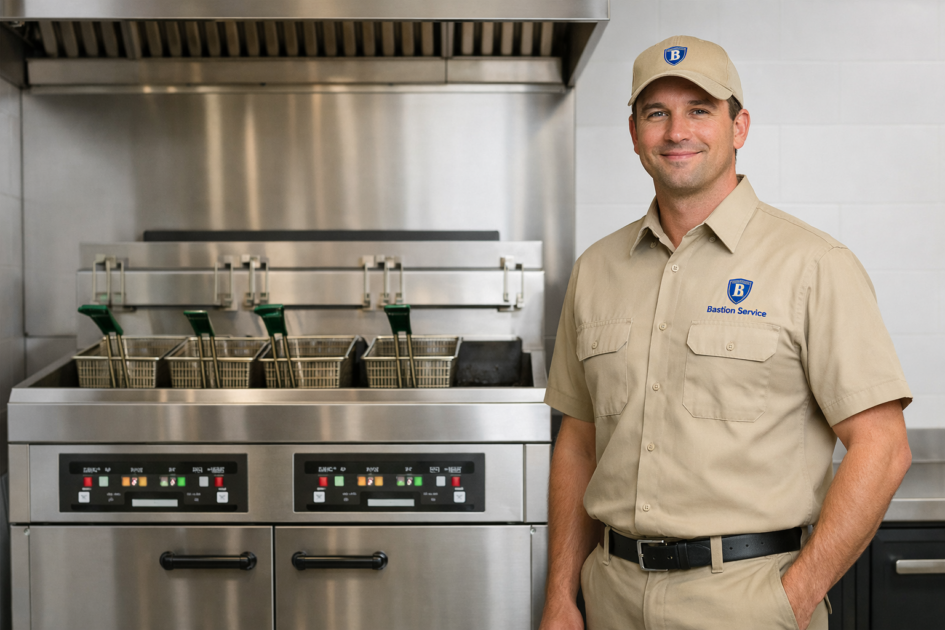
When a Frymaster fryer starts drifting off temperature, short-cycling, leaking, or failing to recover during service, the cost shows up fast in lost production, inconsistent food quality, and extra pressure on the line. For businesses in Del Rey, the right response is symptom-based service that identifies the actual failure before parts are ordered or downtime stretches longer than it should.
Related commercial service paths in Del Rey include Frymaster Commercial Repair in Del Rey, Commercial Fryer Repair in Del Rey, and Pitco Fryer Repair in Del Rey.
Bastion Service helps kitchens in Del Rey evaluate Frymaster fryer problems based on how the unit is behaving in real operation. That includes confirming whether the problem is tied to heat production, sensing, ignition, controls, filtration, electrical supply, or wear in the fryer itself, then helping the operator move forward with repair scheduling and next-step decisions that fit the condition of the equipment.
Common Frymaster fryer problems that disrupt kitchen output
Not heating, not igniting, or shutting down during use
If the fryer will not start heating, loses flame, or shuts off during a cooking cycle, the issue may involve ignition components, flame sensing, high-limit protection, a gas valve problem, control failure, or an electrical interruption. On electric units, failed elements, relays, wiring faults, or board issues may prevent proper heating. These symptoms can look similar from the outside, which is why accurate testing matters before replacing parts.
Slow preheat and poor recovery between batches
A fryer that heats slowly or struggles to recover after each drop can create longer ticket times and uneven cooking results. This often points to weak burner performance, heating element issues, restricted airflow, sensor problems, calibration drift, or control behavior that is no longer matching actual oil temperature. In a busy kitchen, poor recovery usually becomes obvious before a full breakdown occurs.
Oil temperature swings and inconsistent food results
When product comes out too dark, too light, or inconsistent from one batch to the next, the fryer may be overshooting or undershooting the set temperature. Common causes include a failing temperature probe, control faults, incorrect calibration, or heating components that are no longer cycling properly. If staff have started adjusting cook times to compensate, that usually means the fryer needs service rather than routine operator adjustment.
Leaks, drain valve problems, and filtration issues
Oil leaks around the frypot, drain area, valves, fittings, or filtration components should be addressed quickly. A leaking fryer can waste oil, disrupt cleanup, increase slip risk, and create operating concerns around the station. Filtration problems can also reduce oil quality and slow workflow if staff cannot complete normal maintenance cycles efficiently.
Error codes, lockouts, and intermittent faults
Some Frymaster units display fault codes or enter a shutdown mode when the control detects an unsafe or out-of-range condition. These problems may be tied to sensors, overheating protection, communication faults, ignition sequence errors, or unstable power conditions. Intermittent faults are especially important to document because the timing and pattern often help narrow down the cause.
Why is my Frymaster fryer not heating or recovering temperature properly?
This symptom usually means the fryer is not producing heat consistently, not transferring heat efficiently, or not reading oil temperature correctly. The cause may be as simple as one failed component, but it can also involve several related issues affecting performance at once. In Del Rey kitchens, the most common repair paths for this complaint often involve:
- Ignition or flame-sensing faults on gas models
- Heating element or relay failures on electric models
- Temperature probe drift or inaccurate feedback to the control
- High-limit trips or safety shutdowns
- Control board or interface problems
- Burner performance issues or airflow restrictions
- Wiring damage, loose connections, or intermittent power supply problems
Because several of these faults can produce nearly identical symptoms, diagnosis should verify what the fryer is actually doing during startup, heat-up, and normal cycling. That helps avoid replacing a visible part while the underlying cause remains unresolved.
Signs the problem is getting more serious
Some fryer issues begin as small interruptions and then become full service outages. Operators should pay closer attention when the unit needs repeated resets, takes longer each day to reach temperature, falls behind during busy periods, or behaves differently after filtering or cleaning. Those are often warning signs that a component is weakening or that the control system is no longer regulating temperature correctly.
Other indicators include unusual burner sound, frequent high-limit trips, inconsistent display readings, oil overheating, or sudden shutdowns that cannot be tied to normal use. A fryer may still appear usable in this condition, but the risk of product inconsistency and unplanned downtime is much higher.
When to stop using the fryer and schedule repair
Service should be scheduled promptly when the fryer shows repeat ignition failures, unstable temperature control, poor recovery, oil leakage, filtration trouble, visible fault codes, or shutdowns during cooking. If staff are extending cook times, shifting production to another station, or restarting the fryer to get through service, the equipment is already affecting operations enough to justify repair attention.
If there is a persistent gas odor around a gas fryer, stop using the unit immediately. Address the immediate safety concern first through the appropriate emergency steps, then arrange professional appliance diagnosis once the area is safe.
What diagnosis should clarify before repair is approved
A useful service visit should do more than confirm that the fryer is down. It should identify which system failed, whether the issue is isolated or part of broader wear, and whether the unit can return to stable operation with a reasonable repair. For businesses in Del Rey, that usually means getting answers to a few practical questions:
- Is the problem related to heating, sensing, controls, or filtration?
- Is the failure constant or intermittent?
- Are safety controls functioning normally?
- Has the current problem likely caused stress on other components?
- Does the repair support continued reliable use, or is the fryer showing broader decline?
Those answers help management make a better repair decision and reduce the chance of repeated downtime from guesswork.
Repair or replace?
Many Frymaster fryer problems are worth repairing when the unit is structurally sound and the failure is limited to controls, sensing, ignition, valves, elements, relays, wiring, or filtration-related components. Repair is often the better choice when the fryer can be returned to stable temperature performance and the rest of the equipment remains in solid condition.
Replacement becomes a more serious consideration when the fryer has multiple active problems, repeated breakdown history, extensive wear, or repair costs that no longer make sense for its expected service life. The best decision usually depends on overall condition, not just the fact that the fryer is currently down.
How to prepare for service
Before the appointment, it helps to note exactly what the fryer is doing. Useful details include whether it fails on startup or during production, whether the display shows any codes, whether the oil overheats or never reaches setpoint, and whether the problem appears every day or only under heavy use. If the issue began after cleaning, filtering, power loss, or another recent event, that context can also help narrow the diagnosis.
Photos of display messages, notes on the time of failure, and a short description of recent behavior can make the repair process more efficient. For a busy kitchen in Del Rey, that preparation can help move from symptom report to repair plan with less disruption to the day.
When fryer performance starts affecting throughput, food consistency, or safe operation, timely service is usually the most practical next step. Frymaster fryer repair in Del Rey is most effective when the symptom pattern is documented clearly, the failure is diagnosed correctly, and scheduling is handled with the goal of restoring stable kitchen output as quickly as possible.


