
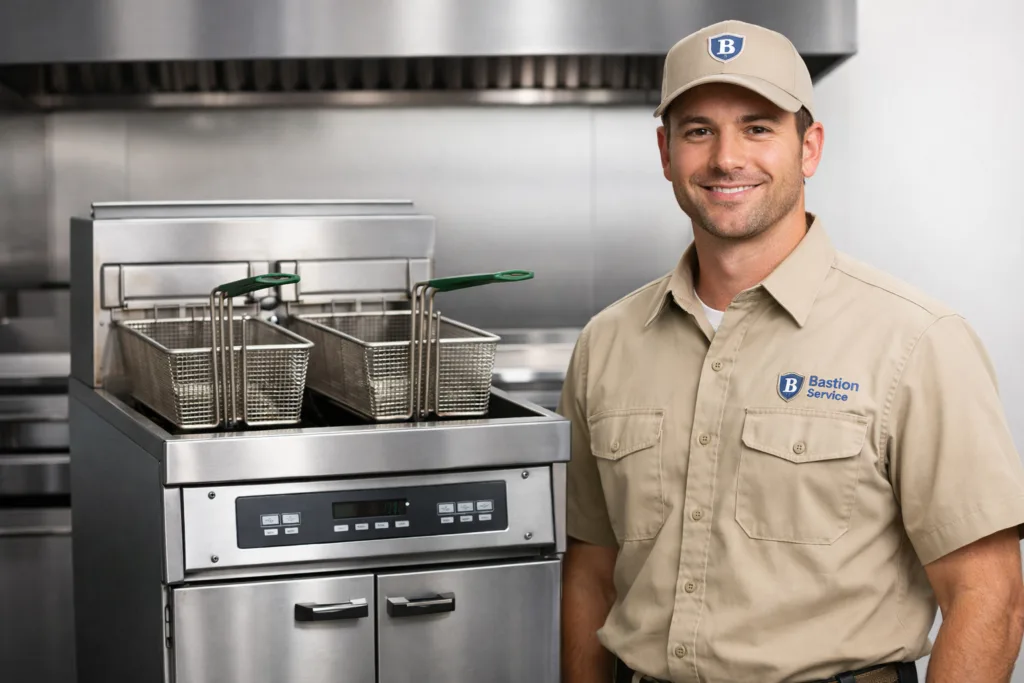




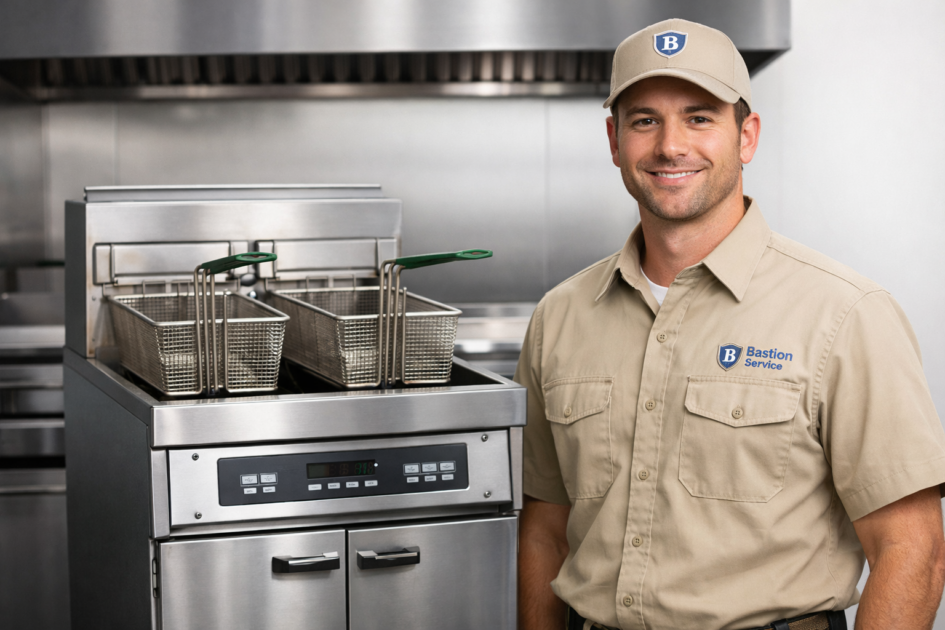
In busy kitchens, Frymaster cooking equipment problems rarely stay isolated for long. A fryer that misses temperature, recovers slowly, leaks, or shuts down mid-shift can disrupt ticket times, strain staff, and affect food quality across the line. Bastion Service helps Del Rey operators move from symptom recognition to diagnosis, repair scheduling, and an informed plan for keeping production moving with less downtime.
For specific equipment paths in Del Rey, review Frymaster Fryer Repair in Del Rey and Commercial Appliance Repair in Del Rey.
Because similar symptoms can come from very different failures, the best repair decisions start with the actual pattern of behavior. Ignition trouble, burner instability, temperature drift, high-limit trips, wiring faults, control failures, and oil-related performance issues can all look similar during service. Identifying what the equipment is doing under load is often what separates a quick parts replacement from a longer, avoidable outage.
Frymaster cooking equipment issues that commonly affect kitchen operations
Although Frymaster is best known in many kitchens for fryer performance, operators usually notice problems first in terms of service impact rather than component failure. Common complaints include slower batch times, uneven cooking results, repeated resets, error conditions, and equipment that seems to work normally until peak demand hits.
These symptoms matter because cooking equipment is part of a production system. When one unit falls behind, staff may overload remaining stations, hold product longer than intended, or change workflow just to keep orders moving. That is why repair service is often less about one isolated malfunction and more about restoring dependable output.
Heating problems and no-heat conditions
If a Frymaster unit will not heat, heats only part of the time, or drops below target temperature during active use, the fault may involve burners, ignition components, controls, gas flow, sensors, safety devices, or electrical connections. A complete no-heat condition usually calls for prompt service because repeated attempts to restart the equipment rarely solve the root cause and can consume valuable kitchen time.
Intermittent heat can be just as disruptive as total failure. Equipment that starts normally in the morning but struggles later in the day may be responding to a developing control issue, a heat-related component failure, or an airflow and burner problem that becomes more obvious during sustained use.
Ignition delays and burner instability
Delayed ignition, inconsistent flame behavior, clicking without proper start-up, or burners that fail to stay lit can all interfere with reliable cooking. In practical terms, this shows up as slower line recovery, uneven product color, and staff uncertainty about whether the equipment can be trusted during rush periods.
These symptoms may point to igniters, flame sensing issues, gas valve faults, burner assembly wear, or control-related problems. When ignition becomes unreliable, continued use tends to become a day-to-day gamble, especially for restaurants that depend on steady fryer output through lunch and dinner service.
Temperature control problems and slow recovery
When oil overshoots temperature, undershoots set points, or takes too long to recover between batches, kitchens often feel the effect before they know the cause. Product may cook unevenly, hold times may change, and throughput may slow enough to create a line backup. In a high-volume setting, even moderate recovery loss can reduce capacity in noticeable ways.
Temperature issues can stem from sensors, thermostatic controls, calibration drift, burner inefficiency, control board faults, or broader wear inside the heating system. If the equipment still heats but cannot keep pace with production, that usually suggests a repair path different from a unit that has stopped heating altogether.
Unexpected shutdowns, lockouts, and resets
Cooking equipment that shuts down during active use creates both production and safety concerns. If staff are resetting the unit just to finish a shift, the problem may involve overheating protection, high-limit devices, ignition failure patterns, electrical faults, or unstable controls.
Temporary restarts can make the issue seem manageable, but repeated shutdowns often signal a fault that is getting worse. Once the equipment begins locking out or failing under load, it is usually better to schedule repair than keep testing it during service hours.
Leaks, oil loss, and visible performance concerns
Some Frymaster equipment problems are not limited to heat and controls. Oil leaks, seepage around fittings, unusual odors, smoke patterns, or signs of excessive residue can point to conditions that affect both operation and safety. Even when the unit still appears usable, leakage and visible performance changes deserve attention because they can escalate from nuisance issues into shutdown events.
If operators notice oil where it should not be, inconsistent burner behavior, or a sudden change in normal cooking performance, inspection should happen before the problem creates a larger disruption in the kitchen.
What these symptoms usually mean for the repair decision
Not every failure points to the same level of repair. A fryer with one consistent issue, such as poor ignition or a temperature reading problem, may be a straightforward service call. A unit with multiple overlapping symptoms, such as slow recovery, shutdowns, and burner instability, often needs broader troubleshooting before any realistic estimate of repair scope can be made.
For operators, that diagnosis helps answer practical questions such as:
- whether the equipment should stay in use, be limited, or be taken offline
- whether the problem is likely tied to one component or a larger fault pattern
- whether scheduling should be handled around prep and service windows
- whether repeated failures suggest a deeper reliability issue
- whether repair remains the better operational choice compared with replacement
When continued use can make the outage worse
Some cooking equipment failures become more expensive when the unit is pushed through additional shifts. Repeated ignition attempts can increase wear on related components. Unstable temperatures can affect food consistency and oil condition. Shutdowns that require manual resets can conceal a safety-related issue or a control problem that is worsening over time.
If the equipment is overheating, struggling to maintain set temperature, producing uneven batches, leaking, or dropping out during production, limiting use until it can be evaluated is often the smarter business move. That is especially true in Los Angeles food-service environments where demand spikes can quickly expose a problem that seemed minor earlier in the day.
Repair planning for Frymaster equipment in Del Rey
Scheduling service is easiest when the symptom pattern is documented clearly. Operators can usually help speed the process by noting whether the problem happens at start-up, during recovery between batches, only after extended use, or only under heavier volume. It is also useful to note whether the equipment is failing consistently or only intermittently, since intermittent faults often require a different testing approach.
When repair is planned around actual kitchen impact, the next steps are more practical: determine whether the unit can remain in limited use, identify likely failure areas, and set a service window that fits the operation as closely as possible. For Del Rey businesses relying on Frymaster cooking equipment, that kind of symptom-based repair scheduling helps reduce guesswork and keeps the focus on restoring reliable output.
Repair versus replacement considerations
Many Frymaster problems are repairable, especially when the issue is isolated and the rest of the equipment is in solid condition. A unit with a defined ignition fault, sensor failure, control issue, or burner-related problem may return to dependable service after targeted repair. On the other hand, equipment with a longer history of repeat outages, unstable performance, multiple control-related complaints, and growing production loss may justify a closer look at long-term value.
The right decision usually depends on more than age alone. Condition, frequency of downtime, parts involved, and the operational cost of another interruption all matter. A proper inspection helps frame that decision around kitchen reality rather than assumptions.
If Frymaster cooking equipment is slowing production, creating inconsistent results, or forcing workarounds during service in Del Rey, the next step is to schedule diagnosis based on the symptoms you are seeing now. Early repair planning can help prevent a broader outage, protect workflow, and clarify whether the equipment needs a focused fix or a larger repair decision.


