
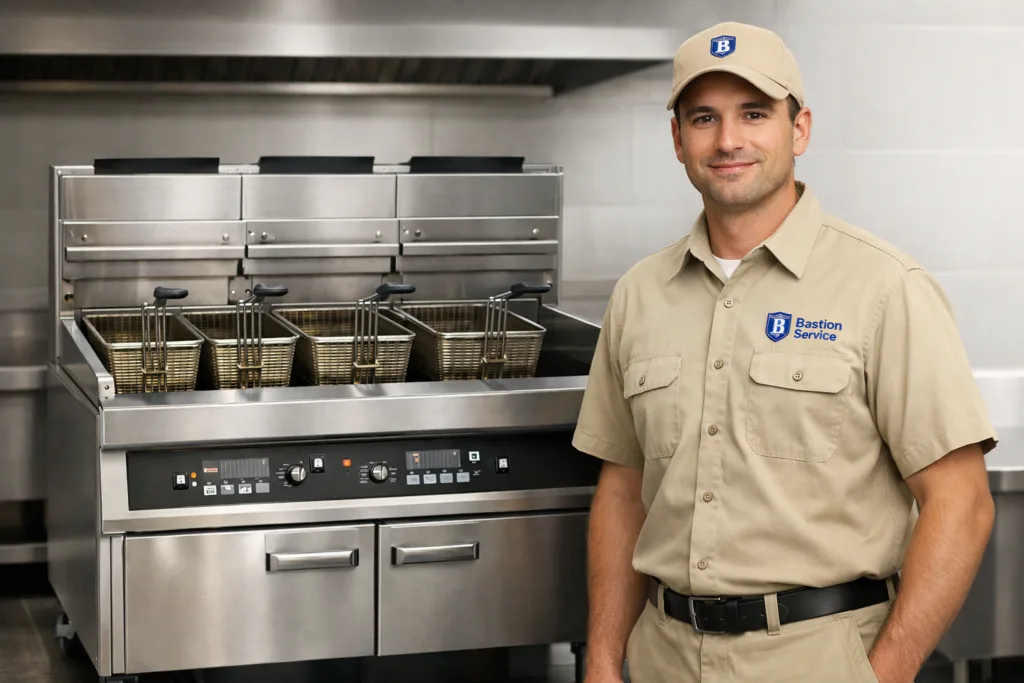




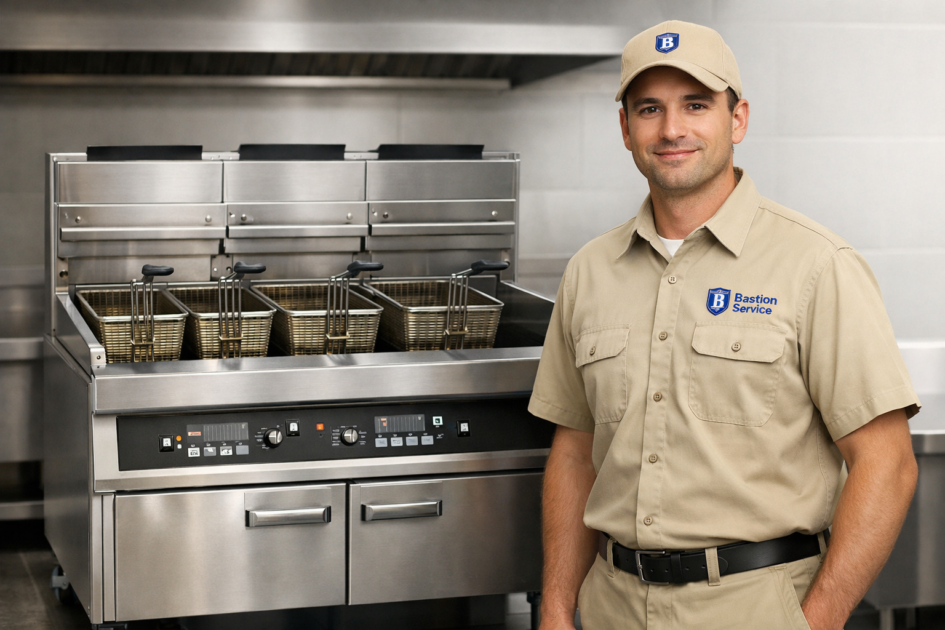
When Frymaster cooking equipment starts missing temperature targets, recovering too slowly, or shutting down during service in Mid-Wilshire, the most useful next step is service that identifies the actual fault and the urgency of repair. For kitchens trying to protect output and food quality, the goal is to determine whether the problem is tied to controls, ignition, heat delivery, safety limits, or another failure that could lead to broader downtime if left unresolved.
For specific equipment paths in Mid-Wilshire, review Frymaster Fryer Repair in Mid-Wilshire and Commercial Appliance Repair in Mid-Wilshire.
Bastion Service helps businesses in Mid-Wilshire evaluate Frymaster equipment problems that affect production flow, line timing, and day-to-day reliability. A service visit should do more than note the symptom. It should help management decide whether the unit can remain in limited use, whether repair should be scheduled immediately, and whether the condition points to a contained parts issue or a larger operating problem.
What Frymaster cooking equipment problems do you troubleshoot?
Frymaster equipment issues often begin as inconsistent performance rather than a full breakdown. A unit may still run, but not well enough to support normal kitchen demand. Symptoms that commonly lead to repair include:
- Slow heat-up or weak recovery during busy periods
- Temperature drift, overheating, or poor temperature hold
- Ignition failure, delayed lighting, or intermittent burner operation
- Unexpected shutdowns, lockouts, or repeated resets
- Error conditions or controls that do not respond normally
- Uneven cooking results tied to unstable heat performance
- Oil leaks, visible wear, or signs that the unit should be inspected before further use
While fryer repair is the most common need with this brand, the same service approach applies across business-use cooking equipment: identify the symptom pattern, confirm which system is failing, and determine whether continued operation is reasonable before repairs are completed.
Heating and recovery issues that affect production
If a unit is taking longer than normal to reach set temperature or cannot recover between batches, the problem may involve temperature sensing, controls, burners, gas delivery, or heat transfer performance. In a working kitchen, slow recovery creates immediate pressure on ticket times and can force surrounding equipment to absorb more volume than planned.
Operators often notice these issues first through product inconsistency, extended cook times, or staff compensating for a unit that no longer keeps pace. Those are important service indicators because an equipment problem that seems minor early in the day can become a full production issue during peak demand.
Signs the problem may be more than routine variation
- The unit falls well below target temperature after normal use
- Recovery gets worse as the day goes on
- Set temperature appears normal, but actual cooking results do not match
- The equipment cycles erratically or struggles to maintain stable heat
When those signs appear repeatedly, it is usually better to schedule repair before the issue turns into a no-heat condition or an avoidable service interruption.
Ignition, burner, and startup faults
Ignition problems are disruptive because they often begin intermittently. A Frymaster unit may light on one cycle, fail on the next, or require repeated attempts before heating starts. That pattern can point to ignition components, flame sensing, burner assembly issues, gas regulation concerns, or control faults that interfere with startup.
Burner-related problems may also show up as weak heat, unusual cycling, incomplete startup, or a unit that appears to run but never delivers normal cooking performance. These faults should be addressed early because they rarely improve with continued use. In many kitchens, the difference between a manageable issue and a full station outage is simply how long the symptom is allowed to continue.
Temperature control and safety-limit shutdowns
If equipment overheats, shuts itself down, or trips out during operation, the issue may involve a high-limit component, sensor fault, control problem, or another condition affecting safe heat regulation. Repeated resets can make the unit seem usable for the moment, but they do not solve the cause of the shutdown.
For businesses in Mid-Wilshire, this is where diagnosis matters most. A technician should be able to determine whether the shutdown is protecting the equipment from a more serious problem, whether the unit should be removed from use, and what repair path is needed to restore stable operation.
Common warning signs that should not be ignored
- Frequent high-limit trips
- Power loss or heating loss in the middle of a cook cycle
- Controls that reset but do not restore normal performance
- Error patterns that return after startup
Leaks, wear, and visible performance problems
Not every repair call begins with a complete heating failure. Sometimes the first sign is oil where it should not be, visible wear around working components, or a fryer that has become harder for staff to operate consistently. Leaks and wear conditions can affect both safety and reliability, especially when they are paired with unstable temperatures, burner issues, or recurring shutdowns.
Even if the equipment still runs, a visible problem should be evaluated in the context of daily usage. A unit that remains in service while leaking, overheating, or cycling unpredictably can create more disruption than a scheduled repair window.
What a service appointment should help you decide
Repair is not only about replacing a failed part. For a business owner, kitchen manager, or facilities lead, the more important question is what the diagnosis means for operations. A useful service appointment should help clarify:
- Whether the equipment is safe to continue using before repair
- Whether the problem is isolated or part of a broader control or heat-performance issue
- How likely the symptom is to cause additional downtime if use continues
- Whether the repair is straightforward or whether replacement should be discussed
That information matters when staffing, prep timing, and service volume depend on stable equipment performance.
When delaying repair usually makes things worse
Some cooking equipment problems allow a short planning window. Others tend to escalate quickly. If a Frymaster unit is overheating, failing to ignite reliably, losing temperature during production, or shutting down without warning, waiting for a total failure often increases downtime and complicates scheduling.
Intermittent issues are especially easy to underestimate. A fryer that works part of the time may appear manageable, but partial operation often means the underlying fault is advancing. Continued use can add wear to controls, ignition components, and heating systems while also creating inconsistent food results and pressure on the rest of the kitchen line.
Repair or replace?
Not every recommendation will be the same. If the problem is limited to a control, ignition, sensor, burner, or another repairable component, service may restore dependable performance without a larger equipment decision. If the unit has recurring failures, extensive wear, or repeated downtime that keeps interrupting operations, replacement may become the more practical path.
The right choice depends on condition, reliability history, repair scope, and how much disruption the equipment is already causing. For many Mid-Wilshire businesses, the value of diagnosis is that it supports a realistic decision instead of another temporary workaround.
Scheduling Frymaster repair in Mid-Wilshire
When Frymaster cooking equipment starts affecting output, consistency, or service speed, early scheduling usually protects operations better than waiting for a complete shutdown. Problems with heat recovery, ignition, controls, leaks, or repeated fault conditions are all good reasons to arrange service before the equipment becomes unusable at the worst possible time. The next step is to schedule repair based on the symptom pattern, confirm whether the unit should stay in use, and move forward with the fix that best reduces downtime for your kitchen.


