
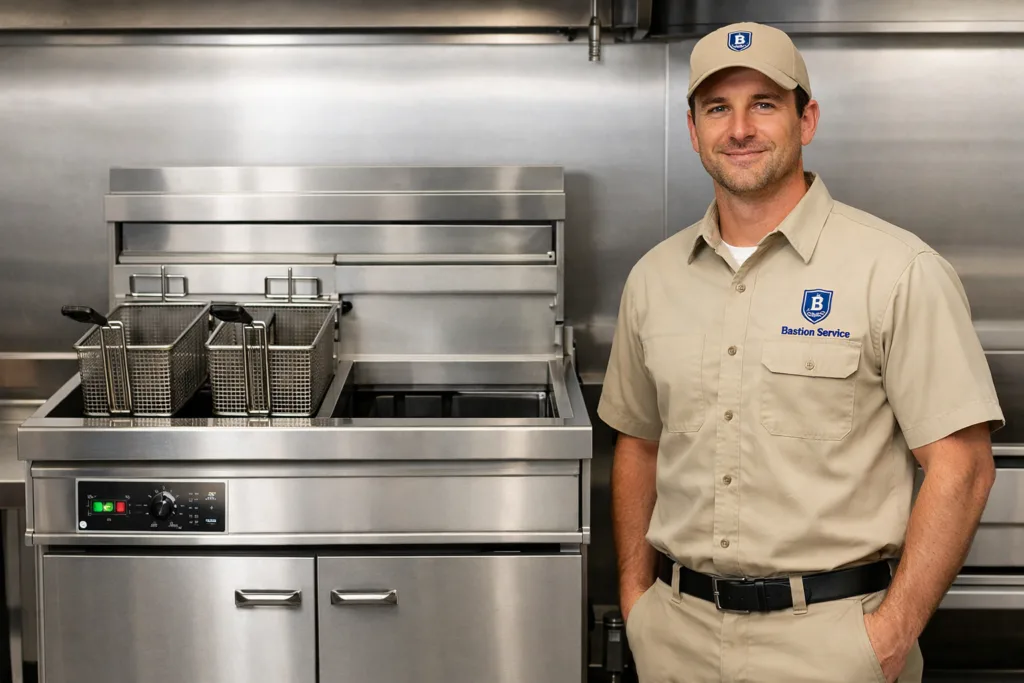






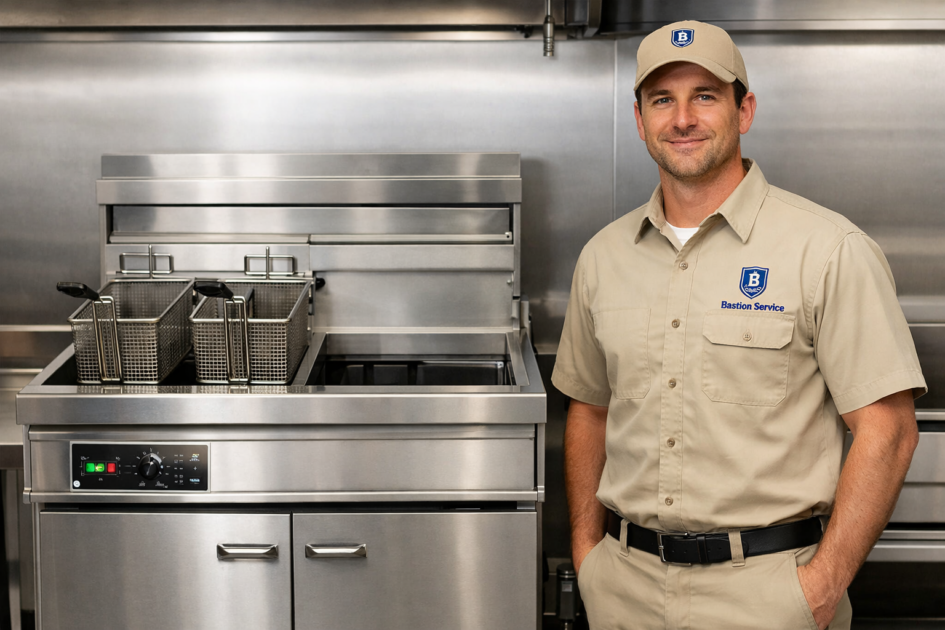
Equipment problems in a busy kitchen rarely stay isolated for long. When Frymaster cooking equipment starts missing temperature, recovering slowly, dropping ignition, or shutting down during service in Century City, managers need more than a guess at the cause. They need repair scheduling that matches the urgency of the symptom, a diagnosis tied to actual operating conditions, and a realistic path to getting production back under control. Bastion Service works with local businesses that need service decisions based on uptime, safety, and daily output rather than trial-and-error parts replacement.
For specific equipment paths in Century City, review Frymaster Fryer Repair in Century City and Commercial Appliance Repair in Century City.
What Frymaster cooking equipment symptoms usually point to
Frymaster equipment is built for demanding kitchen use, but high-volume operation can expose wear in burners, controls, sensors, ignition components, safety systems, and electrical connections. Similar symptoms can come from very different faults, which is why a fryer that runs too hot, one that never reaches set temperature, and one that shuts off without warning all need proper testing before repair decisions are made.
For food-service businesses in Century City, the most common warning signs include:
- Slow heat-up or slow recovery between batches
- Temperature drift, overshooting, or failure to hold setpoint
- Ignition failure or intermittent lighting
- Burner problems that reduce output
- Lockouts, shutdowns, or repeated resets
- Control issues that interrupt normal operation
- Leaks, unusual noises, or signs of overheating
These symptoms affect more than the equipment itself. They can change cook times, lower food consistency, increase waste, and force staff to work around unreliable stations during peak periods.
Fryer problems that disrupt kitchen flow
Fryers are often where performance issues become visible first because any delay shows up immediately in ticket times and batch consistency. Even when a unit is still running, weak heat recovery or unstable temperature can slow service enough to create backups across the line.
Temperature control issues
If oil temperature swings above or below the expected range, the cause may involve probes, thermostatic control, high-limit components, boards, or burner-related performance issues. Kitchens usually notice this as inconsistent product color, changing cook times, or batches that come out unevenly. A repair visit helps determine whether the problem is isolated to one control component or tied to a broader operating fault.
Ignition failures and flame problems
A fryer that fails to light, lights only after repeated attempts, or drops flame during use may have issues with ignition parts, flame sensing, gas delivery, or the control sequence that manages startup. These faults can create immediate downtime, but they can also appear intermittently, which makes them especially frustrating for operators trying to keep service moving. Intermittent ignition should not be treated as a minor inconvenience when the unit is needed every shift.
Slow recovery during busy periods
When a fryer cannot recover quickly after baskets are dropped, output suffers fast. The equipment may still appear functional, but the kitchen sees the difference in delayed orders, rushed work, and inconsistent results. Slow recovery can be related to burner efficiency, heat transfer problems, control faults, or overall component wear that has reduced performance over time.
Unexpected shutdowns
Shutdowns in the middle of service often point to safety trips, overheating protection, ignition lockout, control board issues, or unstable power supply conditions. If a unit repeatedly resets and then fails again, the pattern usually indicates an underlying fault that should be diagnosed before the equipment is put back into normal use.
When leaks, overheating, or repeated resets need faster attention
Some symptoms carry more urgency because they can increase damage or create a greater disruption if operation continues. If your Frymaster cooking equipment is leaking, overheating, producing burning smells, cycling erratically, or requiring frequent resets to stay online, it is smart to treat the issue as more than a routine annoyance.
Faster scheduling is usually the better choice when:
- The unit will not maintain safe or usable cooking temperature
- Ignition becomes unreliable during active service
- The equipment shuts down under load
- Staff are changing procedures just to keep the station working
- Production delays are affecting orders, prep timing, or menu availability
- Managers are unsure whether continued use could worsen the problem
In these cases, the main goal is not just restoring function for one shift. It is avoiding a more disruptive failure at the worst possible time.
Why symptom-based diagnosis matters before authorizing repair
Kitchen equipment problems are often misread because the visible symptom is not always the failed part. For example, poor heating can come from controls, sensing components, burner issues, or a safety-related interruption. A no-heat complaint may begin with ignition, but the underlying cause may sit elsewhere in the operating sequence.
That is why diagnosis supports better repair decisions for Century City operators. It helps answer practical questions such as:
- Is the issue confined to one component or affecting multiple systems?
- Can the equipment remain in limited use while parts and service are coordinated?
- Is the failure likely to return if only the most obvious symptom is addressed?
- Does the repair fit the age and condition of the unit?
- Should the kitchen plan around short downtime or a longer service interruption?
For businesses managing labor, food cost, and service expectations, those answers matter just as much as the technical cause of the failure.
Repair decisions for aging or unreliable Frymaster equipment
Not every problem points to replacement, and not every working unit is a strong repair candidate. The decision usually depends on the severity of the current fault, the frequency of recent breakdowns, the condition of major operating systems, and how much disruption the equipment has already caused.
Repair is often still worthwhile when the issue is contained and the rest of the unit remains structurally sound. Replacement becomes a stronger consideration when failures are stacking up, downtime is becoming routine, or the kitchen has lost confidence in the equipment during critical service windows. The right call is usually the one that protects workflow, food quality, and predictable output over time.
How local businesses benefit from earlier service scheduling
Many equipment failures do not begin with a full shutdown. They begin with slower starts, longer recovery, occasional ignition misses, unstable temperature, or unexplained interruptions that seem manageable at first. Waiting until the unit goes completely offline often turns a controllable repair into a more difficult scheduling problem.
Earlier service can help reduce:
- Production bottlenecks during rush periods
- Inconsistent cooking results
- Extra strain on staff and backup equipment
- Food waste from repeated or uneven batches
- Escalation from minor instability to full outage
For restaurants and other food-service operations in Century City, early action is often the simplest way to protect service flow before a fryer problem spreads across the kitchen.
Scheduling Frymaster cooking equipment repair in Century City
If your Frymaster equipment is showing heating issues, ignition trouble, temperature inconsistency, burner problems, leaks, shutdowns, or slow recovery, the next step is to schedule service based on the actual symptom pattern and how severely it is affecting operations. For businesses in Century City, timely repair helps limit downtime, reduce production delays, and clarify whether the equipment should remain in use, be repaired promptly, or be evaluated for a larger equipment decision.


