
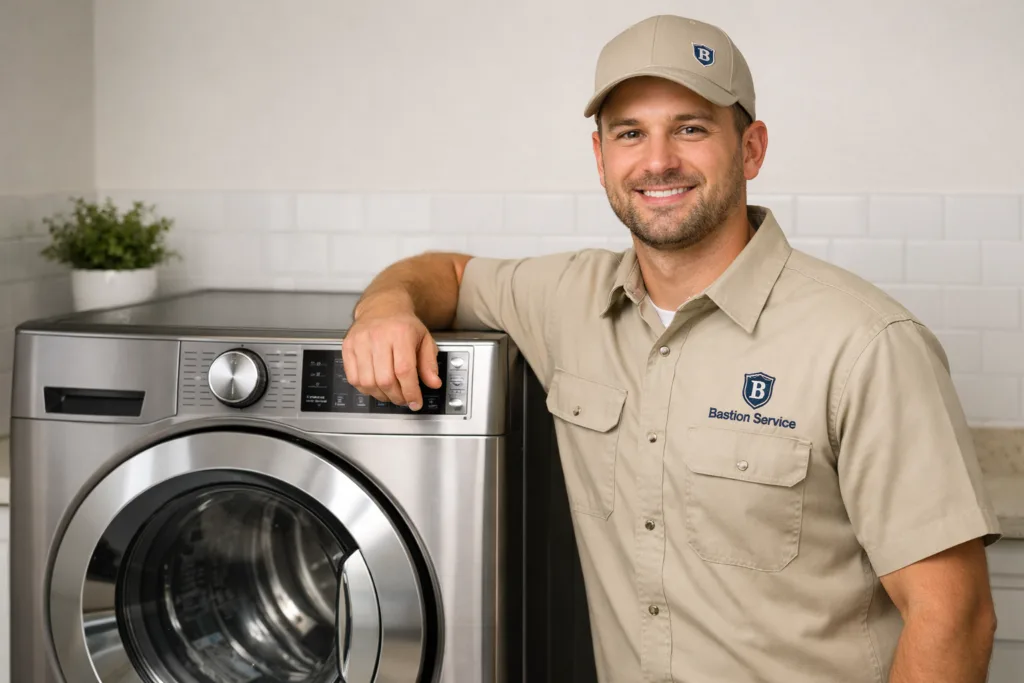




Electrolux appliances usually give warning signs before they stop working altogether. A refrigerator may cool unevenly, a washer may complete a cycle but leave clothes soaked, or a dishwasher may run without actually cleaning well. Reading those symptoms correctly matters, because similar complaints can come from very different causes, and guessing can lead to unnecessary parts replacement or more wear on the machine.
Why symptom patterns matter more than a single complaint
One of the biggest mistakes homeowners make is describing the issue too broadly. “Not working right” can mean a temperature problem, a drainage restriction, a control fault, or a mechanical failure. With Electrolux appliances, the details usually point the repair in the right direction: when the problem started, whether it happens every cycle, whether noise has changed, and whether performance drops only under heavier use.
That matters in Rancho Palos Verdes homes where kitchen and laundry appliances often stay in regular use even after a problem begins. Continuing to run an appliance with poor cooling, weak draining, overheating, leaking, or electrical interruption can turn a limited repair into a more expensive one.
Refrigerator and freezer signs that should not be ignored
Electrolux refrigerators and freezers often show trouble through warm compartments, soft frozen food, frost buildup, water under crisper drawers, loud fan noise, or an ice maker that becomes inconsistent. Those symptoms do not all point to the same failure. Airflow issues, defrost problems, blocked drains, sensor faults, fan problems, and door seal wear can all affect performance differently.
A refrigerator that seems to run all the time is not necessarily cooling well. In many cases, nonstop running means the unit is struggling to maintain temperature. A freezer with heavy frost may still freeze food for a while, but airflow restriction can spread and affect the fresh food section too.
- Warm refrigerator section with a colder freezer can suggest airflow or defrost issues.
- Water inside the cabinet often points to drainage or sealing problems.
- Clicking, buzzing, or fan noise that changes over time usually deserves inspection.
- Intermittent cooling is often more urgent than it looks because food temperatures may already be drifting.
If food spoilage risk is increasing or temperatures are inconsistent from shelf to shelf, it is usually best not to wait.
Washer performance problems often start small
Electrolux washers frequently develop issues such as standing water in the drum, failure to spin out properly, excessive shaking, door lock errors, repeated cycle interruption, or leaking during fill or drain. A washer can appear to “mostly work” while still having a real fault that gets worse load by load.
For example, clothing that comes out wetter than normal can mean much more than a spin-speed issue. It may point to drainage restriction, pump weakness, balance problems, suspension wear, or a control-related interruption during the final spin. Likewise, a loud thumping washer is not always an overloaded drum; repeated vibration can indicate components that are no longer stabilizing the tub correctly.
It is smart to stop experimenting with extra loads when:
- the washer leaks onto the floor,
- the door stays locked or will not lock reliably,
- the machine stops mid-cycle again and again,
- spin noise becomes harsher or more metallic, or
- water remains in the drum after the cycle should be complete.
Dryer symptoms can affect both performance and safety
Electrolux dryers commonly show trouble through long dry times, no heat, overheating, unusual drum noise, shutoff during operation, or clothing that comes out too hot or still damp. Drying complaints often overlap, which is why “it takes two cycles now” should not be treated as a minor annoyance.
Reduced airflow, heating component problems, sensor issues, and drive-related wear can all change drying results. A dryer that heats but does not dry efficiently is not in the same category as a dryer that tumbles with no heat, and neither behaves like a dryer that starts overheating and shutting itself down.
Pay close attention if you notice:
- a burning smell,
- clothes getting unusually hot,
- cycle times getting longer week by week,
- squealing, scraping, or thumping sounds, or
- the dryer stopping before clothes are dry.
Those symptoms often mean the unit should not just be “pushed through” until it fails completely.
Dishwasher problems are not always wash-quality problems
An Electrolux dishwasher may leave residue on dishes, fail to drain, leak near the door, stop filling properly, or make grinding or humming noises. Sometimes the complaint begins as poor cleaning, but the real issue may involve circulation, drain performance, water intake, sealing, or sensing.
A dishwasher that finishes the cycle with standing water usually needs more than a reset. If detergent is left behind repeatedly, that can reflect poor water movement or an interruption in normal wash action. Cloudy dishes and spotty cleaning may seem cosmetic at first, but they can be part of a larger system problem.
Service becomes more urgent when the dishwasher:
- leaks onto flooring or under cabinets,
- stops mid-cycle with water inside,
- trips power during operation,
- fails to drain consistently, or
- becomes noticeably louder than normal.
Cooktop, oven, and range issues often involve uneven results
Electrolux cooking appliances often show early symptoms through temperature inconsistency rather than total failure. Homeowners may notice that a cooktop burner cycles strangely, an oven takes too long to preheat, baked food starts finishing unevenly, or a range has one working section and one unreliable section.
On electric models, burner or oven problems may involve elements, sensors, relays, wiring, or control faults. On gas models, ignition behavior becomes especially important. Repeated clicking, delayed lighting, or uneven flame should be evaluated carefully rather than ignored.
Common warning signs include:
- oven temperatures running too hot or too cool,
- burners that heat intermittently,
- error codes during baking or broiling,
- controls that respond inconsistently, and
- ignition that does not behave the same way from one use to the next.
When multiple functions start failing on the same range, the issue may involve more than a single component. If there is a strong or persistent gas odor, stop using the appliance and address safety first.
When continued use can make the repair worse
Some appliance problems stay relatively contained for a while, but others spread stress to nearby components. That is why the timing of service matters. A refrigerator that cools unevenly can become a full no-cool condition. A washer that vibrates excessively can place more strain on suspension and drum-related parts. A dryer with airflow or heat trouble can overheat internal components. A dishwasher leak can turn into cabinet or floor damage. An oven with drifting temperature can become unreliable enough for everyday cooking.
In general, it is best to stop normal use and schedule help sooner when the problem involves:
- food preservation,
- water leakage,
- overheating,
- electrical interruption,
- gas ignition irregularity, or
- noise that is becoming progressively worse.
Repair or replace? What homeowners should weigh
Not every Electrolux appliance with a fault needs to be replaced, and not every repair is automatically the right investment. The more useful question is whether the current problem is isolated and repairable, or whether it is part of broader decline across the appliance.
Most homeowners in Rancho Palos Verdes will want to weigh:
- the age of the appliance,
- overall condition and maintenance history,
- whether the problem is confined to one system or several,
- how severely normal household use is being affected, and
- whether the repair restores stable everyday performance.
Repair often makes sense when the unit is otherwise in solid condition and the failure is well defined. Replacement becomes more realistic when breakdowns are recurring, multiple systems are involved, or the appliance has reached a point where reliability is already declining beyond the current issue.
What a useful service visit should accomplish
For residential customers, the goal is not just to get the appliance running for the moment. It is to understand what failed, how urgent the issue is, and whether the recommended repair fits the age and condition of the unit. That gives homeowners a practical repair plan based on actual symptoms rather than guesswork.
Whether the problem involves refrigerator temperature loss, a washer that will not finish properly, a dryer with long cycles, a dishwasher holding water, or a cooktop or oven with unreliable heat, the best next step is a diagnosis that matches the way the appliance is actually behaving in daily use.


