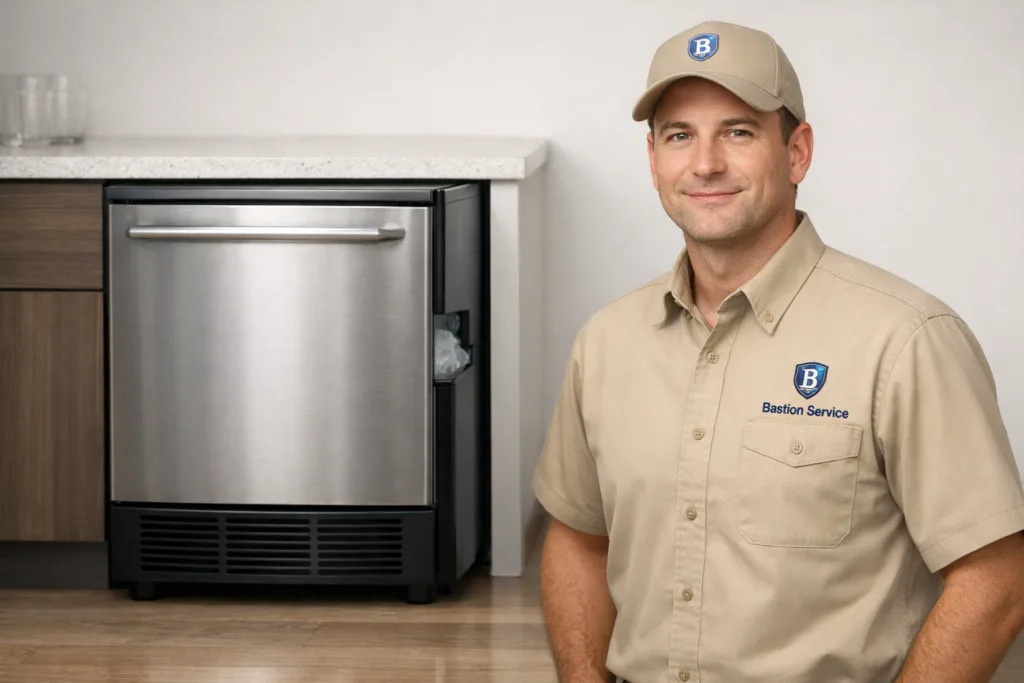
When an EdgeStar ice maker starts missing cycles or creating a mess around the unit, the most useful approach is to match the symptom to the part of the ice-making process that is failing. These machines rely on steady water fill, proper freezing temperatures, accurate sensing, and a clean harvest cycle. A problem in any one of those stages can show up as no ice, slow output, leaks, or poor cube quality.
For many households in Redondo Beach, the biggest mistake is continuing to run the unit while the symptoms are getting worse. Ice makers can hide water-related issues until damage appears outside the cabinet, and intermittent production problems often turn into complete shutdowns without much warning.
Common EdgeStar Ice Maker Problems
No ice production
If the machine powers on but never produces ice, the fault may be related to the water supply, inlet valve, reservoir fill, recirculation system, temperature control, or an electrical control issue. Sometimes the unit sounds normal but never reaches the point where it can freeze and release a batch. In other cases, it begins a cycle and then stalls before harvest.
This symptom matters because “not making ice” is often the end result of a problem that started earlier. Homeowners may notice slower batches, smaller cubes, or occasional skipped cycles before the unit stops completely.
Slow ice production
Slow output usually means the unit is still operating, but not efficiently. Causes can include weak cooling performance, mineral buildup, low water flow, a partially restricted line, or sensors that are no longer reading conditions correctly. If the machine seems to run longer than usual for each batch, that points to a system under strain rather than normal variation.
In daily use, this often shows up when the bin never fully catches up after routine household demand. The machine may still produce ice, just not at the rate it should.
Water leaking from the unit
Leaks can start from loose connections, cracked tubing, blocked drains, overfilling, or internal ice buildup that sends water where it should not go. Even a small leak is worth addressing quickly because water can spread under or around the installation area before it becomes obvious.
If leaking is active, stopping use is usually the safer choice until the source is identified. Continuing to run the machine can make a minor issue more expensive, especially if the leak is tied to an overfill or drainage problem.
Clumped ice or misshapen cubes
Clumped ice often means the machine is dealing with inconsistent freezing, partial melting, or irregular harvest timing. Misshapen cubes can point to fill issues, scale buildup, circulation trouble, or temperature problems inside the system. These symptoms are easy to dismiss at first, but they often indicate that the machine is no longer cycling as designed.
If cube shape changes along with reduced output, there may be more than one issue affecting performance at the same time.
Cloudy ice, bad taste, or odor
Not every ice-quality complaint means a component has failed. Water quality, internal cleanliness, and mineral accumulation can all affect clarity and taste. Still, recurring odor or cloudy ice after cleaning may signal a deeper circulation or fill-related problem. When the issue returns quickly, it makes sense to check whether maintenance alone is no longer enough.
Unusual sounds
A louder-than-normal hum, repetitive clicking, rattling, or grinding noise can be a clue that the pump, fan, compressor, or harvest mechanism is struggling. Some sound changes happen gradually, so homeowners often notice them only after the machine has already begun underperforming. A different noise pattern is often just as important as a visible symptom.
How Symptom Patterns Help Narrow the Cause
Ice maker problems are easier to sort out when you look at what happens before, during, and after each cycle. For example, a unit that fills but never freezes points in a different direction than one that freezes normally but never releases the cubes. A unit that leaks only during fill suggests a different repair path than one that leaks after the ice begins to melt.
Helpful details include:
- Whether the machine stopped suddenly or declined over time
- Whether the issue happens on every cycle or only sometimes
- If leaks appear near the front, back, or underneath the unit
- Whether the cubes changed size, shape, or clarity before production dropped
- If the machine has become noticeably louder or runs longer than before
These clues can make the difference between a targeted repair and unnecessary parts replacement.
Why EdgeStar Ice Maker Diagnosis Matters
Several different faults can create nearly identical symptoms. A fill problem can look like a cooling problem. A drainage issue can look like an overfill. A dirty system can resemble a failing component until the machine is properly inspected. That is why diagnosis matters more than guessing based on one visible symptom.
For EdgeStar units, this is especially important when deciding whether repair is sensible. If the problem is isolated to one serviceable component, repair may be straightforward. If the machine has stacked issues such as leaks, heavy scale, weak cooling, and inconsistent controls, replacement may make more sense than repeated repair attempts.
When Service Is a Good Idea
It is usually time to schedule service when the machine has stopped making ice, leaks more than once, creates poor-quality ice consistently, or returns to the same issue after routine cleaning. Intermittent operation also deserves attention. A unit that works “sometimes” is often in the early stage of a larger failure.
Another sign is when the machine runs constantly without building a normal amount of ice. That pattern can put extra wear on internal components and increase the chance of a total breakdown.
Repair or Replace?
Repair is often worthwhile when the unit is otherwise in good condition and the problem can be traced to a specific component or maintenance-related issue. Replacement becomes more likely when the ice maker has multiple faults, repeated leaking, significant internal buildup, poor overall condition, or repair costs that start approaching the value of the appliance.
The best decision usually depends on several factors together:
- The age of the machine
- How often the problem has returned
- Whether water damage or corrosion is already present
- The condition of cooling and circulation components
- How much repair is needed to restore reliable operation
A proper assessment helps separate a fixable issue from a machine that is likely to keep having trouble.
What Homeowners in Redondo Beach Should Watch For
Many EdgeStar ice maker failures give early warning signs. Smaller batches, slower freezing, thin or cloudy cubes, occasional leaking, and new noises often appear before the machine stops altogether. Paying attention to those changes can help prevent a larger problem later.
If the unit is installed where even a small leak could affect surrounding surfaces, early action is especially important. Water-related symptoms should rarely be treated as something to monitor indefinitely.
For EdgeStar ice maker repair in Redondo Beach, the most effective service starts with understanding exactly where the cycle is breaking down. Once that is identified, it becomes much easier to decide whether repair is the right next step and what it will take to restore steady ice production at home.