
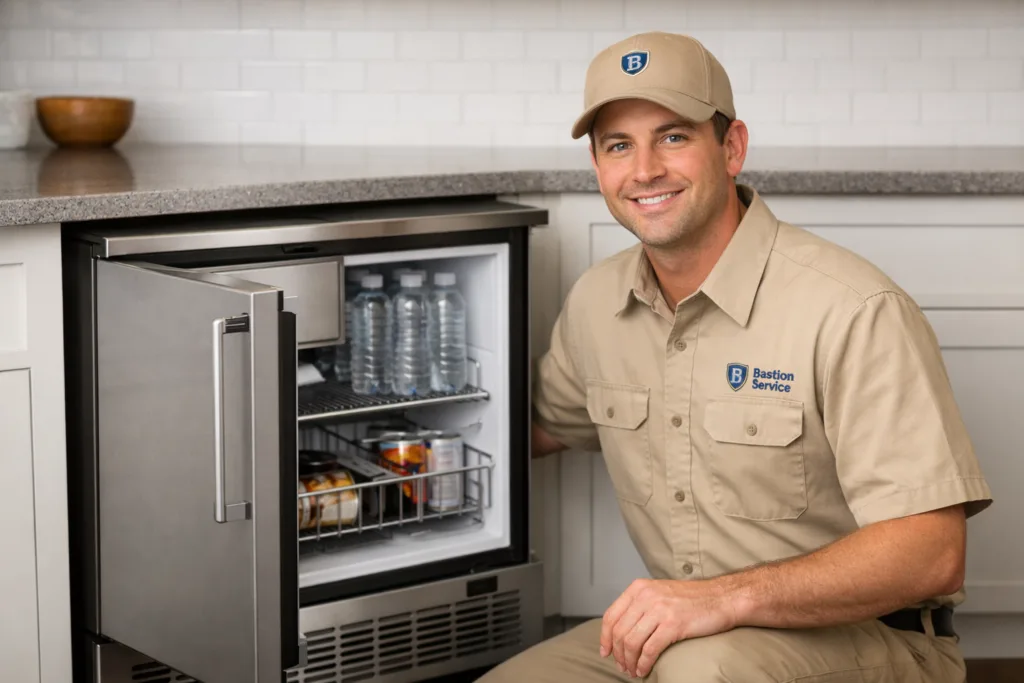






Cooling problems rarely stay small for long. An EdgeStar unit that is a little warm today can turn into spoiled groceries, melting ice, leaking water, or unstable storage conditions if the underlying issue is left unresolved. The most useful first step is to look at the symptom pattern closely instead of guessing based on a single sign.
For specific EdgeStar appliance paths in Hawthorne, review EdgeStar Refrigerator Repair in Hawthorne, EdgeStar Freezer Repair in Hawthorne, and EdgeStar Ice Maker Repair in Hawthorne.
How EdgeStar cooling problems usually show up
In Hawthorne homes, EdgeStar appliances are often used in kitchens, garages, home bars, and entertainment areas. Because many of these units are compact or specialty models, performance changes can be subtle at first. A refrigerator may cool unevenly, a freezer may begin building frost, an ice maker may slow down before stopping, or a wine cooler may drift away from its set temperature without a total shutdown.
That is why symptom-based diagnosis matters. The same complaint, such as “not cold enough,” can point to very different causes depending on whether the unit is also noisy, leaking, icing over, or cycling strangely.
Symptoms that help narrow down the problem
Temperature loss or inconsistent cooling
If the appliance feels warmer than usual, the likely causes can include restricted airflow, fan trouble, sensor errors, control faults, dirty condenser components, or a more serious sealed system issue. Intermittent cooling is especially important to note. When a unit cools normally for a while and then slips out of range, homeowners sometimes delay service, but repeated temperature swings often signal a problem that is getting worse.
Useful clues include:
- Food spoiling faster than normal
- Soft frozen foods or partially thawed items
- The appliance running longer but cooling less effectively
- Temperature differences between shelves or compartments
Frost buildup or ice blocking vents
Frost is not just a cosmetic issue. Heavy ice accumulation can choke airflow and make the appliance seem to be running while cooling performance drops. This often points to defrost trouble, a poor door seal, frequent warm-air intrusion, or fan-related airflow problems.
A common pattern is a freezer that looks very cold but a refrigerator section that is getting warm. In many cases, that combination suggests air is not moving correctly through the system.
Water leaks and excess moisture
Puddles under the appliance, water inside shelves or bins, or excessive condensation around the door can come from clogged drain paths, cracked water lines, poor gasket sealing, or defrost-related drainage issues. Leaks should be taken seriously because ongoing moisture can damage nearby flooring and create odor or mold concerns.
Noise, vibration, or nonstop operation
Buzzing, clicking, rattling, or fan-like scraping sounds can all help identify where the problem is developing. Some noises come from simple causes such as poor leveling or items vibrating against the cabinet. Others suggest worn fan motors, ice interference, or compressor strain. If the appliance is running almost constantly and still not holding temperature, the issue is usually no longer minor.
Display or control irregularities
On units with digital controls, symptom patterns may include flashing displays, incorrect temperature readings, unresponsive buttons, or settings that do not hold. These issues can be electronic, but they can also appear alongside true cooling failures. That is one reason random part replacement often misses the real cause.
What to watch for by appliance type
Refrigerators
EdgeStar refrigerator problems often begin with weak cooling, warm fresh food storage, recurring puddles, or unusual compressor run time. A refrigerator may still appear operational because lights are on and fans can be heard, but food safety depends on actual temperature, not whether the unit has power.
Service becomes more urgent when:
- Milk, produce, or leftovers are not staying cold enough
- The door does not seal tightly
- Moisture keeps returning inside the cabinet
- The refrigerator is noisy and warm at the same time
Freezers
Freezer issues are often easier to notice because food texture changes quickly. Soft ice cream, frost-coated packages, partial thawing, or uneven freezing usually mean the unit is not maintaining consistent performance. A freezer that sounds normal can still have internal airflow or defrost problems, so the condition of the food is often a better indicator than the sound of the machine.
Ice makers
When an EdgeStar ice maker slows down, stops producing, leaks, or makes small or misshapen cubes, the problem may involve water supply, internal freezing conditions, scale buildup, sensors, or mechanical wear. Ice makers depend on both proper temperature and proper water movement, so the visible symptom does not always reveal the failed part.
Homeowners should pay attention to whether the problem is:
- No ice at all
- Very slow production
- Leaks during the fill cycle
- Cloudy, thin, or malformed cubes
Wine coolers
Wine cooler complaints usually center on temperature drift, uneven cabinet cooling, fan noise, condensation, or a unit that powers on but does not maintain the selected range. These symptoms matter even if the cooler has not fully shut down, because storage stability is the whole point of the appliance. If bottles are warming, labels are damp, or the unit cycles erratically, the problem is worth addressing before performance drops further.
When waiting is likely to make things worse
Some appliance issues can be observed for a short time, but others should be scheduled promptly. Temperature loss, repeated leaking, heavy frost, burning smells, or new mechanical noises usually mean continued use could increase wear or lead to a larger failure. This is especially true when a fan is obstructed, a defrost system is failing, or a compressor is being forced to work harder than normal.
Temporary recovery can also be misleading. If the appliance cools again after being reset or after sitting unused for a while, that does not necessarily mean the problem is solved. Intermittent faults often return with less warning the next time.
Repair or replace?
Not every EdgeStar appliance should be repaired automatically. The better choice depends on the age of the unit, the type of failure, the condition of doors and seals, and whether the repair addresses the root cause. Many issues involving fans, drains, seals, controls, or sensors can make sense to repair if the rest of the appliance is in solid condition.
Replacement becomes more likely when the problem involves major sealed system failure, repeated breakdowns, or overall deterioration that affects long-term reliability. For many households in Hawthorne, the decision comes down to expected performance after repair rather than the immediate symptom alone.
What helps before a service visit
A few details can make diagnosis much more efficient:
- When the problem started
- Whether it is constant or intermittent
- If the unit is louder than usual
- Whether frost, leaks, or condensation are present
- If food, ice production, or stored beverages are being affected
- Whether the issue followed a power interruption, cleaning, or moving the unit
Those observations help connect the symptom to the most likely failure area and make it easier to choose the right repair direction.
Choosing the right next step for your household
EdgeStar refrigerators, freezers, ice makers, and wine coolers can fail in different ways even when the complaint sounds similar. A warm cabinet, a noisy fan, a puddle on the floor, or a drifting display reading each points to a different path forward. For homeowners in Hawthorne, the smartest approach is to focus on what the appliance is doing now, how quickly the symptom is progressing, and whether the unit is still protecting what it is meant to store.
That kind of practical evaluation helps separate minor issues from urgent ones and supports a repair plan based on the actual behavior of the appliance.


