
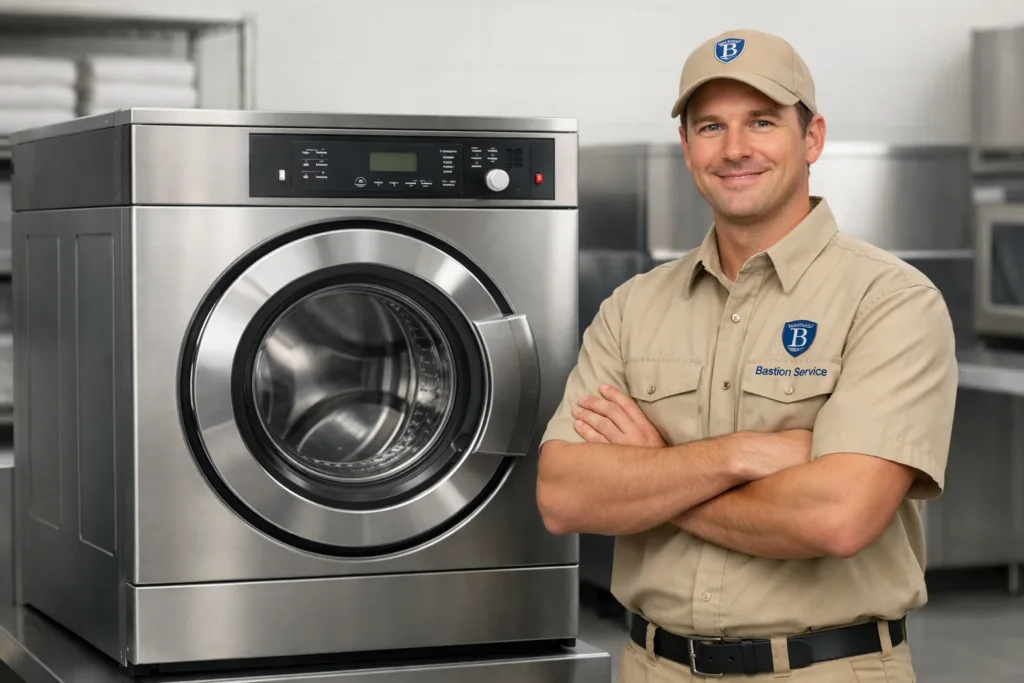




Commercial washers support daily operations that depend on predictable laundry flow, so even a “minor” issue can create delays in staffing, linen availability, tenant service, or back-of-house turnover. In West Hollywood, the most useful first step is identifying whether the failure is mechanical, electrical, water-related, or tied to how the machine is completing each stage of the cycle.
Related commercial equipment paths in West Hollywood include Speed Queen Washer Repair in West Hollywood and Wascomat Washer Repair in West Hollywood.
What common washer symptoms usually mean
A machine that will not start may be dealing with a door-lock fault, user-interface problem, power supply issue, or control failure. If the washer starts but stops mid-cycle, the cause may involve lid or door sensing, drain delays, fill errors, overheating, or communication problems between controls and drive components. These symptoms can look similar from the outside, but they do not point to the same repair.
Fill problems are another frequent source of downtime. Slow fill, no fill, or overfilling can come from restricted inlet screens, failing water valves, pressure-sensing issues, hose problems, or a board that is no longer reading water level correctly. In a commercial setting, those issues can also affect chemical balance, wash times, and final cleaning results.
Drain and spin complaints often show up together. When a washer leaves standing water, takes too long to drain, or refuses to enter a full spin, the problem may involve the pump, drain hose restrictions, load sensing, suspension wear, or an imbalance condition the machine cannot correct. Poor extraction matters because it pushes extra moisture into the next stage of the laundry process. If the bottleneck is really happening after the wash cycle because items remain unusually wet, Commercial Dryer Repair in West Hollywood may be the better service path.
Signs the machine should be taken out of use
Some problems should not be monitored for “one more day.” A commercial washer should be evaluated promptly if it is leaking onto the floor, producing grinding or banging sounds, tripping breakers, smelling hot, failing to lock, or displaying recurring error codes. Continued use under those conditions can turn a targeted repair into damage involving bearings, motors, control boards, wiring, or surrounding equipment.
Visible leaks deserve special attention because water on the floor can come from more than one source. The issue may be a torn hose, drain backup, overfill condition, door boot damage, pump leak, or internal crack. In busy commercial environments, even a small leak can become a safety concern and add cleanup time that interrupts workflow.
Why wash quality problems are not always detergent problems
When loads come out looking poorly washed, operators often assume the issue is chemical, loading practice, or program selection. Sometimes that is true, but inconsistent cleaning can also point to low fill volume, improper water temperature, weak mechanical action, shortened cycle stages, or a spin issue that changes how the load moves through the machine. A washer can still appear operational while performing far below the standard a business needs.
Heating-related faults can also affect results where applicable. If programmed temperatures are not being reached or maintained, the machine may struggle with sanitation targets, stain removal, or cycle consistency. For businesses handling towels, linens, uniforms, or recurring high-volume loads, these performance issues can be just as disruptive as a complete shutdown.
Vibration, noise, and movement during operation
Excessive shaking, walking, or repeated off-balance stops usually points to a condition that should be corrected before it becomes more expensive. Common causes include worn suspension components, uneven installation, basket issues, bearing wear, overloaded cycles, or repeated operation with poorly distributed loads. In commercial laundry rooms, those stresses add up quickly because machines are run more often and for longer periods.
Noise is another important clue. Squealing can suggest belt or pulley wear, grinding may indicate bearing or drivetrain problems, and sharp knocking can point to basket movement or mounting issues. The sound profile matters because it helps distinguish between a repair involving an isolated wearable component and one involving deeper structural wear.
How repair decisions are usually made
Not every commercial washer failure leads to the same recommendation. Repairs are often worthwhile when the problem is isolated to pumps, valves, hoses, door-lock assemblies, sensors, belts, or accessible electrical components. Those issues can often be addressed without replacing the machine if the frame, basket, bearings, and control system remain in solid overall condition.
Replacement becomes more likely when there is severe bearing damage, major corrosion, repeated high-cost breakdowns, obsolete parts support, or broader deterioration that makes future reliability unlikely. For many businesses in West Hollywood, the right decision comes down to downtime impact, age, repair scope, and whether the washer can return to stable daily use instead of becoming a recurring interruption.
What a service assessment should clarify
A useful commercial washer diagnosis should do more than identify a single failed part. It should confirm how the machine behaves during fill, agitation, drain, and spin; whether the fault is isolated or part of a larger wear pattern; whether continued use risks secondary damage; and whether the unit is a good repair candidate based on condition and expected service life.
That kind of evaluation helps business owners, facility managers, and operations teams make faster decisions with less guesswork. The goal is to restore reliable laundry performance, prevent repeat interruptions, and keep the operation moving without avoidable strain on the rest of the equipment lineup.


