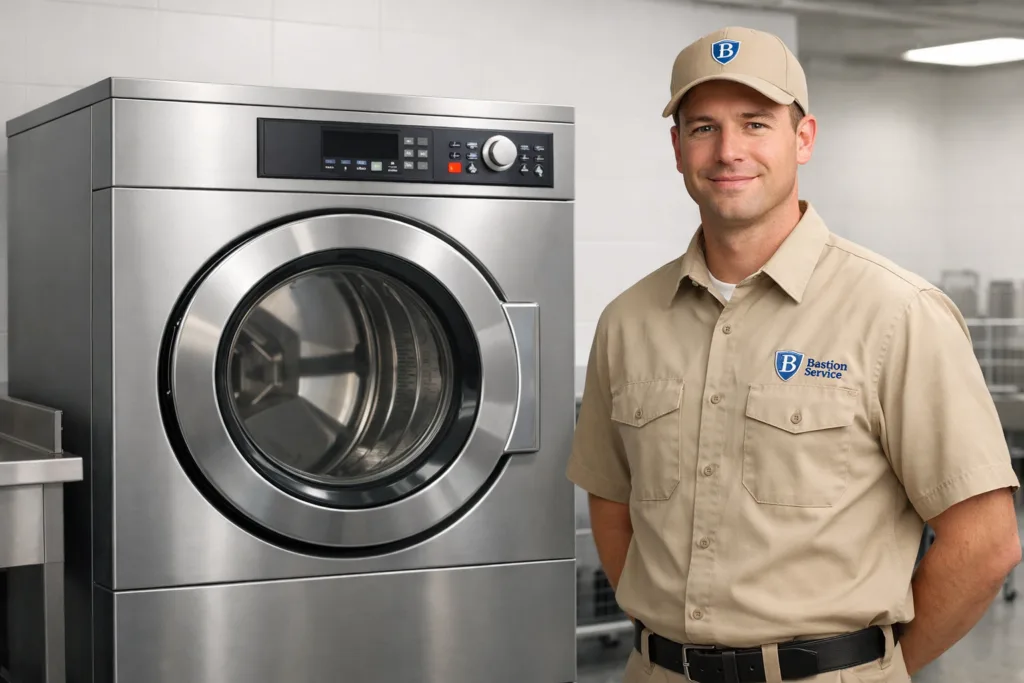




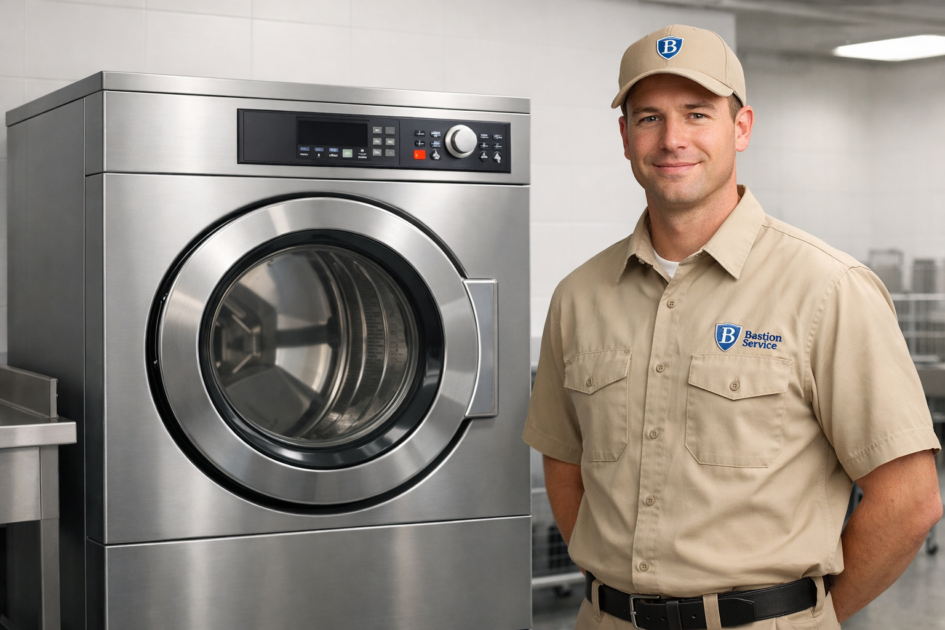
Commercial dryers support daily throughput, staffing efficiency, and turnaround expectations, so even one underperforming unit can disrupt an entire laundry workflow. Symptoms that seem similar on the surface often come from different causes, which is why heat loss, long dry times, shutdowns, and drum noise should be evaluated by system rather than guesswork.
Related commercial equipment paths in West Hollywood include Speed Queen Dryer Repair in West Hollywood and Wascomat Dryer Repair in West Hollywood.
Common commercial dryer symptoms and what they may indicate
A dryer that tumbles but does not produce heat can point to failed heating components, ignition problems on gas equipment, tripped thermal protection devices, wiring faults, or control issues. When the machine does heat but cycles take much longer than expected, the problem is often tied to restricted airflow, weak heat output, sensor errors, or wear that prevents the drum and seals from operating efficiently.
Noise is another important warning sign in commercial settings. Thumping, scraping, squealing, or rattling may suggest worn rollers, a failing idler, belt damage, bearing wear, or loose internal hardware. Intermittent stopping can also reflect overheating, motor stress, a faulty door switch, unstable electrical supply, or a control fault that only appears after the machine has been running for part of the cycle.
Burning smells, excessive exterior heat, and repeated breaker trips should be treated as priority issues. Continued use under those conditions can increase damage, extend downtime, and create avoidable safety concerns for staff working around the equipment.
Why long dry times are not always a heating problem
One of the most common mistakes with commercial dryer complaints is assuming every slow cycle is caused by a bad heater. In practice, poor exhaust flow is often a major factor. If hot, moist air cannot leave the machine properly, fabric stays damp longer, internal temperatures rise unevenly, and components are forced to work harder than intended.
That is why airflow checks matter alongside heater and sensor testing. Vent restrictions, lint buildup, crushed ducting, clogged outlet paths, and failed blower-related parts can all affect performance. A dryer may appear to be heating normally at first, yet still struggle to complete loads on schedule because moisture is not being removed efficiently.
How dryer issues can affect the full laundry process
In commercial laundry environments, a dryer failure rarely stays isolated to one machine. Wet loads begin stacking up, staff spend more time re-running cycles, and available capacity drops quickly during busy periods. If the backup starts earlier in the laundry process with slow draining, poor spin-out, or water left in loads, Commercial Washer Repair in West Hollywood may be the better service path before focusing only on the dryer.
Looking at the handoff between washer performance and dryer performance can prevent misdiagnosis. A dryer asked to handle overly wet loads may appear weak even when its heat system is functioning, while an airflow-restricted dryer can make normal washer output seem like the problem. Reviewing both sides of the workflow helps identify where the bottleneck actually begins.
When prompt service makes the most sense
Service is usually worth scheduling as soon as drying times increase, heat becomes inconsistent, the drum stops turning smoothly, or the unit shuts off before a cycle is complete. These issues tend to worsen under continued commercial use, especially when machines are running back-to-back throughout the day.
Early attention can also help prevent secondary failures. A restricted vent can overheat safety components, a worn support roller can damage the drum, and a slipping belt can add strain to the motor. What starts as a manageable repair can become a larger interruption if the machine stays in operation too long after symptoms first appear.
Repair versus replacement for commercial dryer equipment
Many commercial dryer problems are repairable when the machine is otherwise structurally sound and the failure is limited to serviceable parts. Belts, rollers, idlers, igniters, elements, thermostats, sensors, switches, and selected electrical components are often addressed without replacing the entire unit.
Replacement becomes more likely when there are multiple overlapping failures, significant drum or cabinet deterioration, repeated control-related downtime, or repair costs that no longer align with the equipment’s remaining service life. For businesses in West Hollywood, the decision usually comes down to whether the machine can return to reliable operation without creating ongoing scheduling risk.
What a productive service visit should clarify
A useful commercial dryer evaluation should identify whether the primary fault is related to heat generation, airflow, drum movement, electrical supply, controls, or a combination of systems. It should also account for any secondary wear that could cause the same issue to return shortly after the main repair is completed.
That level of detail helps managers, facilities teams, and operators make better approval decisions. Instead of relying on trial-and-error parts replacement, they can weigh downtime, expected repair scope, and operational impact with a clearer understanding of what the equipment needs next.