
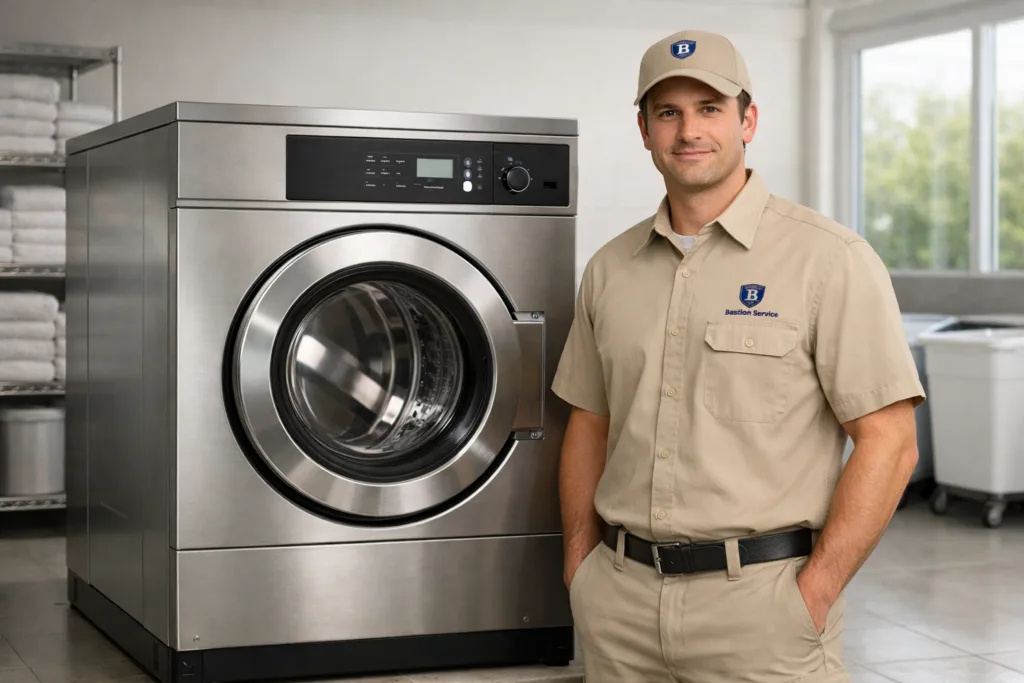




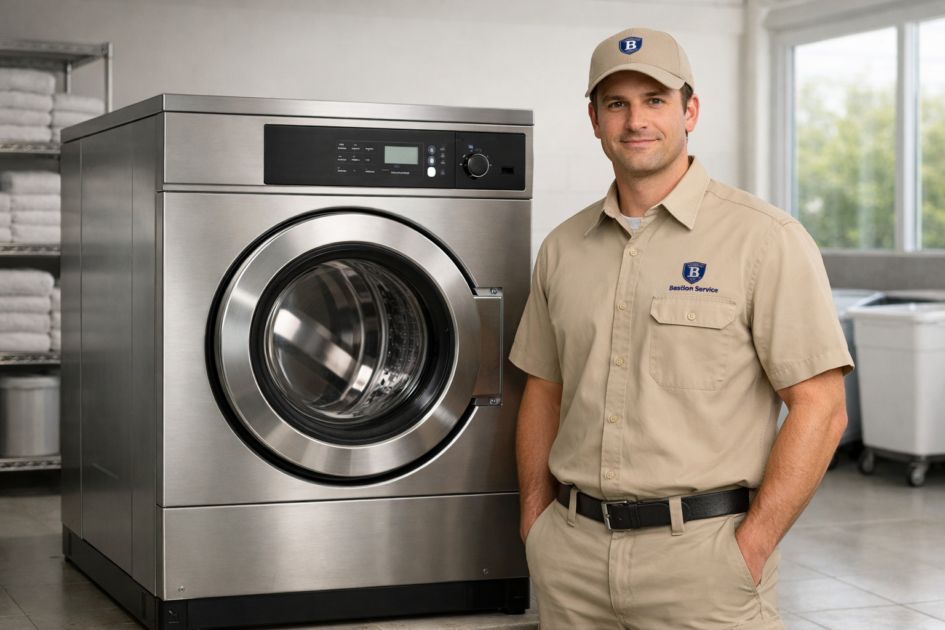
Commercial washer problems tend to show up first as workflow issues: delayed turnover, incomplete cycles, standing water, poor extraction, or staff having to rerun loads. In a business setting, even a single underperforming machine can create backups, inconsistent results, and avoidable labor costs. The most useful response is to evaluate the exact symptom pattern before parts are ordered or a unit is pushed through more cycles.
Related commercial equipment paths in Rancho Palos Verdes include Speed Queen Washer Repair in Rancho Palos Verdes and Wascomat Washer Repair in Rancho Palos Verdes.
Commercial washer issues that commonly disrupt operations
Many failures begin gradually rather than all at once. A washer may start filling too slowly, stop before rinse or spin, leave loads wetter than usual, or show inconsistent wash results from one cycle to the next. Those symptoms can point to different causes, including inlet valve problems, pressure sensing faults, drain restrictions, pump wear, drive system trouble, or control failures.
Leaks also need prompt attention in commercial environments. Water on the floor can create slip hazards, damage surrounding materials, and interfere with nearby equipment. Depending on the machine, the source may be a hose connection, drain path, door seal, internal tub component, or another worn part that worsens under repeated use.
Excessive vibration, banging during spin, grinding sounds, or a burning odor should not be treated as minor nuisances. Those symptoms may indicate balance problems, suspension wear, bearing deterioration, motor strain, or other mechanical issues that can escalate quickly if the machine stays in service.
Why symptom-based diagnosis matters
The same visible problem can come from very different failures. A washer that will not spin might be dealing with a door-lock issue, a drain problem that prevents cycle progression, a worn belt, a motor fault, or an electronic control problem. A machine that seems to wash poorly may actually have a fill issue, weak drum action, incorrect temperature performance, or interruption during part of the cycle.
That is why symptom-based diagnosis matters in commercial washer repair in Rancho Palos Verdes. Replacing a part based only on the end result can waste time, extend downtime, and leave the original problem unresolved. A better service path looks at when the issue starts, whether it is constant or intermittent, and what changes from one cycle stage to another.
Common symptom patterns and what they can suggest
- Will not start: possible power supply issues, door or lid lock faults, control failure, or user-interface problems.
- Fills incorrectly: possible inlet valve failure, pressure switch issues, supply restrictions, or control errors.
- Won’t drain: possible pump failure, obstruction, drain hose issue, or a control problem affecting cycle advancement.
- Won’t spin properly: possible imbalance, suspension wear, drive trouble, lock issues, or drainage problems.
- Leaks during operation: possible hose, seal, tub, door, or drain connection problems.
- Loads come out too wet: possible poor extraction, spin-speed issues, drainage trouble, or overloading patterns.
When continued use can make the problem worse
Some washer problems reduce performance but still allow limited operation. Others create a real risk of secondary damage. A machine that leaks, stops mid-cycle, trips electrical protection, drains slowly, or produces loud mechanical noise should usually be taken out of use until it is evaluated. Continuing to run it can increase wear on the pump, motor, bearings, controls, mounting points, or flooring.
Intermittent faults are especially important in busy facilities because they often become more frequent before complete failure. If staff notice that a washer stops at the same stage, drains inconsistently, or only spins correctly on some loads, those details can help narrow the likely cause and shorten the service process.
Poor extraction and downstream laundry bottlenecks
When a commercial washer does not remove enough moisture during spin, the problem extends beyond the wash cycle. Wet loads slow the rest of the laundry process, increase drying time, and reduce equipment throughput across the room. If those delays are showing up on the drying side as well, Commercial Dryer Repair in Rancho Palos Verdes may be the better place to start for the equipment causing the backup.
Repair or replacement considerations
Repair is often the practical choice when the failure is limited to a serviceable component and the rest of the machine remains in solid operating condition. That can make sense for many drain, fill, lock, pump, control, and drive-related issues when the unit still has reasonable service life left. Replacement becomes more likely when the washer has repeated breakdowns, multiple worn systems, or a cost outlook that no longer supports dependable operation.
For businesses in Rancho Palos Verdes, the decision usually comes down to how much downtime the unit creates, whether the machine can return to predictable performance after service, and whether parts availability supports a sensible turnaround. In commercial settings, consistency often matters just as much as whether the machine can be made to run again temporarily.
What to expect during a commercial washer service evaluation
A service evaluation typically begins with the reported symptom, recent operating history, and visible machine condition. From there, inspection may focus on fill behavior, drainage, door or lid operation, spin performance, control response, electrical function, and signs of mechanical wear. The goal is to identify not only what failed, but whether the failure appears isolated or part of a broader wear pattern.
Useful information from staff can make that process faster. It helps to note whether the washer fails on every load or only some cycles, whether water remains in the drum, whether vibration happens only at high spin, and whether any unusual sounds or odors appear before shutdown. Those details can make the service plan more direct and reduce unnecessary downtime.
Business-focused washer repair support
Commercial laundry equipment is expected to perform on schedule, not just occasionally complete a cycle. When a washer starts leaking, draining poorly, stopping mid-cycle, or producing unreliable results, the priority is getting an accurate assessment of the fault and understanding the next step that best protects uptime. For facilities that rely on steady laundry output in Rancho Palos Verdes, targeted washer service helps restore a more predictable operation.


