
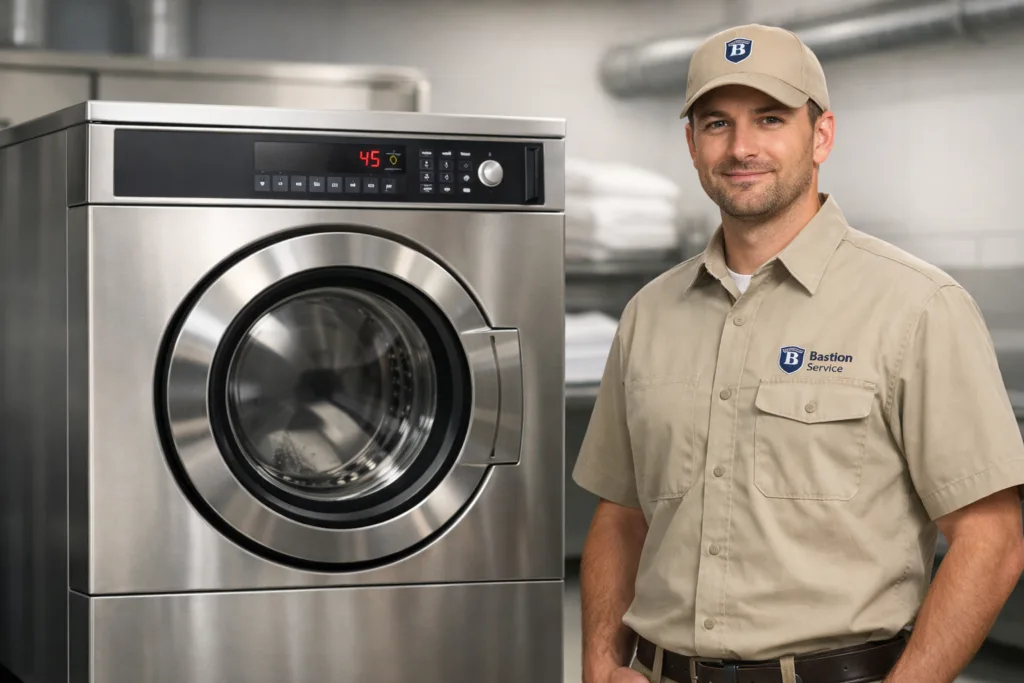




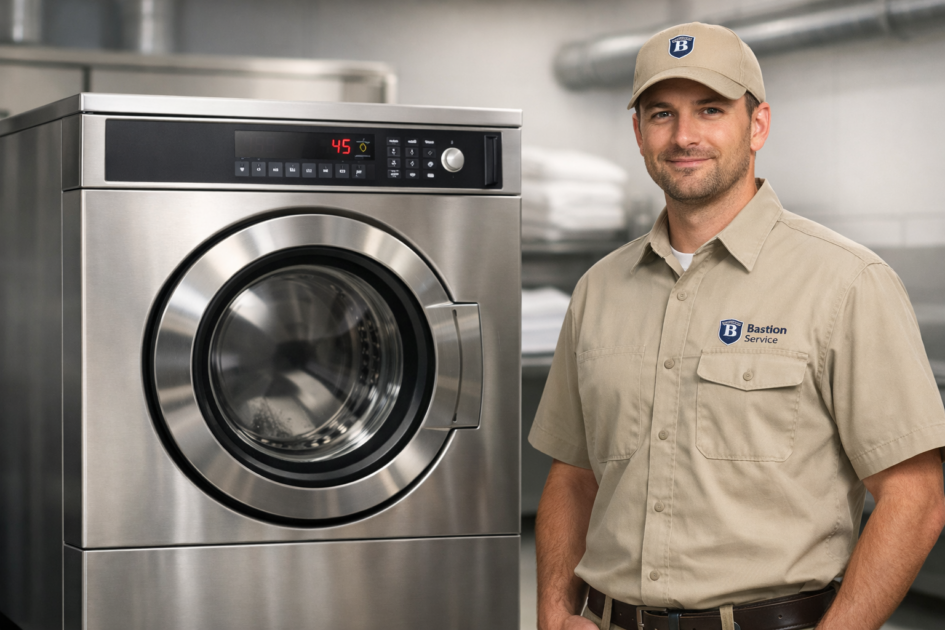
Washer downtime can quickly disrupt laundry flow, delay turnover, and force staff to spend time managing equipment instead of daily operations. In a commercial setting, the most effective next step is to identify whether the problem is tied to water supply, draining, spin performance, controls, or a developing mechanical failure before the issue spreads into larger workflow losses.
Related commercial equipment paths in Pico-Robertson include Speed Queen Washer Repair in Pico-Robertson and Wascomat Washer Repair in Pico-Robertson.
Common Commercial Washer Problems and What They Often Mean
Commercial washers rarely fail in exactly the same way twice, even when the symptom looks familiar. A unit that will not start may be dealing with a door lock issue, control fault, power problem, or failed switch. A machine that fills too slowly can point to restricted inlet screens, valve trouble, or inconsistent water pressure. If cycles stop partway through, the cause may involve controls, drainage problems, overheating, or an out-of-balance condition the machine cannot correct on its own.
Drain complaints are especially important because they affect everything that happens afterward. Standing water in the drum, long cycle times, and overly wet loads often trace back to pump obstructions, drain hose restrictions, or a pump motor that is weakening under demand. When the washer cannot clear water properly, spin performance usually suffers too, which can make a laundry bottleneck look like a washer-only issue when the slowdown is affecting the entire room.
Leaks also deserve prompt attention. Water at the front of the unit may suggest door gasket wear, while water underneath can come from hoses, pumps, internal seals, or overfill conditions. In a business environment, even a small leak can become a safety concern and can contribute to flooring damage, nearby equipment issues, and avoidable cleanup time.
Signs the Washer Should Be Taken Out of Service
Some problems allow for scheduled service, but others justify stopping use immediately. A commercial washer should generally be taken out of rotation if it is tripping breakers, producing a burning smell, leaking actively, making severe grinding or banging sounds, or shaking hard enough to move during operation. Continued use under those conditions can increase repair scope and create risk for surrounding equipment.
Repeated staff workarounds are another warning sign. If employees have to rerun loads, reduce fill levels, skip certain cycles, manually rebalance items, or restart the machine several times to get a usable result, the washer is already operating below commercial expectations. Those temporary fixes often hide a fault that is steadily getting worse.
Spin, Vibration, and Extraction Problems
Poor extraction is one of the most expensive washer symptoms because it affects both wash quality and the next stage of laundry processing. Loads that come out excessively wet may indicate a spin control issue, motor problem, belt or drive trouble, drainage restriction, or imbalance detection fault. In high-volume operations, that extra retained moisture adds time to every load and reduces overall throughput.
Heavy vibration is not always just a load issue. It can come from worn suspension components, bearing wear, mounting problems, uneven flooring conditions, or damage caused by repeated overloaded cycles. When the machine begins walking, slamming, or sounding rough at high speed, the concern is no longer just operator inconvenience. It may indicate wear that can spread into other assemblies if ignored.
If washer loads are reaching the dryers unusually wet and drying time has climbed at the same time, Commercial Dryer Repair in Pico-Robertson may be the better service path for the second half of the laundry bottleneck.
Fill and Wash Performance Issues
When a commercial washer is not cleaning effectively, the issue is not always detergent-related. Poor wash results can come from improper fill levels, temperature problems, weak mechanical action, shortened cycles, sensor errors, or failures that prevent the machine from completing programmed steps correctly. A washer that appears to run normally can still underperform if one part of the cycle is no longer happening at the right time or for the right duration.
Slow filling can be especially disruptive in busy operations because it lengthens every load without always triggering a hard failure. Businesses may notice cycle creep before they notice an outright breakdown. That kind of symptom often points to water inlet restrictions, valve problems, or control-related delays that should be tested rather than guessed at.
When Repair Makes Sense and When It May Not
The repair decision usually comes down to the exact fault, the condition of the machine overall, the age of major components, and the cost of downtime while the unit remains unreliable. A targeted repair often makes sense when the problem is isolated to a pump, valve, lock, hose, sensor, or similar serviceable component and the washer is otherwise in solid working condition.
Replacement becomes a more serious consideration when failures are recurring, leaks keep returning, structural or drivetrain wear is advanced, or multiple repairs have already been made without restoring stable performance. In those cases, the better business decision may depend less on the current symptom and more on whether the washer can realistically return to consistent commercial use.
Symptoms That Should Be Evaluated Promptly
- Washer will not start or stops before cycle completion
- Standing water remains in the drum after the cycle ends
- Spin cycle is weak, noisy, or inconsistent
- Loads come out too wet for normal drying turnaround
- Water is leaking from the door, hoses, or underneath the cabinet
- Machine vibrates excessively or shifts during operation
- Error codes return after resets
- Wash results are poor even with normal loading and chemistry
What a Service Evaluation Should Clarify
A useful commercial washer evaluation should narrow the problem to its actual source rather than just the visible symptom. That means determining whether the fault is electrical, mechanical, hydraulic, control-related, or caused by wear that has started affecting multiple systems. It should also identify whether a failed part is the root cause or only the result of another unresolved problem.
For businesses in Pico-Robertson, the goal is not just getting the washer to turn back on. It is restoring consistent cycle performance, reducing repeat interruptions, and making a sound decision about whether the machine should be repaired, monitored, or removed from rotation before it causes more disruption.


