
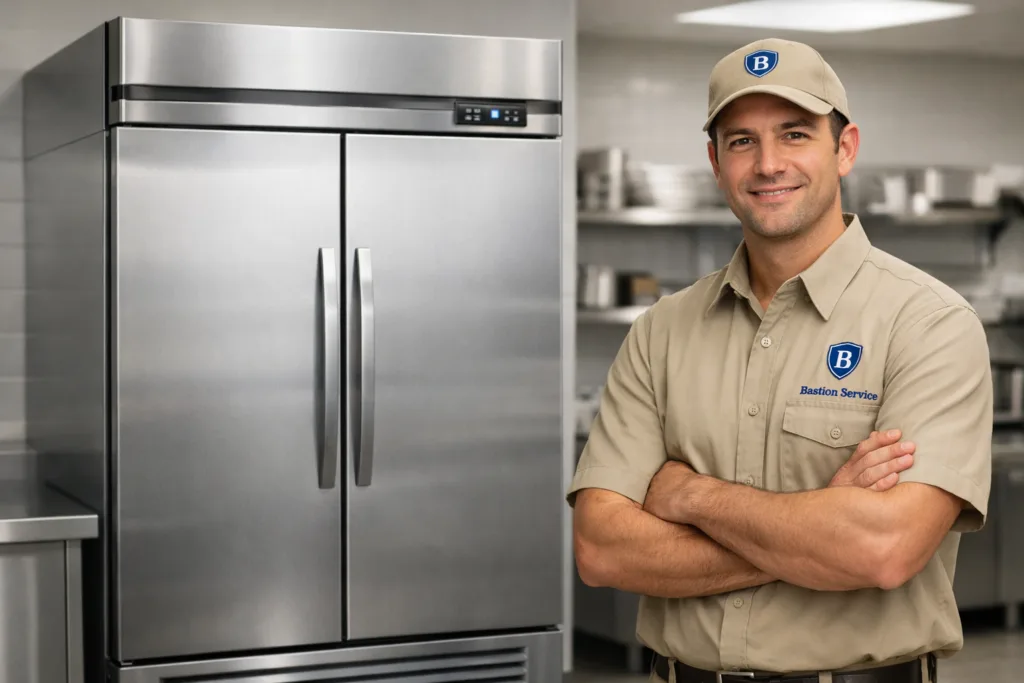




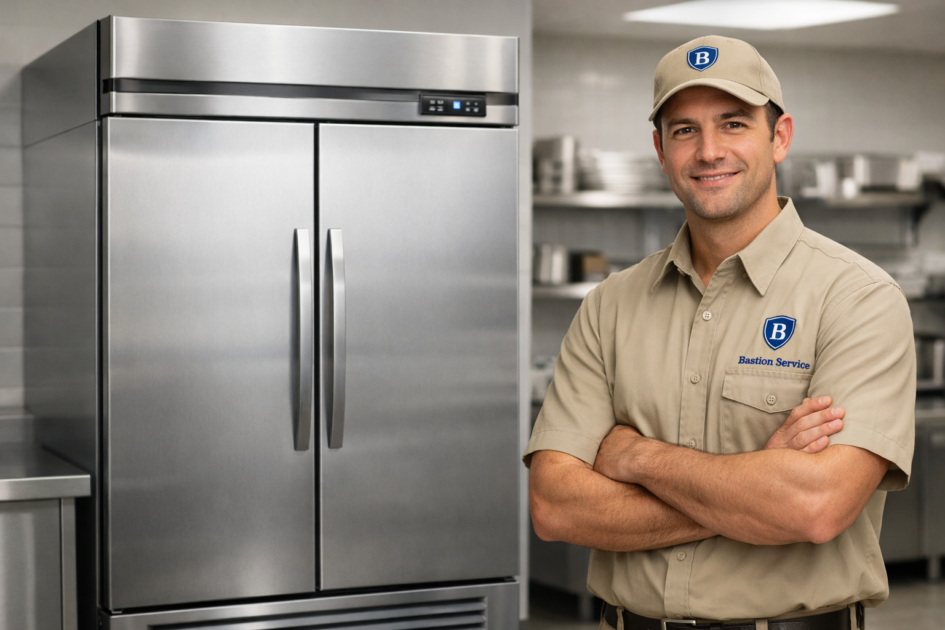
Temperature problems in a commercial refrigerator rarely stay isolated for long. Once a cabinet begins running warm, cycling too often, or collecting moisture, inventory protection, prep timing, and staff workflow can all be affected. The most useful starting point is to narrow the symptom pattern before the issue spreads into a larger equipment interruption.
Related commercial equipment paths in West Los Angeles include Beverage-Air Fridge Repair in West Los Angeles.
Common commercial refrigerator problems
Temperature inconsistency is one of the most common reasons businesses request service in West Los Angeles. A refrigerator that cannot hold its set range may be dealing with dirty condenser coils, failing evaporator fans, weak door gaskets, sensor drift, control faults, or refrigerant-system trouble. If temperatures only rise during heavy door traffic, loading patterns and airflow blockage may be contributing. If the cabinet stays warm even during slower periods, a component failure becomes more likely.
Noise, leaks, and frost buildup are also common warning signs. Buzzing, clicking, fan scraping, hard starts, or louder compressor operation can point to parts working under strain. Water on the floor may come from a blocked drain, a defrost issue, or condensation caused by poor sealing. Frost and moisture often appear together, which is why replacing a single visible part without testing the full system can miss the real cause.
What different symptoms may indicate
Warm cabinet or slow temperature recovery
If product temperature climbs after normal door openings and recovery takes too long, the issue may involve restricted airflow, poor coil performance, fan failure, or a control problem. In more serious cases, compressor weakness or sealed-system trouble may be involved. A useful inspection typically begins with coil condition, fan operation, gasket fit, control response, and door closing before moving deeper into the refrigeration circuit.
Frost, condensation, or interior ice
Excess frost on shelving, product, or interior panels can indicate warm air infiltration, sensor problems, defrost failure, or restricted drainage. Condensation around the door frame may point to gasket wear or alignment issues that allow humid air into the cabinet. If the coldest symptoms are isolated to a low-temperature compartment rather than the main refrigerator section, Commercial Freezer Repair in West Los Angeles may be the better service path.
Leaks, poor ice production, or water supply concerns nearby
Some sites notice puddling, slow fills, or inconsistent ice output at the same time refrigerator issues appear, especially when multiple pieces of refrigeration equipment share utility connections or nearby drainage conditions. When the main complaint centers on ice harvest, fill cycles, or water valve behavior instead of cabinet cooling, Commercial Ice Machine Repair in West Los Angeles may be more relevant.
Noise, cycling, or intermittent shutdowns
Short cycling, delayed starts, overload trips, and random shutdowns can be tied to relays, controls, fan motors, electrical faults, or overheating caused by poor ventilation. These symptoms deserve prompt attention when the refrigerator supports perishable inventory or continuous daily service. A unit that repeatedly resets and fails again is usually signaling an underlying condition rather than a one-time interruption.
When service should be scheduled
Service should be prioritized when temperatures are drifting outside target range, alarms are repeating, frost is building quickly, or the refrigerator runs constantly without stabilizing. Continued operation can worsen damage if a fan motor is failing, a drain is backing up into the cabinet, or the compressor is overheating. Staff workarounds such as moving product between shelves, manually clearing ice, or resetting controls more than once are strong signs that the problem needs direct diagnosis.
It also helps to document what the unit is doing before service begins. Temperature swings, alarm history, time of day, recent loading changes, unusual sounds, and whether the problem starts after cleaning or restocking can all help narrow the likely source. In a commercial setting, that information often saves time and helps keep the repair process focused.
Repair versus replacement considerations
Not every commercial refrigerator problem points to replacement. Many service calls involve controls, fan motors, door gaskets, drains, sensors, defrost components, or maintenance-related airflow restrictions that can be corrected without replacing the cabinet. Replacement becomes a more serious consideration when the unit has repeated breakdowns, major sealed-system failure, unstable temperatures that threaten product, or downtime that no longer fits operational needs.
Age, repair history, parts availability, energy performance, and the cost of lost inventory should all be weighed alongside the estimate. For some businesses, restoring dependable operation quickly is the main priority. For others, repeated interruptions make long-term equipment planning the better business decision.
What a practical diagnosis should cover
A thorough commercial refrigerator evaluation should look at operating temperature, airflow, fan performance, control behavior, door seal condition, drainage, frost pattern, and compressor workload. The point is to determine whether the failure is isolated and repairable, tied to maintenance conditions, or part of a larger reliability problem within the unit.
For businesses in West Los Angeles, the most useful outcome is a service recommendation based on how the equipment is actually performing in daily use. That makes it easier to decide whether to proceed with repair, limit use until the fault is corrected, or begin planning replacement if the refrigerator no longer supports reliable operation.


