
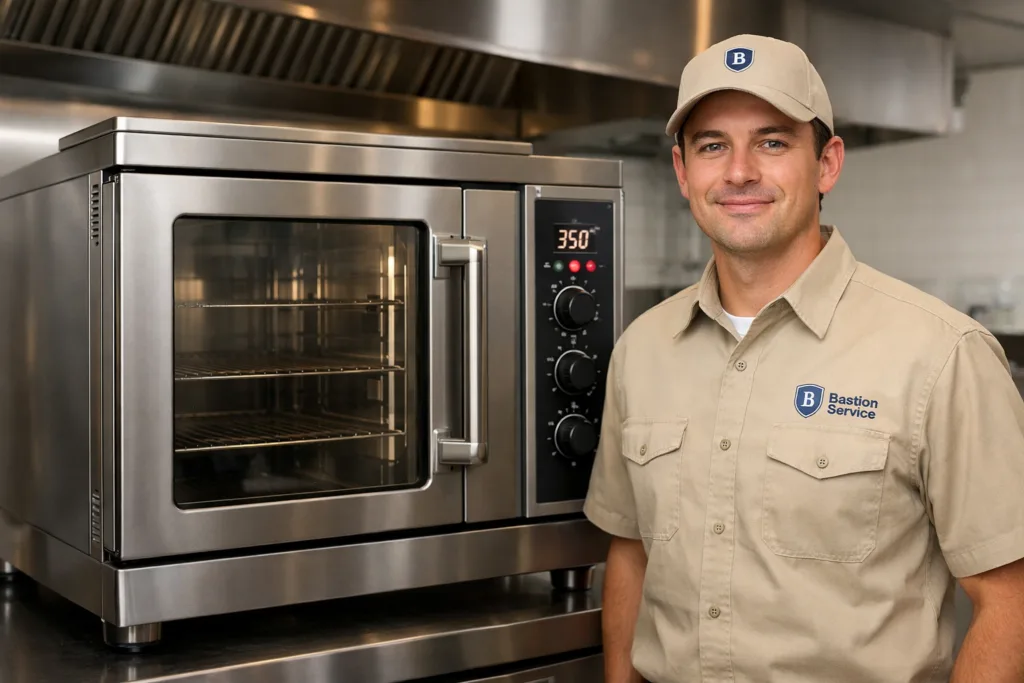




Uneven heat, slow preheating, and unexplained shutdowns can disrupt far more than one piece of equipment. In a commercial kitchen, oven problems affect ticket timing, product consistency, staffing rhythm, and overall output, so the most useful next step is identifying whether the issue is tied to heat production, controls, airflow, ignition, or wear that has built up over time.
Related commercial equipment paths in Torrance include Blodgett Oven Repair in Torrance and Southbend Oven Repair in Torrance.
Common commercial oven problems and what they may indicate
Temperature-related complaints are among the most common reasons businesses schedule service. Hot spots, undercooked centers, overbrowned edges, slow recovery between batches, and wide temperature swings can point to failing heating elements, weak igniters, sensor drift, thermostat problems, damaged door gaskets, or control faults. When the oven technically runs but cooking results are inconsistent, calibration and temperature feedback issues are often part of the diagnosis.
Startup and power problems can also come from several different sources. A unit that will not turn on, cuts off mid-cycle, trips a breaker, or flashes error codes may be dealing with wiring damage, switch failure, overheating protection events, control board trouble, or electrical supply issues. In gas equipment, delayed ignition, weak flame, or intermittent burner operation should be evaluated promptly because unreliable heating can affect both product quality and component life.
Symptoms that usually show up during production
Some oven failures are obvious, but others first appear as workflow problems. Longer cook times, batches that need rotating to finish evenly, unusual fan noise, smoke that appears during normal use, doors that no longer seal cleanly, and racks or sections of the cavity that heat differently are all signs that service is worth scheduling before the issue grows into lost product or missed timing.
If the problem involves open-oil cooking equipment instead of enclosed baking or roasting equipment, Commercial Fryer Repair in Torrance may be the better service path for that station.
When continued use can make the problem worse
Commercial ovens are often kept in service through minor symptoms because production demands do not stop, but some issues should not be ignored. Repeated overheating, visible arcing, burning smells, breaker trips, insulation damage, ignition delays, or a door that will not close properly can lead to broader component failure if the unit continues running. A struggling convection fan, for example, can create airflow imbalance that affects heating consistency and increases strain on related parts.
Waiting can also raise the real cost of the problem even if the oven still powers on. Lost batches, slower output, extra labor spent compensating for unreliable cook times, and inconsistent finished product often become more expensive than early repair. Once staff members are adjusting settings constantly just to get usable results, the equipment is already affecting day-to-day operations.
Repair versus replacement considerations
Not every commercial oven issue means replacement is necessary, and not every older unit is a poor repair candidate. The practical decision usually depends on what failed, whether parts are available, how often the unit has broken down recently, and how essential that oven is to daily throughput. If the failure is isolated and the rest of the machine is in solid condition, repair is often the sensible move. If several systems are wearing out at once and downtime is becoming routine, replacement may deserve stronger consideration.
For businesses in Torrance, that decision is easier when the diagnosis explains whether the problem is contained or likely to keep expanding. Knowing the condition of the heat system, controls, door seal, fan assembly, and electrical or gas-related components helps management weigh repair cost against reliability rather than guessing under pressure.
What a productive service visit should clarify
A useful commercial oven service call should do more than confirm the symptom. It should identify whether the core issue involves heat generation, ignition, sensor accuracy, control response, airflow, power delivery, or physical wear inside the cooking chamber. That kind of assessment helps kitchens, bakeries, and foodservice operations plan around downtime, order the right parts when needed, and avoid putting unnecessary stress on equipment that is already unstable.
For many operations, the real value of service is restoring predictable performance. When an oven in Torrance starts affecting consistency, output, or staff efficiency, a timely repair evaluation helps protect both production quality and equipment uptime.


