
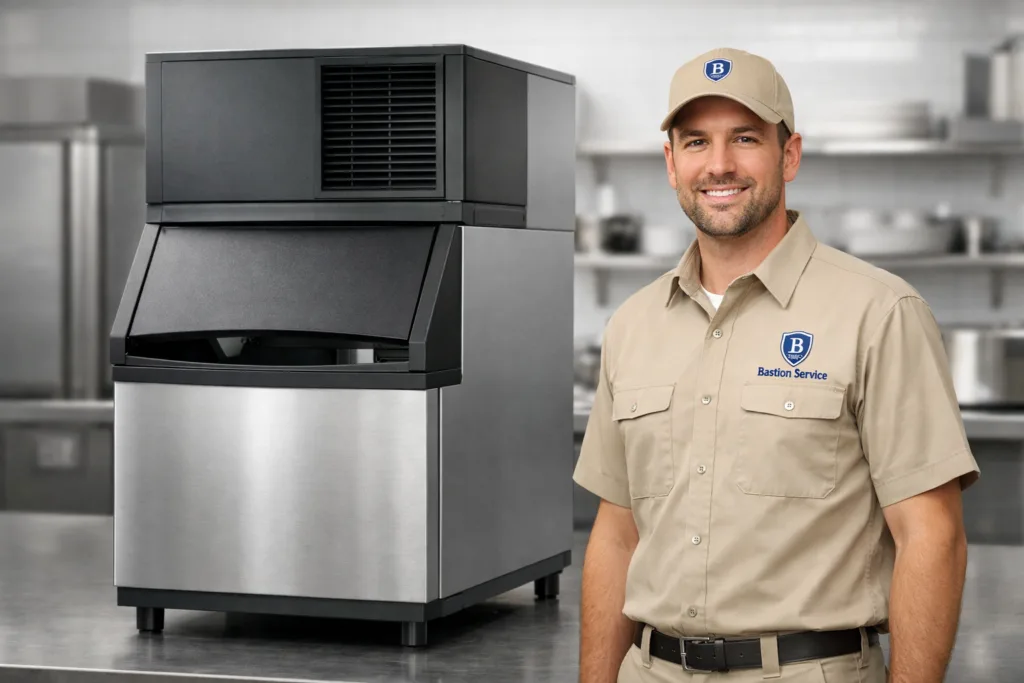




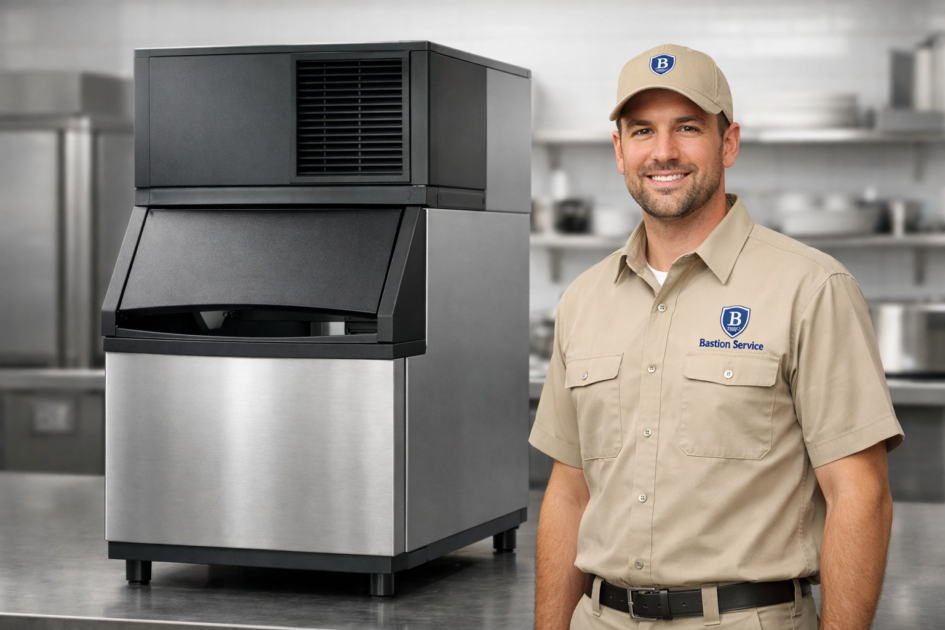
Ice machine problems tend to show up first as operational friction: beverage stations run short during peak periods, prep teams start rationing bin levels, or staff notice the machine cycling without delivering consistent output. In a commercial setting, those symptoms are worth addressing early because low production, wet ice, and intermittent shutdowns can come from very different causes, including water supply restrictions, scale buildup, drain issues, sensor faults, or refrigeration-side failures.
Related commercial equipment paths in Culver City include Hoshizaki Ice Machine Repair in Culver City.
Common ice machine problems in commercial settings
Low production or no ice
If the machine is powered on but bin levels stay low, the issue may involve restricted incoming water, a clogged filter, a failing inlet valve, mineral buildup on internal components, or a freeze cycle that is not completing properly. Some units continue to run while producing only partial batches, which can make the problem look manageable until demand rises and the shortage becomes obvious.
Soft, cloudy, or irregular ice
Changes in cube shape, density, or clarity often point to water quality problems, scale accumulation, fill-time issues, or controls that are no longer regulating the cycle correctly. When ice quality starts changing before total output drops, that is often a sign the machine is already working under strain rather than operating normally.
Leaks, overflow, and drainage trouble
Water around the unit can come from blocked drains, loose line connections, cracked tubing, poor leveling, or cycle problems that cause overflow during freeze or harvest. In addition to creating slip hazards, standing water can complicate sanitation and may indicate a problem that will keep getting worse if the machine stays in use.
Noise, long run times, or erratic cycling
Buzzing, rattling, repeated clicking, or unusually long cycles can point to pump issues, fan motor wear, control board faults, or compressor stress. A machine that seems to run constantly without rebuilding the bin is usually signaling that one part of the system is not keeping pace with the rest.
Why accurate diagnosis matters
Two machines with the same complaint can need completely different repairs. One unit may stop making ice because of poor water flow, while another may have a refrigeration problem that prevents proper freezing and harvest. Approving repair work based only on the visible symptom can lead to unnecessary parts replacement, added downtime, and a longer path back to normal output.
Diagnosis is also important when the issue may not be limited to the ice machine itself. If staff are also seeing warmer temperatures, condensation, or inconsistent recovery in nearby reach-ins, Commercial Refrigerator Repair in Culver City may be the better service path for the broader cooling problem.
Symptoms that should not be ignored
Service should be scheduled promptly when production drops enough to affect business flow, the unit leaks onto the floor, the machine stops harvesting correctly, or the ice begins looking contaminated, slushy, or unusually small. Even partial operation can be misleading in a restaurant, office, retail, or hospitality environment because the machine may still be running while failing to meet normal daily demand.
Electrical symptoms also deserve quick attention. Breaker trips, repeated shutoffs, or controls that reset unpredictably may indicate a component failure that can worsen with continued use. The same applies to machines that restart but never complete a normal cycle.
When the problem may involve nearby refrigeration equipment
Commercial ice machines do not always fail in isolation. In kitchens, bars, break rooms, and service areas, operators sometimes notice frost, poor temperature recovery, or airflow complaints in adjacent cold-storage equipment at the same time. If the strongest symptoms are centered in a freezer compartment rather than the ice maker itself, Commercial Freezer Repair in Culver City may be more relevant.
This distinction matters because businesses can lose time chasing the wrong repair. An ice machine fill or harvest issue calls for one diagnostic path, while a broader low-temperature storage problem points in another direction. Separating those symptoms early helps avoid unnecessary delays.
Repair or replacement?
Many commercial ice machine problems are repairable when caught early, especially issues involving water flow, pumps, valves, drainage, sensors, scale-related performance loss, and certain control failures. Replacement becomes a more practical discussion when the machine has a long history of repeated breakdowns, significant wear, unreliable production, or major system failures that no longer make sense for the business.
The right decision depends on more than age alone. Output requirements, downtime impact, service history, and the condition of core components all matter. For businesses in Culver City, the goal is usually not just getting the machine to run again, but getting it back to stable, predictable performance that supports daily operations.
What a focused commercial service visit should address
A useful service visit should begin with the actual operating complaint: no ice, slow ice, poor-quality cubes, leaking, or erratic cycling. From there, the machine can be evaluated for water supply and fill behavior, drain condition, cycle timing, component response, and overall production performance. That process helps determine whether the issue is localized and repairable or part of a larger equipment reliability problem.
For Culver City businesses, that kind of evaluation is often what makes the next step clear. Whether the machine needs a targeted repair, maintenance-related correction, or a replacement decision, a system-based diagnosis helps reduce guesswork and protects equipment uptime where ice production supports daily service.


