
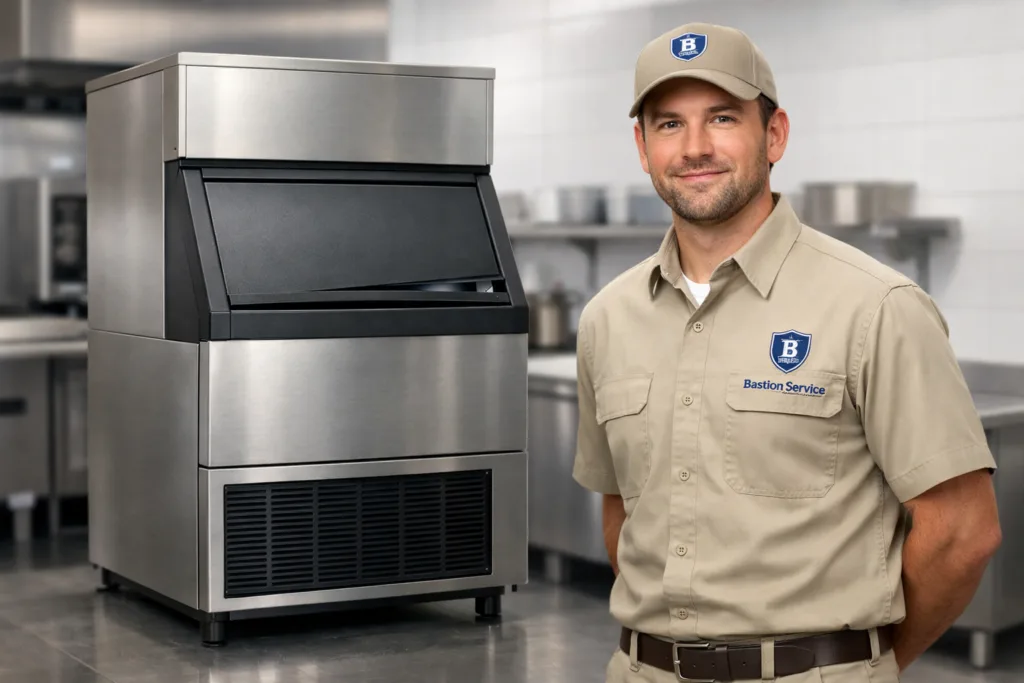




Low ice production, wet cubes, leaks, or repeated shutdowns can interrupt service quickly when a business depends on steady ice output. The challenge is that one symptom can come from several different causes, including scale buildup, restricted airflow, poor incoming water flow, drain blockage, faulty sensors, or refrigeration-component trouble. Sorting out the source first helps prevent wasted parts orders, unnecessary downtime, and repair decisions based on guesswork.
Related commercial equipment paths in Century City include Hoshizaki Ice Machine Repair in Century City.
Common ice machine problems and what they may mean
A machine that is running but not keeping up with demand often has a problem beyond simple heavy usage. Reduced production may point to a dirty condenser, poor ventilation around the unit, mineral buildup on water-contact surfaces, an inlet valve issue, or freeze-cycle timing that is no longer operating correctly. In a commercial setting, slower output usually gets worse before it gets better, especially when the machine is already working near peak demand.
Ice quality also provides useful clues. Soft cubes, cloudy ice, uneven cube size, sheets of ice, or clumped ice in the bin can indicate water-level problems, scale accumulation, sensor faults, pump issues, or harvest problems. A machine that fills inconsistently or releases malformed batches may not need replacement, but it does need a closer look at how water delivery, freezing, and harvest are interacting.
Leaks and standing water should be addressed early. What looks like a simple overflow can be caused by a blocked drain, frozen internal section, cracked line, loose connection, failing valve, or a bin-area problem that affects sanitation. Continued operation after a leak begins can damage surrounding finishes, create slip hazards, and increase the chance of electrical or component failure.
Why the right diagnosis matters
Commercial ice machines can show the same outward symptom while failing for different reasons. One unit with low output may only need descaling and condenser cleaning, while another may have a weak fan motor, a control issue, or declining refrigeration performance. A useful service call should separate maintenance-related conditions from actual component failure so the next step matches the condition of the machine.
This is especially important when a business is deciding whether to approve repair costs. If the unit has a long history of scale, repeated freeze-ups, multiple worn parts, and unstable production, a repair may still be possible, but the expected reliability needs to be weighed carefully. If the machine is otherwise in solid condition and the fault is limited to a specific component or water-flow problem, repair is often the more sensible choice.
When continued use can make things worse
Running an ice machine with poor airflow, inconsistent water supply, a blocked drain, or unusual noises can turn a manageable repair into a larger outage. Refrigeration components may be forced to run longer, sensors may cycle incorrectly, and excess moisture can create sanitation concerns around the machine. If cooling problems are centered in the freezer compartment rather than the ice system itself, Commercial Freezer Repair in Century City may be more relevant.
Symptoms that often point to water or fill issues
Many commercial ice machine calls come down to water delivery. Slow fill, partial freeze patterns, hollow cubes, overflow during harvest, and inconsistent batch size can all suggest a restriction in the supply line, a faulty inlet valve, pressure problems, or mineral buildup affecting normal flow. These problems are easy to underestimate because the machine may still produce some ice while overall performance continues to drop.
Drain performance matters just as much. If meltwater is not moving out properly, the machine may shut down, leak, or develop internal freezing where it should not. In busy operations, these issues can create repeated cleanups and interfere with sanitary handling even before the machine stops producing entirely.
How to think about repair versus replacement
The decision usually depends on condition, repair history, output needs, and downtime risk. A unit with one identifiable fault and otherwise stable performance is often worth repairing. Replacement becomes more reasonable when corrosion is advanced, major components are failing together, sanitation concerns are persistent, or the machine no longer supports normal production volume for the business.
It also helps to look at nearby cold equipment instead of viewing the ice machine in isolation. If the same kitchen, prep area, or back-of-house zone is also seeing warmer temperatures in reach-in storage, inconsistent recovery, or compressor-related issues, Commercial Refrigerator Repair in Century City may be the better service path for that separate equipment problem.
What a commercial service visit should cover
A productive visit should focus on the actual operating complaint, not just the visible symptom. That means checking water supply and drainage, inspecting condenser condition and airflow, reviewing freeze and harvest behavior, looking for scale buildup, and testing the components most likely tied to the shutdown or production loss. For business owners and facility teams, the most useful result is a clear explanation of what failed, what can be corrected, and what risk comes with delaying service.
For Century City businesses, that approach supports better decisions about uptime, sanitation, and budgeting. Whether the issue is low production, leaking, poor ice quality, or repeated stoppage, the goal is to restore dependable operation without overcorrecting or ignoring a problem that is likely to grow.


