
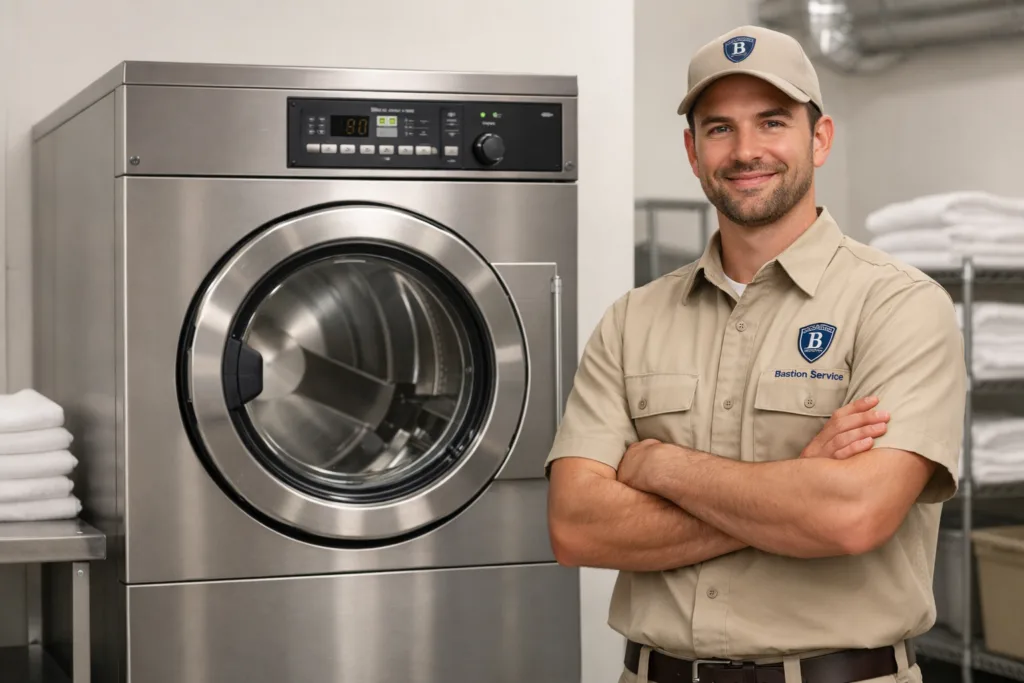




Common commercial dryer problems and what they can indicate
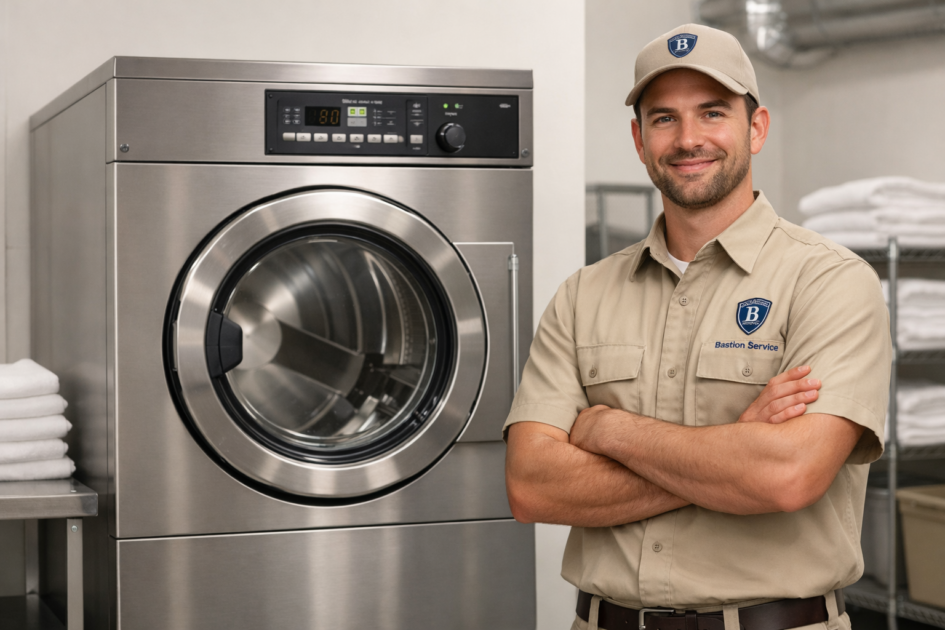
When a dryer tumbles without producing heat, the issue may involve heating elements, igniters, thermostats, sensors, controls, or power supply conditions. In a commercial setting, that kind of fault does more than slow one machine down. It can disrupt turnaround times, create bottlenecks in laundry handling, and force staff to work around unreliable equipment.
Related commercial equipment paths in West Los Angeles include Speed Queen Dryer Repair in West Los Angeles and Wascomat Dryer Repair in West Los Angeles.
Long dry times often point to restricted airflow, venting problems, moisture sensing issues, overloaded cycles, or a heat system that is operating below normal output. A machine may appear to be working while still falling short of what the workflow requires. That can raise utility costs, reduce daily capacity, and put added wear on components that are already under strain.
Noise is another symptom that should not be ignored. Thumping, squealing, scraping, rattling, or heavy vibration can suggest worn rollers, supports, belts, bearings, drum problems, or mounting issues. If the sound is getting worse from cycle to cycle, the repair scope can grow quickly as damaged moving parts begin affecting nearby assemblies.
Some dryers fail in less obvious ways. Intermittent shutdowns, failure to start, repeated tripped breakers, incomplete cycles, and inconsistent temperature control may involve motor protection trips, door switch faults, control board problems, sensor errors, or electrical supply issues. For businesses that rely on steady equipment output, inconsistent performance can be just as disruptive as a complete breakdown.
How dryer issues affect business operations
Commercial laundry equipment problems rarely stay isolated for long. One dryer running slowly can delay folding, pickup schedules, room turnover, uniform availability, or back-of-house workflow. When several loads start stacking up behind a single weak machine, the operational cost often becomes larger than the repair itself.
Drying performance also depends on what happens before the load reaches the dryer. If loads are coming out overly wet, off-balance, or not draining properly, Commercial Washer Repair in West Los Angeles may be the better place to start because washer-side problems can make a dryer seem weaker than it really is.
That is why symptom-based diagnosis matters. A dryer complaint may be caused by the machine itself, by exhaust restrictions, by electrical conditions, or by upstream laundry equipment affecting moisture levels and load consistency. Sorting those possibilities early helps avoid repeat service and unnecessary parts replacement.
When to schedule service
Performance is slipping but the machine still runs
If drying times are getting longer, temperatures feel inconsistent, or loads need repeated cycles, scheduling service early is usually the best move. Many commercial dryer failures start as efficiency problems before turning into hard shutdowns. Addressing them early can limit downtime and reduce the chance of secondary damage.
Operation appears unsafe or mechanically damaging
Service should be prioritized when the dryer is overheating, producing a burning smell, making loud metal-on-metal noise, shutting off unexpectedly, or struggling to rotate. Continued use under those conditions can worsen wear, increase repair cost, and create a more disruptive outage for the rest of the operation.
The issue is affecting multiple loads or multiple staff workflows
Even if the machine still completes some cycles, repeated delays can create scheduling issues across the business. If attendants, housekeeping teams, facility staff, or kitchen support teams are reorganizing work around one unreliable dryer, the problem is already operationally significant.
Repair versus replacement considerations
Repair is often the practical choice when the fault is isolated and the machine is otherwise in solid operating condition. Heating components, switches, sensors, belts, supports, and certain control-related parts can often be addressed without replacing the entire unit. The right decision depends on the overall condition of the dryer, not just the current symptom.
Replacement becomes more relevant when the dryer has recurring failures, several worn systems at once, chronic inefficiency, or repeated downtime that is hard to justify in a commercial environment. Age matters, but so do service history, parts availability, operating cost, and the impact unreliable equipment has on staff productivity.
For many businesses in West Los Angeles, the best path is based on whether the repair restores stable performance or simply postpones another interruption. A useful assessment should help clarify that difference rather than treating every breakdown the same way.
What a productive service visit should accomplish
A strong service call should identify the active cause of the dryer problem and separate it from contributing conditions such as poor airflow, maintenance gaps, electrical inconsistencies, or workflow-related loading issues. That gives decision-makers a better basis for approving repair and planning next steps.
It should also highlight any secondary wear that could soon create another outage. For example, a heat complaint may uncover vent restriction, while a noise complaint may reveal support-part wear that is starting to affect the drum or drive system. Catching those related issues early can help reduce repeat downtime.
For commercial properties and businesses in West Los Angeles, the goal is not only to get the dryer running again. It is to restore reliable output, protect laundry workflow, and make sure the equipment can support daily operations without ongoing interruptions.


