
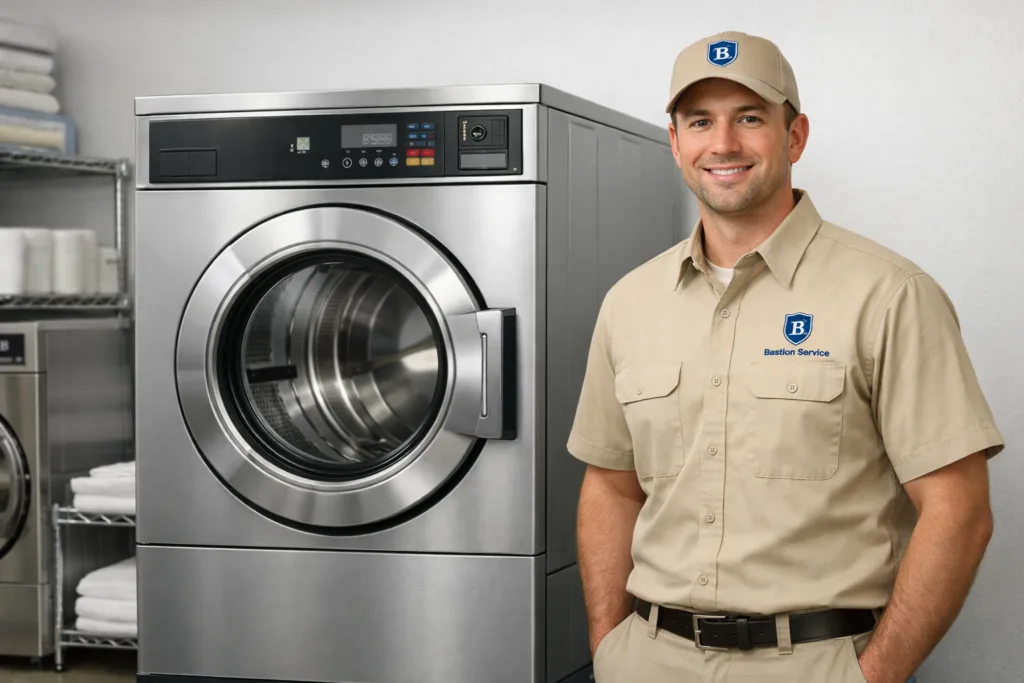




Dryer problems can disrupt staffing, linen turnover, tenant service, guest readiness, and back-of-house workflow faster than many businesses expect. Similar symptoms can come from very different causes, so the most useful first step is to separate airflow restrictions, heating faults, control failures, and mechanical wear before approving parts or downtime.
Related commercial equipment paths in Torrance include Speed Queen Dryer Repair in Torrance and Wascomat Dryer Repair in Torrance.
Common commercial dryer problems and what they may indicate
Long dry times are one of the most frequent complaints in commercial laundry environments. When loads stay damp, require repeat cycles, or dry unevenly, the issue may involve restricted exhaust airflow, weak heat output, failed ignition or heating components, temperature regulation problems, or moisture-sensing errors. The dryer may still appear to run normally while performance drops in ways that slowly reduce daily capacity.
No-heat or low-heat conditions usually need careful testing rather than assumption. A failed heater, gas ignition issue, blown thermal protection component, wiring problem, or control fault can all produce similar results. In some cases, the machine is creating heat but cannot move air efficiently enough to complete the cycle, which can make diagnosis look misleading if the full system is not checked.
Mechanical symptoms matter just as much as heating complaints. Squealing, grinding, scraping, thumping, or rumbling often points to worn rollers, supports, bearings, belts, pulleys, or motor-related wear. A drum that hesitates, stops under load, or turns inconsistently may indicate a drive-system problem that can worsen quickly if the unit stays in service.
Heat, airflow, and cycle consistency
Many commercial dryer calls come down to the relationship between heat and airflow. A machine may seem to have a heating failure when the actual problem is restricted venting or poor exhaust movement. That can cause long cycle times, excessive cabinet heat, repeated thermal cutoffs, and inconsistent results from one load to the next. On the other hand, a dryer with good airflow but no usable heat may need electrical or gas-heating diagnosis at the component level.
Intermittent shutdowns are also important in commercial settings. If the dryer works during light use but trips, stalls, or shuts off during peak demand, the cause may be a marginal motor, an overheating condition, a weak relay, or a control issue that appears only under sustained load. Patterns like that can be easy to miss unless service is based on operating conditions rather than a quick visual check.
Signs the problem may be affecting more than the dryer
Commercial laundry systems rarely operate in isolation. If staff are waiting on loads to finish, staging clean inventory differently, or rerouting work between machines, the dryer problem may already be affecting the larger process. Slow drying can create bottlenecks that look like staffing or scheduling issues when the root cause is equipment performance.
In operations where delays begin earlier in the laundry cycle with fill, drain, spin, or leak concerns, Commercial Washer Repair in Torrance may be the better place to start before treating the dryer as the only source of the slowdown. Looking at the full workflow can prevent businesses from solving only part of the problem.
When continued use can make the situation worse
A commercial dryer should be checked promptly when it overheats, produces burning smells, makes new mechanical noise, stops mid-cycle, trips breakers, or leaves loads consistently damp. Continued operation under those conditions can accelerate wear on motors and drum supports, damage textiles, increase utility waste, and turn an otherwise contained repair into a larger outage.
If the drum is not rotating properly, the unit is shutting down repeatedly, or the cabinet is becoming excessively hot, taking that machine out of active rotation is often the safer choice until it is assessed. Businesses that rely on steady laundry output usually benefit from acting before the problem spreads into missed deadlines, inventory shortages, or avoidable strain on other machines.
Repair versus replacement considerations
Not every breakdown leads to the same decision. Repair is often the practical path when the fault is isolated, the dryer is otherwise stable, and the correction is likely to restore dependable performance without repeated interruption. Replacement becomes more relevant when there are multiple failing systems, recurring shutdowns, chronic control problems, or downtime costs that outweigh another repair cycle.
Age is only one factor. Service history, workload intensity, parts availability, energy performance, and the effect of downtime on operations all matter. For many Torrance businesses, the right choice comes down to whether the equipment can return to predictable service without creating another near-term disruption.
What businesses in Torrance should expect from service
Commercial dryer service should focus on how the machine is actually being used, not just whether it powers on. That means evaluating heat production, airflow path, drum movement, controls, safety devices, and shutdown behavior in a way that matches real operating demand. The goal is to identify the source of the symptom, explain the operational risk, and outline the repair scope in terms that support uptime planning.
For businesses in Torrance, that approach helps management make better decisions about immediate repair, temporary rotation changes, and whether a single machine issue is likely to affect the broader laundry process. When the diagnosis matches the real symptom pattern, it becomes much easier to restore reliable performance and reduce repeat interruptions.


