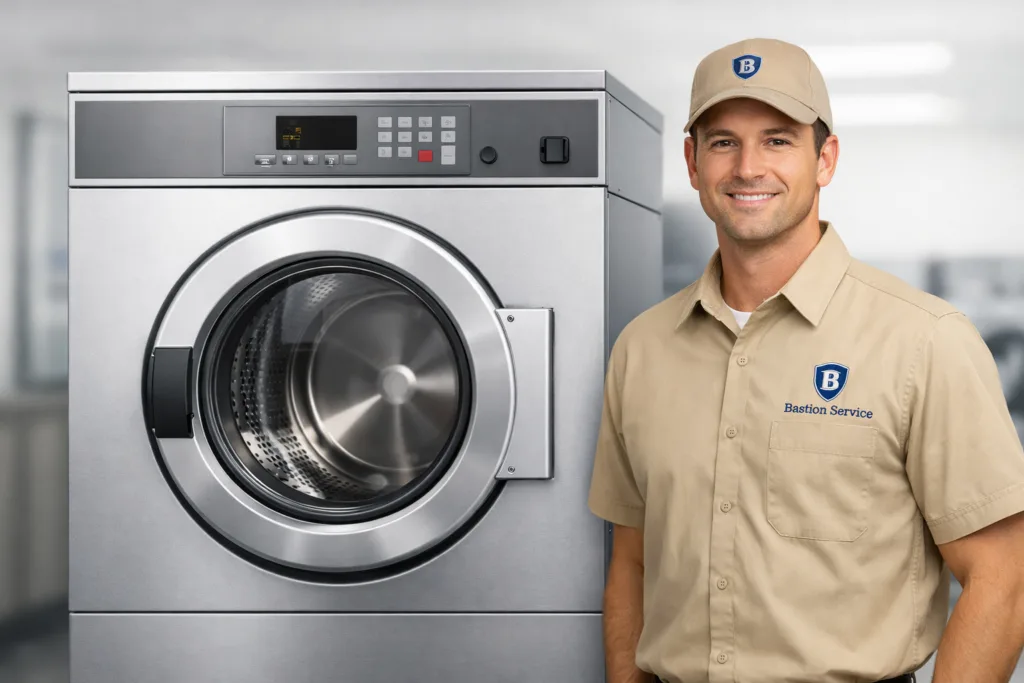




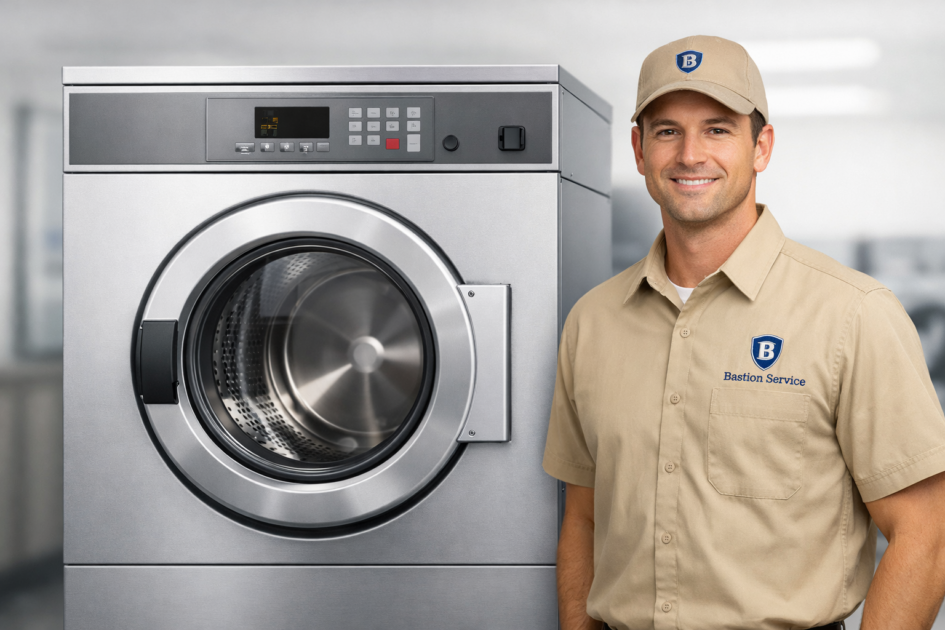
Dryer problems can disrupt turnaround times fast when loads stay damp, cycles run too long, or the machine shuts down before the work is done. For businesses in Torrance, the best next step is service that focuses on the exact symptom pattern, the operating condition of the dryer, and whether the problem is isolated or affecting multiple systems. Bastion Service handles Wascomat dryer repair with attention to heat performance, airflow, drum movement, controls, and the downtime impact on daily operations.
Related commercial service paths in Torrance include Wascomat Commercial Repair in Torrance, Commercial Dryer Repair in Torrance, and Wascomat Washer Repair in Torrance.
Common Wascomat Dryer Symptoms and What They May Mean
No heat or poor heat output
If the drum turns but the load is not drying, the fault may involve the heating circuit, temperature sensing, power supply issues, airflow restrictions, or a control problem that is preventing normal heat delivery. In a busy laundry setting, no-heat conditions usually show up immediately as backed-up loads, repeat cycles, and rising utility waste.
Long dry times
Extended dry times do not always mean the heater has failed. A Wascomat dryer may run longer because air is not moving correctly through the machine, lint is restricting key passages, temperature regulation is inconsistent, or the dryer is not maintaining normal performance under load. When drying times creep up gradually, it often points to a developing issue rather than a sudden failure.
Dryer starts but stops before the cycle ends
Mid-cycle shutdowns can be tied to overheating, motor stress, control faults, electrical interruptions, or sensor-related problems. If the unit restarts after cooling down, that does not mean the issue has cleared. It usually means the dryer is reaching a condition that forces it out of normal operation.
Noise, scraping, or vibration
Squealing, grinding, thumping, or scraping sounds can indicate wear in support components, belt issues, drum movement problems, or motor-related strain. These symptoms often start as a nuisance and then become a larger repair if the machine stays in use without inspection.
Burning smell or excessive cabinet heat
A hot exterior, unusual odor, or signs of overheating should be taken seriously. Lint accumulation, friction, restricted airflow, and failing components can all contribute to heat buildup. In these cases, continued use can raise the risk of additional part damage and unsafe operation.
Why Symptom-Based Diagnosis Matters
Two dryers can show the same complaint and have very different causes. Damp loads at the end of a cycle might come from weak heat, poor exhaust flow, sensor problems, incorrect cycle response, or a combination of faults. Replacing parts based only on the visible symptom can add cost while leaving the original problem unresolved.
A service visit typically needs to evaluate temperature behavior, airflow, electrical function, drum rotation, motor performance, and wear around moving parts. That process helps determine whether the repair is straightforward, whether related failures are starting to stack up, and whether the unit can return to stable daily use after the work is completed.
Problems That Often Affect Drying Performance
- Heating components not operating correctly
- Airflow restrictions inside the dryer or exhaust path
- Temperature controls or sensors reading incorrectly
- Drum support or belt wear affecting movement
- Motor stress during startup or under load
- Intermittent control or power issues
- Overheating conditions that interrupt the cycle
When more than one of these conditions is present, the dryer may still run but perform poorly enough to disrupt workflow. That is why businesses in Torrance often benefit from scheduling service before the machine fails completely.
When to Schedule Repair
It makes sense to schedule service when the dryer is still operating but no longer performing normally. Early warning signs include longer dry times, repeated restarts, uneven drying results, unusual sounds, overheated panels, or staff avoiding certain settings because the machine has become unreliable.
Another sign is when employees begin working around the dryer by splitting loads, extending cycle times, or rerunning damp items. Those temporary adjustments can keep production moving for a short time, but they usually hide a fault that continues to worsen in the background.
When Continued Use Can Lead to Bigger Repairs
Some symptoms suggest that continued operation may cause more damage. This is especially true when the dryer overheats, smells hot, struggles to rotate smoothly, stops without warning, or produces scraping or grinding noises. A problem that starts in one area can begin affecting belts, motors, drum supports, controls, and heat-related components nearby.
For Torrance businesses trying to protect uptime, taking one dryer out of rotation for testing is often the lower-cost choice compared with running it until a more disruptive breakdown affects scheduling, staffing, and load capacity.
Repair or Replace?
Repair is often the better option when the fault is limited, the dryer is otherwise in solid condition, and the unit still supports the facility’s workload. Replacement becomes more likely when the machine has repeat failures across several systems, major wear in the drum or drive assembly, unreliable controls, or repair costs that no longer make sense for the expected service life.
A useful evaluation should look beyond the immediate complaint. Heat output, airflow, structural condition, control behavior, motor load, and the extent of wear all matter when deciding whether to proceed with repair. The goal is not just to get the machine running again, but to restore reliable operation that fits the demands of the business.
Service Planning for Wascomat Dryer Issues in Torrance
Preparing for service is easier when the symptom pattern is documented clearly. It helps to note whether the dryer has no heat, takes too long to dry, stops mid-cycle, makes noise only under load, overheats at certain points, or fails on specific settings. Those details can shorten diagnosis time and help identify whether the problem is tied to heat generation, airflow, controls, or mechanical wear.
If your Wascomat dryer is affecting production in Torrance, the most practical next step is to schedule repair based on the exact behavior of the machine rather than waiting for a complete shutdown. Targeted diagnosis, informed repair decisions, and timely scheduling can reduce downtime and help restore normal laundry workflow before a smaller issue becomes a broader equipment problem.