
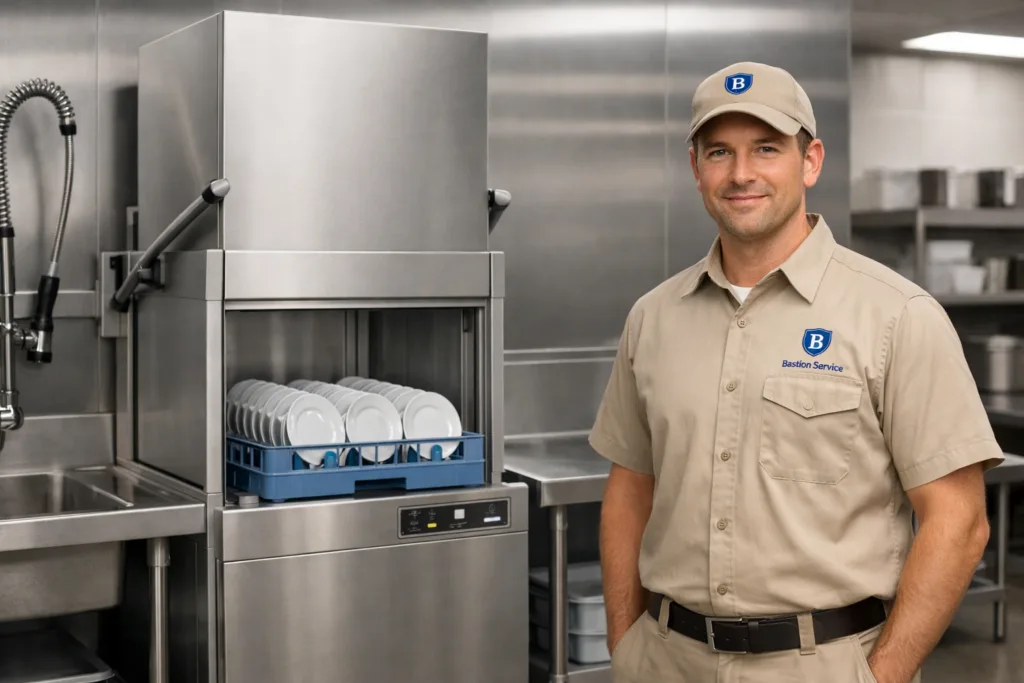




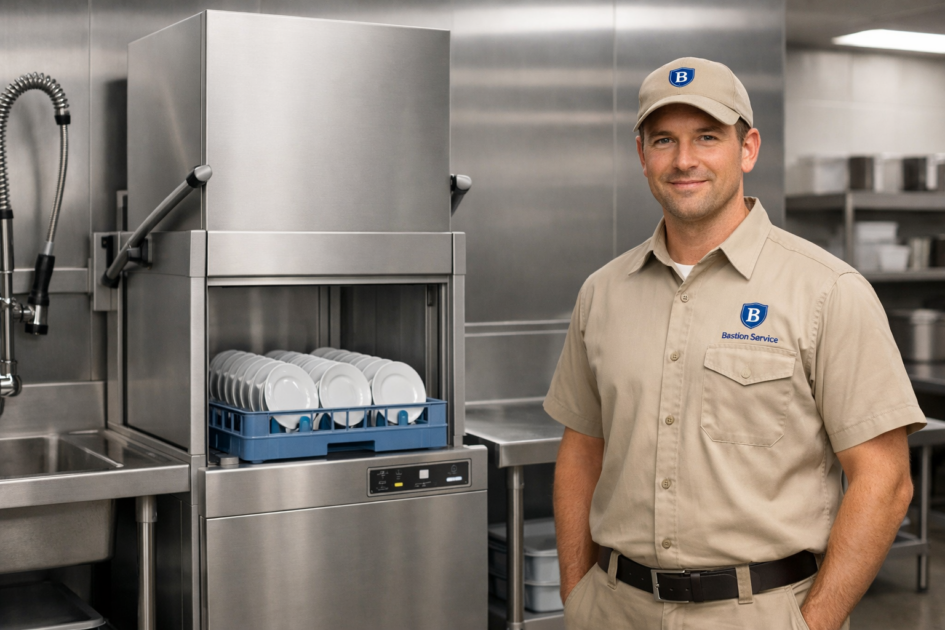
Commercial dishwashing equipment supports sanitation, turnaround speed, and back-of-house workflow. When that process becomes inconsistent, the impact is immediate: rewash volume goes up, racks start backing up, and staff have to work around equipment that should be saving time instead of creating delays. In Venice, timely repair is often the difference between a manageable equipment issue and a disruption that affects the whole operation.
Related commercial equipment paths in Venice include Commercial Refrigerator Repair in Venice, Commercial Freezer Repair in Venice, and Hobart Dishwasher Repair in Venice.
Common commercial dishwasher problems and what they can indicate
Many failures begin as performance changes rather than a complete shutdown. A machine may still power on and run a cycle, but wash quality, draining, heating, or timing may no longer be correct. Looking at the specific symptom helps narrow the likely cause and avoid guessing at parts.
Poor wash results
If plates, glassware, pans, or utensils come out with residue, spotting, or uneven cleaning, the problem may involve blocked spray arms, weak circulation, low water fill, pump wear, temperature loss, or a problem in the chemical delivery process. In a commercial setting, poor cleaning is more than a quality issue. It slows production because staff have to sort, rewash, and verify items that should have been cleaned correctly the first time.
Drain problems and standing water
When water remains in the tank or chamber after a cycle, likely causes include drain obstructions, drain pump issues, valve faults, or controls that are not completing the drain sequence correctly. Standing water should not be dismissed as minor. It can lead to odor, recirculation of dirty water, and added strain on pump components if the machine keeps running in that condition.
Leaks during operation
Leaks may come from a worn door gasket, loose hose connection, cracked fitting, overfill condition, or pump-related failure. Even a slow leak deserves attention in a commercial environment because moisture around the machine creates slip hazards and can damage adjacent surfaces or electrical components. If leaking becomes visible during every cycle, continued use can make the repair more expensive.
Low rinse temperature or heating issues
A dishwasher that is not reaching proper heat may appear to complete cycles normally while still underperforming. Heating elements, thermostats, high-limit controls, sensors, relays, and electronic controls can all play a role. Temperature problems affect both cleaning quality and sanitation confidence, so they usually require direct testing rather than assumptions based on how the machine sounds or how long the cycle runs.
Fill problems
If the machine is not filling to the correct level, wash pressure and final results can drop quickly. Fill valves, floats, sensors, supply restrictions, and control issues are all possible factors. Low fill can be easy to overlook because the machine may still operate, but reduced water volume can cause weak spray performance and inconsistent cycle results across the entire shift.
Cycle failures and mid-cycle stopping
When a unit will not start, stops partway through operation, or shows erratic cycle behavior, the problem may involve door switches, relays, power supply faults, overheating conditions, water-level sensing, or board-related failures. Repeated resets may get the machine running temporarily, but they rarely address the underlying cause. If interruptions are becoming more frequent, the equipment needs proper evaluation.
Why symptom timing matters
It helps to know whether the problem started suddenly or developed over time. A sudden failure often points to an electrical component, switch, valve, or control issue. A gradual decline is more likely to involve wear, buildup, partial restrictions, deteriorating seals, or weakening pump or heating performance. That timeline can make diagnosis faster and help determine whether the repair is likely to be isolated or part of a larger wear pattern.
Signs continued use may cause bigger problems
Some dishwashers can keep operating briefly with a limited fault, but others should be taken more seriously right away. Risk is higher when the machine is leaking, failing to drain, making grinding noises, overheating, tripping breakers, or showing inconsistent wash pressure. Those symptoms can escalate from a contained repair into damage affecting pumps, motors, heating components, or controls.
Businesses should be especially cautious when rinse temperature is unreliable or dirty water is not leaving the machine properly. Those conditions affect both output and sanitation standards, and they can create hidden wear if the dishwasher keeps cycling under stress.
How diagnosis supports smarter repair decisions
The same complaint can have several different causes. Poor cleaning might be tied to circulation, heat, water level, or blocked wash components. A drain complaint may come from a simple obstruction or from a control failure that never initiates the correct drain sequence. That is why diagnosis matters before any repair decision is made. Bastion Service helps businesses in Venice with commercial dishwasher repair focused on clear diagnosis, practical service guidance, and dependable local support for dish-area uptime.
When the issue is likely isolated
Some service calls point to a single repairable fault on a machine that is otherwise in solid condition. Examples include one failed switch, a worn gasket, a drain blockage, or a specific heating component that has stopped working. If the rest of the dishwasher is operating normally and the unit has been reliable overall, repair is often the practical choice.
When a broader equipment review makes sense
If the dishwasher has multiple active problems at once, such as temperature inconsistency, leaking, unreliable controls, and repeated downtime, the issue may be larger than one part failure. In those situations, it is important to consider the machine’s age, condition, service history, and whether recurring repairs are starting to interfere with daily operations more than they solve the problem.
Repair versus replacement for commercial dishwashing equipment
Replacement is not automatically necessary just because a dishwasher has failed, but repair is not always the best long-term answer either. The right decision usually depends on how severe the current failure is, whether parts wear is isolated or widespread, and how costly downtime is for the business. A high-use machine with one clearly defined issue may still be a strong repair candidate. A unit with recurring electrical faults, repeated leaks, and declining performance may be harder to justify keeping in service.
For many operations, the real cost is not only the repair invoice. It is the lost time, labor disruption, inconsistent cleaning results, and uncertainty that come with equipment that cannot be trusted during busy periods.
What to note before scheduling service
Useful details can make troubleshooting more efficient. Before service, it helps to note:
- whether the machine fills normally
- whether wash action sounds weaker than usual
- whether water drains fully after the cycle
- whether leaks happen only during wash, rinse, or idle periods
- whether the unit seems slow to heat or never reaches expected temperature
- whether any display alerts or error codes appear
- whether the problem is constant or intermittent
These observations can help separate a water supply issue from a circulation fault, drain restriction, temperature failure, or control problem.
What businesses in Venice typically need from dishwasher repair
Commercial repair is not just about getting the machine to run one more cycle. The goal is stable operation that supports dish flow, cleaning consistency, and predictable daily use. That means looking beyond the surface symptom and evaluating whether the dishwasher can return to reliable service without creating repeat interruptions for the staff using it every day.
When wash quality drops, leaks appear, drain performance changes, or cycles start failing, early service is usually the best way to limit downtime and protect the rest of the equipment area. Addressing the problem before it spreads can help preserve uptime and keep operations moving with fewer interruptions.


