
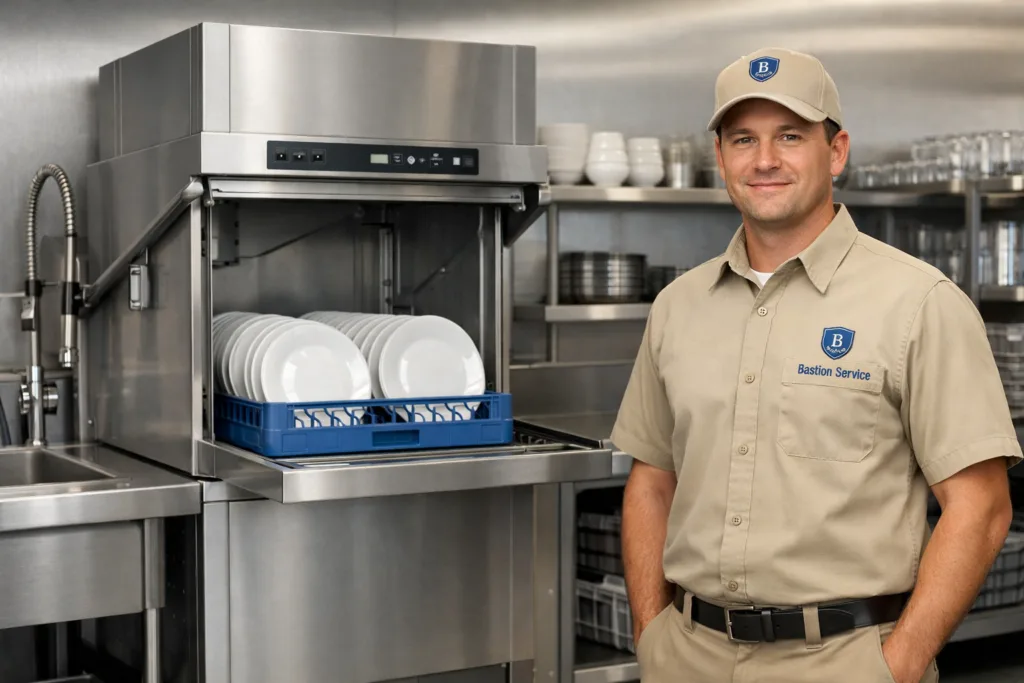





Common commercial dishwasher failures and what they usually indicate
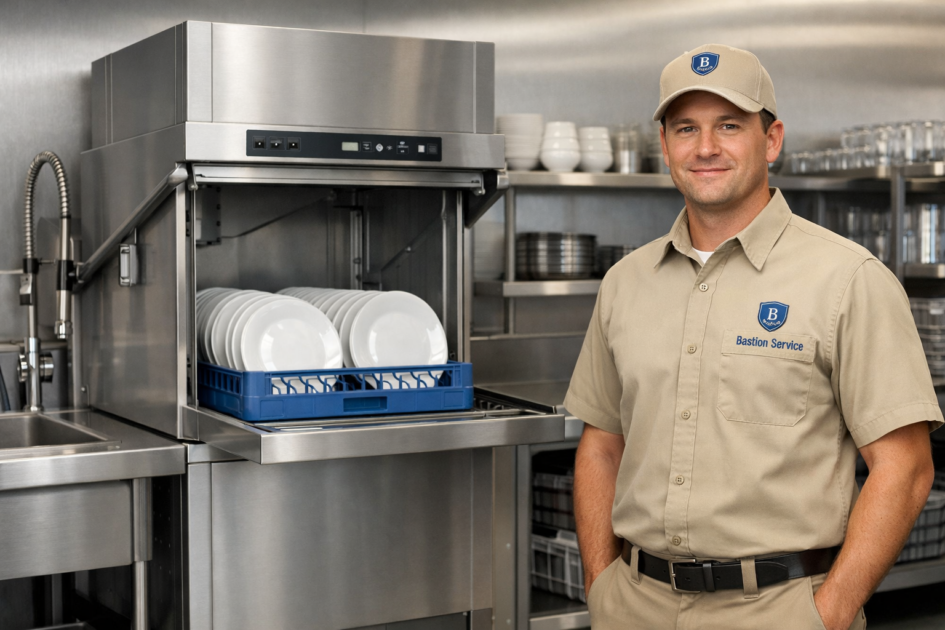
A commercial dishwasher can show the same symptom for several different reasons, which is why it helps to look at the full cycle instead of one complaint in isolation. A unit that fills but does not clean well may have a circulation issue. A machine that seems to wash normally but leaves water behind may have a drain restriction, a failing pump, or a control problem preventing the drain sequence from completing.
Related commercial equipment paths in Sawtelle include Commercial Refrigerator Repair in Sawtelle, Commercial Freezer Repair in Sawtelle, and Hobart Dishwasher Repair in Sawtelle.
In Sawtelle, dish-area downtime affects more than sanitation tasks. It can slow table turnover, interrupt prep flow, create backup at sinks, and increase labor spent on rewashing. Identifying the actual failure path early helps keep the problem from spreading into larger operational delays.
Poor wash results
Glasses coming out cloudy, plates with residue, or utensils needing a second pass often point to problems with water movement, heat, or chemical delivery. Common causes include clogged spray arms, worn wash pump components, low fill levels, scale buildup, faulty temperature sensing, or rinse system issues.
When wash quality drops gradually, staff may compensate for a while by rerunning racks. That usually raises water and energy use while masking the underlying equipment problem. If results are inconsistent from one cycle to the next, the issue is often mechanical or sensor-related rather than a simple loading mistake.
Drain problems and standing water
Water remaining in the machine after a cycle should not be treated as a minor nuisance. Drain trouble can come from blocked filters, food debris in the drain path, hose restrictions, pump wear, or a control sequence that is not advancing correctly. In some cases, the machine drains slowly enough to appear functional while still holding enough dirty water to affect the next load.
Standing water also increases the chance of odors, internal buildup, and added strain on components that were designed to operate under normal flow conditions. If the unit has to be restarted to finish draining, that usually signals a problem worth addressing before a full shutdown occurs.
Low rinse temperature or heat-related issues
If the dishwasher is not reaching the expected rinse or wash temperature, sanitation confidence and cycle performance can both suffer. Heating-related faults may involve the heating element, booster system, thermostats, limit controls, relays, wiring, or temperature sensors that are sending inaccurate readings.
Some machines with heat problems will continue running but take longer than normal to complete a cycle. Others may stop mid-cycle, post an error, or leave loads looking dull because proper rinse conditions were never reached. In a commercial setting, slow heat recovery can be just as disruptive as a complete heating failure.
Leaks, unusual sounds, and interrupted cycles
Leaks around the base of the machine may come from door gasket wear, loose clamps, cracked fittings, overflow conditions, or pump seal failure. The location and timing of the leak matter. Water appearing only during fill, wash, or drain can help narrow down which part of the system is involved.
Grinding, humming, rattling, or hard-start noises often suggest motor or pump stress, foreign debris in moving components, failing bearings, or mounting issues. If the machine stops unexpectedly, trips protection devices, or needs repeated resets, the problem may involve electrical faults, overloaded motors, or failing controls.
Why symptom-based troubleshooting matters
Commercial dishwashers are built around connected systems: fill, circulation, heating, rinse, draining, and controls. When one section falls out of spec, another may appear to be at fault. For example, poor cleaning can be caused by low water level, weak wash pressure, or inadequate heat. A cycle that will not complete may be tied to temperature recovery, draining, or a control input that never changes state.
That is why replacing parts based only on the most visible symptom can lead to extra cost and longer downtime. A better service approach is to check how the machine behaves through each stage of operation and determine whether the issue is isolated or part of a larger pattern of wear.
Signs the machine should be serviced sooner rather than later
Some dishwasher problems allow the unit to keep running, but that does not mean the machine is operating safely or efficiently. Early service is often the better choice when the dishwasher:
- Leaves dishes dirty or spotted after normal cycles
- Fails to drain completely or drains very slowly
- Shows low rinse temperature or inconsistent heat
- Leaks during operation or after shutdown
- Stops mid-cycle or requires frequent restarting
- Makes new grinding, buzzing, or humming sounds
- Displays recurring faults or cycle errors
These symptoms often worsen under daily commercial use. What begins as a performance issue can turn into a full outage if a pump seizes, a heating circuit fails completely, or a leak reaches electrical components.
Repair decisions in a commercial kitchen environment
Not every malfunction means replacement is the better path. Many commercial dishwasher issues are repairable when the main problem is limited to a pump, valve, heating component, sensor, latch, control interface, or drain-related failure. If the cabinet, wash system, and overall structure remain in solid condition, repair may restore dependable performance without the cost of replacing the unit.
Replacement becomes a more realistic discussion when the machine has repeated breakdowns across multiple systems, severe corrosion, chronic leak history, ongoing control failures, or repair needs that are out of proportion to the condition of the equipment. The most useful recommendation is based on the present fault, the general health of the machine, and the level of reliability the business needs from it going forward.
What businesses in Sawtelle should expect from commercial dishwasher service
Business owners and kitchen managers usually need more than a basic yes-or-no answer on whether the machine runs. They need to know what failed, whether the current problem may have caused secondary stress, and what the repair outlook looks like in day-to-day operation. That kind of assessment is especially important when uptime affects staffing, kitchen flow, and sanitation routines.
For commercial dishwasher repair in Sawtelle, the most useful service outcome is a diagnosis tied to real operating symptoms: wash quality, drainage, temperature performance, leak control, pump behavior, and cycle reliability. When those points are evaluated together, it becomes easier to make a sound repair decision and restore the dish area to a more predictable workflow.


