
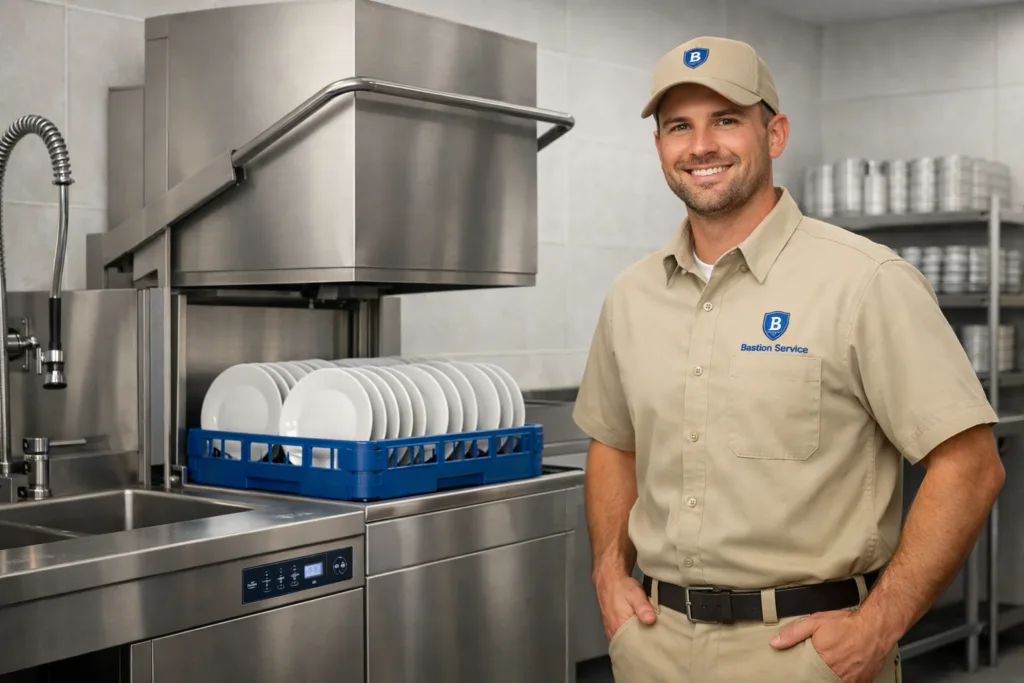




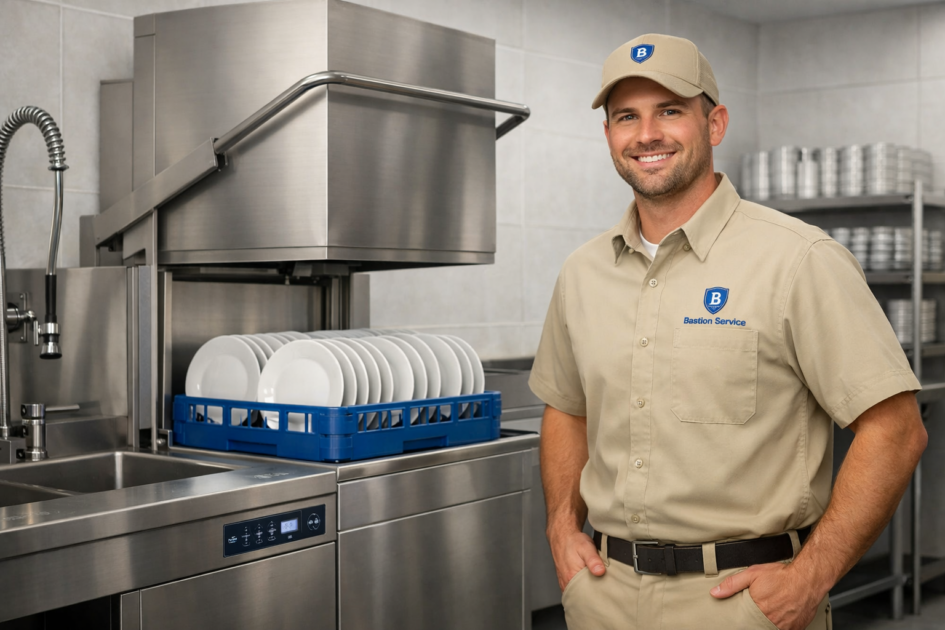
Dish-area disruptions usually start with symptoms staff can see right away: racks coming out dirty, a machine that stalls between cycles, water left in the basin, or a leak that turns into a slip hazard. In a commercial setting, those issues affect more than one appliance. They slow table turnover, interrupt prep flow, create sanitation concerns, and put pressure on the rest of the kitchen team. The best next step is to identify whether the problem is tied to wash performance, draining, heating, filling, controls, or a combination of systems.
Related commercial equipment paths in Playa Vista include Commercial Refrigerator Repair in Playa Vista, Commercial Freezer Repair in Playa Vista, and Hobart Dishwasher Repair in Playa Vista.
Common commercial dishwasher issues that interrupt service
Commercial dishwashers work under heavy daily demand, so even small performance changes can become operational problems fast. A unit may still power on and run while failing to clean properly, draining too slowly, or losing temperature consistency. Looking at the symptom pattern helps narrow down the likely cause and determine how urgent the repair is.
Poor wash results and residue left on wares
If dishes, glassware, pans, or utensils come out with film, food residue, or spotting, the issue may involve weak spray action, blocked wash arms, low pump pressure, restricted filters, or incorrect water movement through the machine. Poor results can also point to temperature or rinse-related problems. When cleaning quality drops, staff often compensate by rewashing loads, which increases labor time and slows the entire dish area.
This symptom should not be treated as a minor nuisance. Repeated poor wash results often mean the machine is no longer performing consistently enough for commercial demand.
Drain problems and standing water
Water remaining in the unit after a cycle usually indicates a drain restriction, pump issue, valve problem, or sensor fault. In some cases, debris buildup in the drain path reduces flow gradually before the machine starts showing obvious failures. In others, the dishwasher may pause, show a drain error, or leave water pooling at the bottom of the tank.
Standing water creates sanitation and cleanup concerns and can place added strain on drain and pump components if the machine continues running without correction.
Low rinse temperature or heat-related performance issues
When a commercial dishwasher struggles to reach proper rinse temperature, takes too long to recover between cycles, or delivers inconsistent heat, likely causes include heating component failure, thermostat issues, scaling, wiring faults, or control problems. Heat-related issues can also show up indirectly through poor drying, repeat cycle delays, or inconsistent sanitizing performance.
For businesses that depend on a steady flow of clean wares, temperature instability can affect throughput as much as a full shutdown.
Fill issues and interrupted cycles
If the unit does not fill correctly, overfills, or stops mid-cycle, the problem may involve water inlet components, float systems, level sensors, switches, or control board faults. Machines with fill issues can become unreliable quickly because water level affects washing, heating, and draining. An underfilled machine may clean poorly, while an overfilled machine can contribute to leaks and overflow conditions.
Leaks, unusual noise, and pump trouble
Leaks around a commercial dishwasher may come from worn door gaskets, cracked hoses, loose fittings, overfill conditions, or pump seal failure. Grinding, buzzing, rattling, or loud humming often points to motor or pump problems, foreign objects in moving parts, or wear inside the circulation system. These symptoms usually get worse rather than better with continued use.
When pump performance starts to decline, staff may notice several issues at once, such as weak cleaning, poor draining, longer cycles, or unusual sound during wash and drain phases.
Why symptom-based diagnosis matters
Different dishwasher failures can look similar from the outside. A machine that leaves dishes dirty might have a wash-pressure problem, but it could also be dealing with low temperature, spray blockage, or fill issues. A drain complaint may be caused by a clogged line, a failing pump, or a control fault that prevents the drain sequence from completing properly.
That is why commercial dishwasher repair in Playa Vista is most effective when the machine is checked by system rather than by guesswork. A good diagnostic process helps determine whether the fault is isolated to one component or whether multiple issues have developed from ongoing wear, scale buildup, or repeated heavy use.
Signs the machine should be serviced sooner rather than later
Some dishwasher problems are disruptive but manageable for a short time. Others can escalate quickly and should be addressed before the next busy shift. Businesses in Playa Vista should consider prompt service when they notice:
- Repeated drain or fill errors
- Dirty or cloudy wares after normal cycles
- Water leaking onto the floor
- Inconsistent rinse temperature
- Cycles that run too long or stop unexpectedly
- Loud pump or motor noise
- Burning smell or power-related interruption
- Intermittent operation that staff cannot reproduce consistently
Even if the dishwasher still runs, recurring symptoms usually mean the underlying condition is getting worse. Early repair can help reduce unplanned downtime and avoid secondary damage to pumps, controls, seals, and surrounding areas.
What can cause repeat dishwasher downtime in a commercial setting
Commercial equipment often develops repeat issues when one unresolved problem starts affecting other parts of the system. For example, a partial drain restriction can increase pump strain. Poor heating performance can contribute to weak results that are mistaken for wash-arm problems. Leaks that start at a gasket or fitting can lead to electrical concerns if moisture reaches sensitive components.
Heavy daily operation, inconsistent cleaning practices, hard water scale, and delayed service all increase the chance that a dishwasher problem becomes more expensive over time. In high-volume kitchens, a machine may continue operating long enough to mask the severity of the issue until the unit fails during peak demand.
Repair versus replacement considerations
Many commercial dishwasher problems are repairable when the machine is otherwise in solid condition. Pumps, valves, heating components, controls, sensors, latches, hoses, and drain-related parts are common service items. If the cabinet, major structure, and core systems remain sound, repair is often the more practical path.
Replacement may become the better option when the unit has widespread corrosion, repeated major failures, severe internal wear, or a repair scope that no longer makes sense for the machine’s age and operating condition. The right decision usually depends on downtime risk, expected future reliability, and whether service is likely to restore stable day-to-day performance rather than provide only a short-term fix.
What businesses in Playa Vista should expect from commercial dishwasher service
A useful service visit should do more than address the visible complaint. It should check how the dishwasher fills, circulates, heats, drains, and completes its cycle, while also looking for signs of wear that may be contributing to the failure. That includes verifying whether the active symptom is isolated or part of a broader pattern that could affect near-term reliability.
For a business in Playa Vista, the goal is not simply to restart the machine for the moment. It is to restore dependable dish-area operation with a clear understanding of what failed, what needs immediate attention, and what should be monitored if the equipment has seen sustained heavy use.
Reducing disruption after a dishwasher problem appears
When a commercial dishwasher starts acting up, documenting the symptom pattern can make troubleshooting more efficient. It helps to note whether the issue happens during fill, wash, drain, or final rinse; whether it affects every cycle or only some loads; and whether staff have seen leaks, unusual sound, temperature inconsistency, or error displays. Details like these help separate a one-part failure from a wider performance problem.
The sooner the issue is evaluated, the easier it is to prevent avoidable downtime, rewash volume, and added wear on a machine that is already under strain. In a busy commercial environment, protecting dishwasher uptime protects the rest of the workflow too.


