
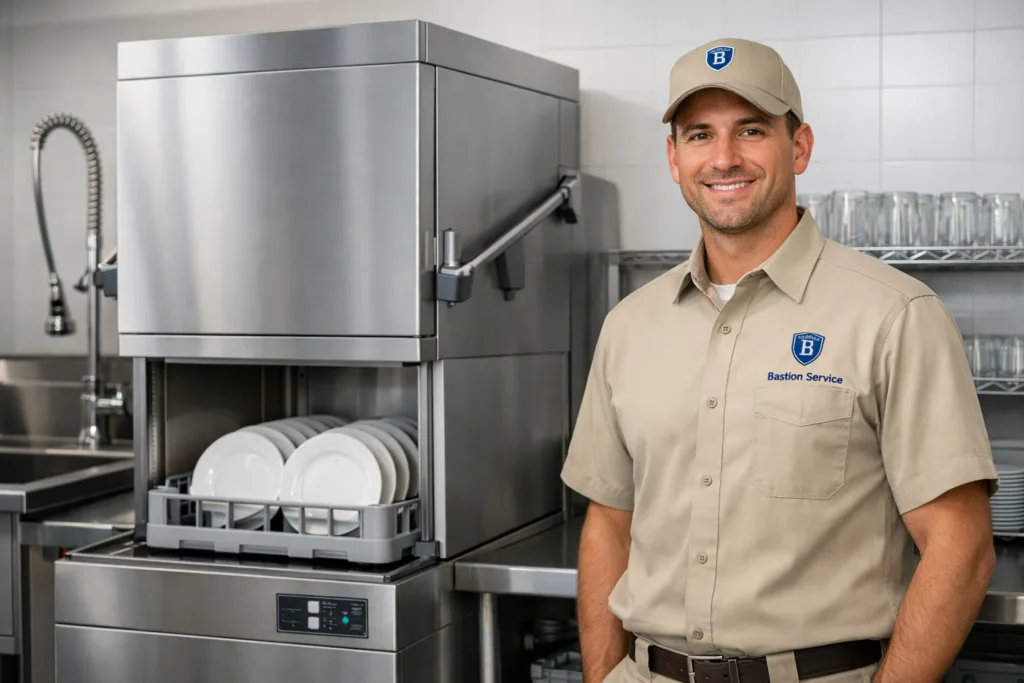




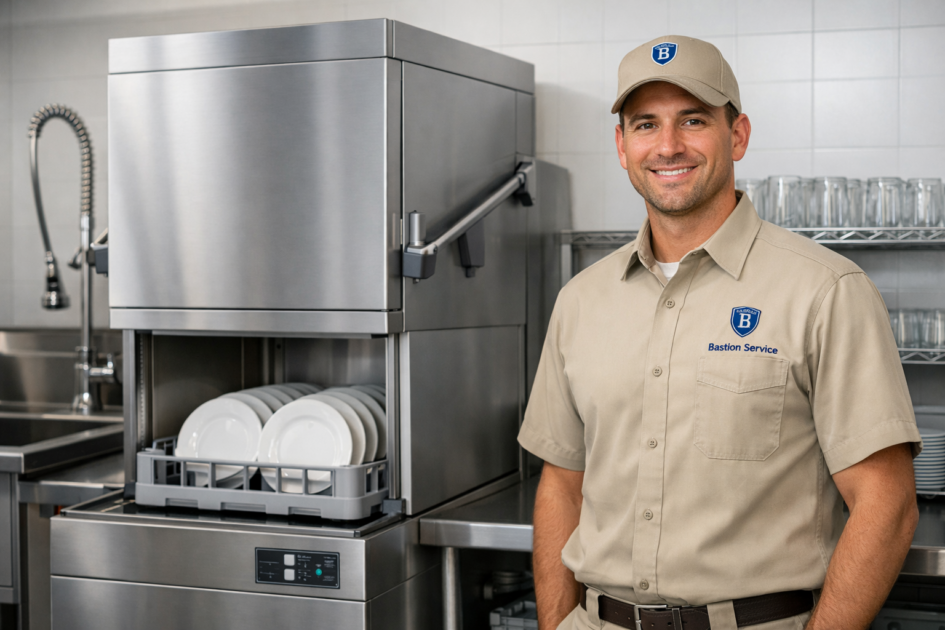
Commercial dishwashers rarely fail all at once. More often, staff notice that racks are not coming out clean, the machine takes longer to recover, water remains in the tank, or a cycle stops before completion. In a busy Palms operation, those changes can quickly disrupt back-of-house flow, create rewashing delays, and put pressure on labor and sanitation routines.
Related commercial equipment paths in Palms include Commercial Refrigerator Repair in Palms, Commercial Freezer Repair in Palms, and Hobart Dishwasher Repair in Palms.
Problems that commonly interrupt commercial dishwasher performance
A dishwasher can appear to have one obvious issue while the actual cause sits elsewhere in the system. Poor cleaning may relate to wash pressure, water level, heating, or chemical delivery. A machine that will not start may involve power supply problems, door safety switches, controls, or failed electrical components. Looking at the full operating sequence is usually the fastest way to understand what is really affecting uptime.
Common service calls in Palms include units that:
- Leave food soil, film, or spotting on wares
- Drain slowly or hold water after the cycle
- Leak from the door, underside, or hose connections
- Fail to reach proper wash or rinse temperature
- Fill incorrectly or stop filling altogether
- Make grinding, humming, or rattling noises
- Shut down mid-cycle or fail to complete the programmed sequence
Symptom-based diagnosis matters
Commercial Dishwasher Repair in Palms is most effective when the symptom is traced to the underlying failure rather than treated as a one-part problem. A drain complaint might come from a blockage, a pump issue, a drain valve fault, or a control failure. A low-temperature complaint could involve the heater, thermostat, sensor, contactor, or incoming water conditions. That is why symptom-based troubleshooting is more useful than replacing parts based on guesswork.
Poor wash results
If dishes, glassware, or utensils come out with residue, grease, or visible debris, the machine may not be circulating water properly or may not be reaching the intended operating conditions. Blocked spray arms, scale buildup, low fill levels, weakened pump output, and heating problems are all common causes. In some cases, the dishwasher is technically running, but not delivering enough pressure or temperature to clean consistently.
When staff begin rerunning racks to get acceptable results, the issue is already affecting throughput. That often means the problem has moved beyond a minor inconvenience and into a service matter that should be addressed before it creates a larger workflow slowdown.
Drain issues and standing water
Water left behind after the cycle usually points to restricted drainage, a failing drain pump, valve problems, or an interrupted cycle that never reaches the drain phase. Continued operation with incomplete draining can recirculate dirty water, increase odors, and place additional strain on pumps and seals.
Drain complaints also deserve attention because they can lead to overflow conditions or water escape around the machine. In a commercial setting, that introduces cleanup time, slip risk, and unnecessary disruption in the dish area.
Low rinse temperature or heating failure
Commercial dishwashers rely on proper heat for consistent washing and sanitizing performance. If the unit is not getting hot enough, businesses may notice longer cycles, poor drying, cloudy results, or inconsistent final output. Heating issues can stem from failed elements, limit devices, sensors, relays, controls, or wiring faults.
When temperature-related problems begin, operators sometimes keep using the machine because it still appears to run. That can hide the fact that the dishwasher is no longer performing as intended, which is why temperature complaints should be evaluated promptly.
Leaks during operation
Leaks can come from worn door gaskets, cracked hoses, loose fittings, overfilling, sump issues, or drain-related faults. Some leaks appear only during wash circulation, while others show up during filling or draining. Finding out when the leak occurs is often important in narrowing down the cause.
Even a small leak can become a larger facility problem if it affects flooring, surrounding cabinetry, wall materials, or nearby electrical areas. If water escape increases during operation, it is usually wise to stop using the dishwasher until the source is identified.
Pump issues and unusual noise
Grinding, loud humming, rattling, and abnormal vibration often point to wash pump wear, motor trouble, obstructions in moving parts, or loose internal components. A weak or failing pump can also show up as poor cleaning, slow circulation, or inconsistent spray action rather than obvious noise alone.
If the sound changes suddenly or becomes more severe under load, continued operation may increase the risk of motor damage or further mechanical failure. Noise complaints are often early warnings that the dishwasher is still operating, but not for long.
Fill problems and interrupted cycles
When a machine does not fill correctly, starts with too little water, overfills, or stops responding mid-cycle, the cause may involve inlet valves, float systems, sensors, switches, controls, or supply-related issues. These faults often create inconsistent behavior, which can make them frustrating for staff and difficult to work around during service hours.
A unit that pauses, resets, or fails to advance through its sequence should be checked before repeated use continues. Intermittent electrical or control problems tend to worsen over time and can eventually turn into a complete shutdown.
Why commercial dishwasher issues should not be ignored
In a commercial environment, a dishwasher problem affects more than the machine itself. It can slow table turnover, delay prep support, create dishroom backups, increase labor, and force staff into repeated rewashing. What starts as a manageable symptom can become a broader operations issue if the equipment remains in service with an unresolved fault.
There is also the risk of secondary damage. A machine running with low water, poor drainage, overheating, or failing pump performance may place extra stress on motors, heaters, seals, and controls. Addressing the problem earlier often helps limit both downtime and repair scope.
When service should be scheduled
It makes sense to schedule service when the dishwasher is no longer cleaning reliably, cannot maintain normal cycle performance, leaks, drains poorly, fails to heat, fills incorrectly, or shuts down unexpectedly. Businesses in Palms usually benefit from calling once staff notices a repeatable pattern instead of waiting for a complete failure during a busy shift.
Some warning signs deserve especially quick attention:
- Water leaking onto the floor during operation
- Repeated cycle interruptions or non-start conditions
- Burning smells, tripped breakers, or electrical irregularities
- Loud mechanical noise from the pump or motor area
- Persistent standing water after each cycle
- Consistently poor wash or rinse results despite normal loading
Repair versus replacement considerations
Not every breakdown points to replacement. Many commercial dishwasher problems are tied to serviceable components such as pumps, valves, heaters, sensors, switches, gaskets, latches, or controls. When the machine is otherwise in solid condition, repair is often the practical decision.
Replacement becomes a more serious consideration when the unit has multiple major failures, recurring reliability issues, severe internal wear, or a repair history that no longer supports stable operation. The right path usually depends on the machine’s overall condition, age, parts availability, and how important that dishwasher is to daily output.
What businesses in Palms should expect from service
Commercial dishwasher service should focus on restoring reliable operation, identifying the true source of the failure, and clarifying whether any related problems developed while the machine stayed in use. That means evaluating wash performance, drain function, heating, filling, leak points, and component wear rather than focusing only on the most visible symptom.
For kitchens, foodservice operations, and other commercial facilities in Palms, the goal is not just to get the machine to turn on again. It is to return the dishwasher to stable working condition so dish-area performance can support normal operations without repeated interruption.


