
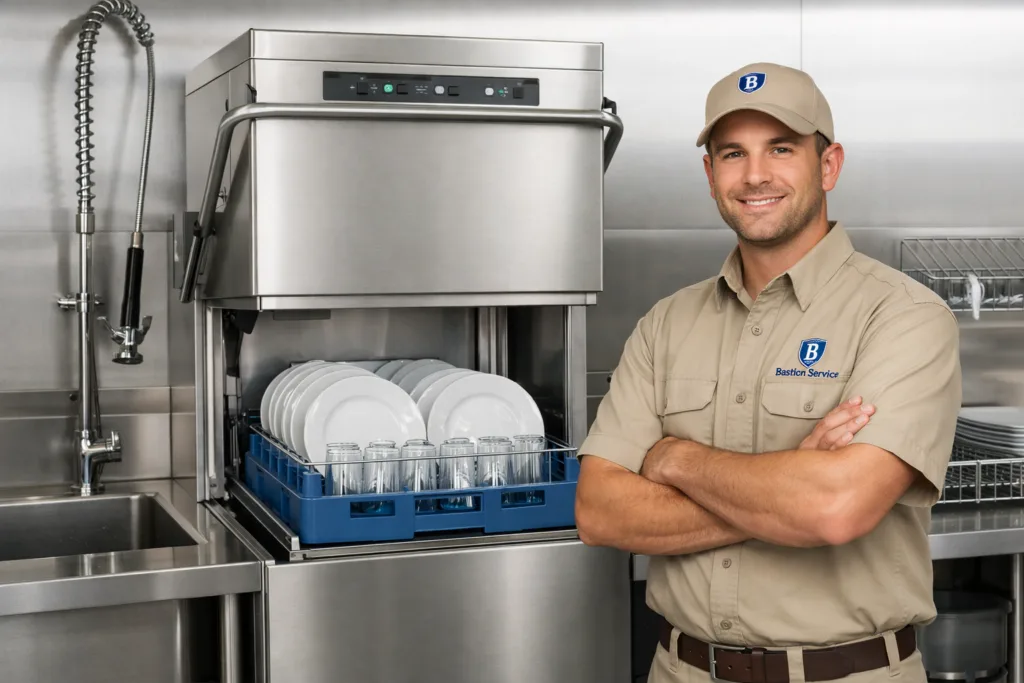




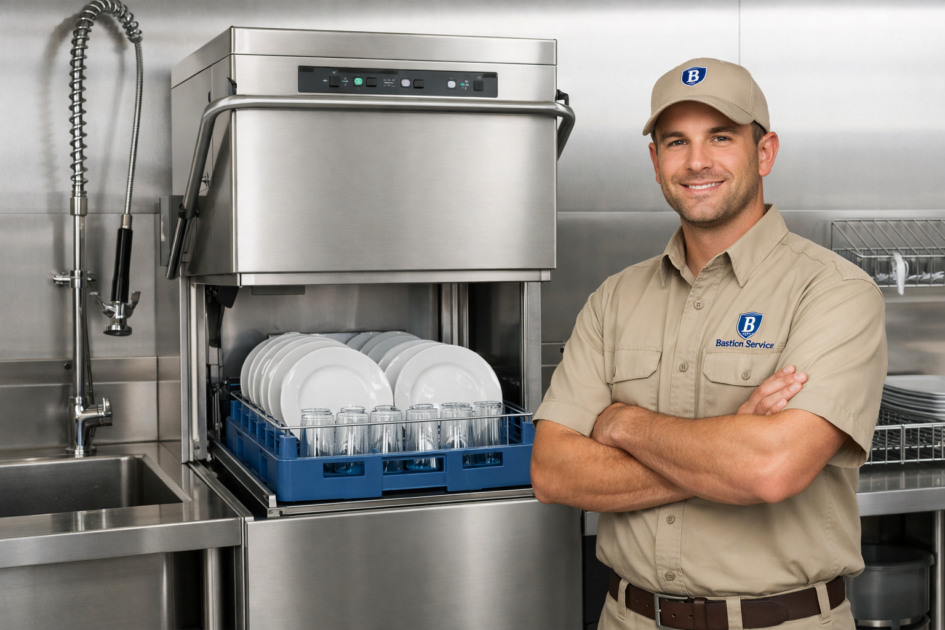
Commercial dishwashing equipment problems tend to show up first as workflow issues: racks backing up, staff rewashing items, longer closeout time, or inconsistent results between cycles. In Mid-Wilshire, those disruptions can quickly affect sanitation routines and the pace of service, especially when a machine still runs but no longer performs the way it should.
Related commercial equipment paths in Mid-Wilshire include Commercial Refrigerator Repair in Mid-Wilshire, Commercial Freezer Repair in Mid-Wilshire, and Hobart Dishwasher Repair in Mid-Wilshire.
A good repair visit should identify both the immediate failure and the reason it appeared. That matters because the same symptom can come from very different causes. Water left in the tank, for example, may point to a blocked drain path, a weak drain pump, a stuck valve, or a control problem that interrupts the cycle before proper draining begins.
Commercial dishwasher issues that commonly interrupt operations
Some failures are obvious, such as a unit that will not power on or one that leaks onto the floor. Others build gradually and are easy to overlook until output quality drops. Common service calls include:
- Poor wash results or residue left on dishes, utensils, or glassware
- Standing water after the cycle ends
- Low rinse temperature or inconsistent heating
- Cycle interruptions, mid-cycle shutdowns, or failure to start
- Visible leaks around the door, hoses, or lower assembly
- Unusual pump noise, humming, grinding, or vibration
- Slow fill, overfilling, or fill faults
Each of these symptoms can affect more than the machine itself. They can slow turnover, increase labor, create sanitation concerns, and make it harder for teams to keep up during busy operating periods.
What specific symptoms can indicate
Not draining at the end of a cycle
When water remains in the machine, the problem may involve a clogged drain line, obstructed filter area, pump restriction, damaged drain components, or a sensor or control fault. Continued use can place added strain on the pump and increase the chance of overflow or repeat cycle interruption.
Poor cleaning, spotting, or cloudy ware
If the dishwasher is running but results are inconsistent, likely causes include weak wash pressure, blocked spray arms, scale buildup, filtration problems, low water temperature, rinse issues, or chemical feed imbalance. A machine can appear operational while still producing output that creates rewash work and slows the dish area.
Leaks during operation
Leaks often come from worn gaskets, hose deterioration, loose fittings, cracked components, seal failure, or water-level problems. Even minor leaking should be addressed promptly in a commercial setting because it can damage nearby surfaces and create a slip hazard for staff.
Low rinse temperature or heating problems
Heating-related complaints may point to failed heating elements, thermostat issues, relays, wiring faults, or control problems. Low temperature affects cleaning performance and rinse effectiveness, so this is not just a comfort or speed issue. It can directly affect the machine’s ability to support normal kitchen or dish-room standards.
Will not start or stops mid-cycle
A unit that fails to begin operation or shuts down before completion may be dealing with power supply issues, door switch problems, motor overload conditions, loose wiring, control board faults, or safety shutdowns. Repeatedly restarting the machine without diagnosis can worsen electrical or mechanical damage.
Unusual pump or motor noise
Grinding, humming, rattling, or harsh vibration can indicate debris in moving components, bearing wear, pump damage, misalignment, or motor-related problems. These sounds often signal a mechanical issue that is still repairable but may become more severe if the machine continues operating under load.
Why symptom-based diagnosis matters
Commercial dishwasher repair decisions are most useful when they are based on failure pattern, not guesswork. Two machines with the same complaint can require very different solutions. One may need a relatively contained repair, while another may be showing signs of broader wear across pumps, heating components, controls, or water-handling parts.
Looking at when the problem began, whether it is constant or intermittent, and what changed in machine behavior helps clarify the next step. That process can reveal whether the issue is isolated, whether more than one component is involved, and whether repair is likely to restore stable day-to-day performance.
When to schedule service instead of waiting
Prompt service is usually the better choice when the dishwasher:
- Leaves water in the machine
- Leaks during or after operation
- Fails to heat properly
- Produces inconsistent wash results
- Stops mid-cycle
- Trips power or shows signs of electrical instability
- Makes new or worsening mechanical noise
It is also worth scheduling service when performance is declining even though the machine still runs. Slower cycles, weaker cleaning, intermittent draining, or occasional shutdowns often point to a developing issue that is easier to address before it becomes a full outage.
When continued use can increase repair scope
Some faults allow partial operation, but continuing to run the dishwasher is not always the lowest-risk choice. A drain issue can overwork the pump. A leak can spread water into surrounding areas or nearby components. A heating fault can reduce cleaning consistency across every load. A machine that repeatedly shuts down may be protecting itself from a larger electrical or motor problem.
If the unit is leaking, overheating, failing to drain, producing burning smells, or showing clear signs of electrical trouble, limiting use until the cause is identified is often the more practical decision for protecting both the equipment and the surrounding work area.
Repair versus replacement considerations
Many commercial dishwasher problems are repairable when the failure is specific and the rest of the machine remains structurally sound. Pumps, valves, heating parts, seals, switches, hoses, and some control-related components can often be addressed without replacing the entire unit.
Replacement becomes a more serious discussion when the equipment has frequent repeat failures, multiple major systems are wearing out at once, parts availability is poor, or restored operation would still leave the business with unreliable performance. In Mid-Wilshire, the more useful question is usually not just whether the dishwasher can be repaired, but whether the repair is likely to support dependable ongoing operation.
What businesses should expect from commercial dishwasher repair in Mid-Wilshire
Effective service should help clarify what failed, what that failure is affecting, and whether the problem appears isolated or part of a broader wear pattern. It should also help a business understand whether limited use is reasonable in the short term or whether downtime is the safer choice.
For commercial dishwasher repair in Mid-Wilshire, that kind of assessment is often what helps managers make the right operational decision. Whether the issue involves draining, washing performance, temperature, leaks, pump function, or cycle control, the goal is to restore reliable equipment performance with the least disruption possible.



