
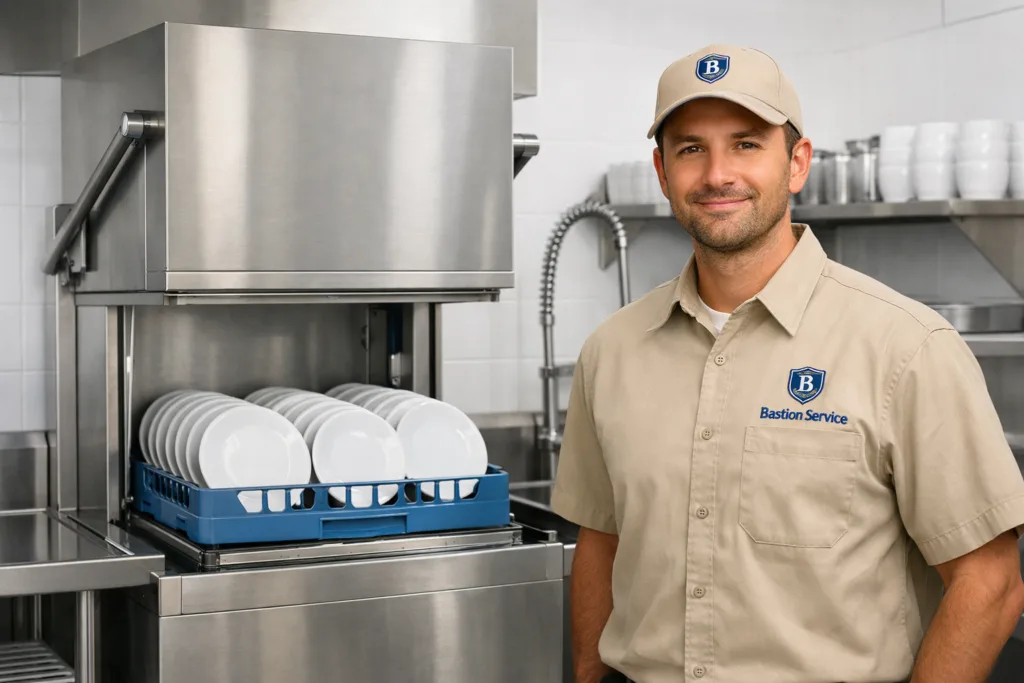




Common commercial dishwasher problems and what they can mean
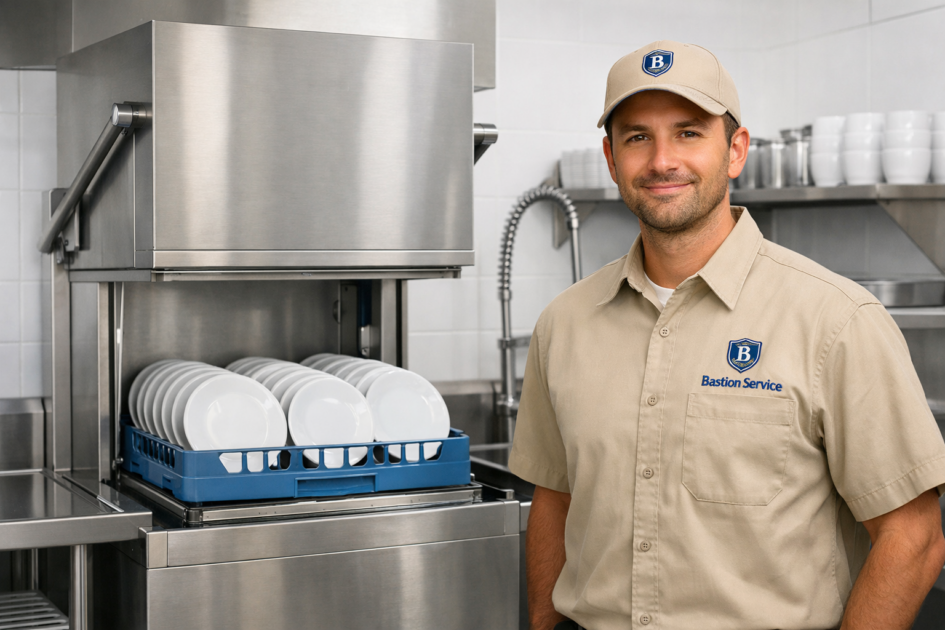
In a busy dish area, a dishwasher problem tends to spread quickly into the rest of the operation. Racks back up, staff shift time toward rewash and manual cleanup, and service rhythm becomes harder to maintain. The most useful next step is identifying whether the issue is tied to fill, wash action, drain performance, heating, controls, or a mechanical part that is beginning to fail.
Related commercial equipment paths in Marina del Rey include Commercial Fridge Repair in Marina del Rey, Commercial Freezer Repair in Marina del Rey, and Hobart Dishwasher Repair in Marina del Rey.
Poor wash results
When dishes come out with film, leftover soil, spotting, or inconsistent results from one rack to the next, the cause is not always obvious. Common possibilities include low wash pressure, blocked spray arms, circulation pump issues, scale buildup, low rinse temperature, or chemical delivery problems. In a commercial setting, poor cleaning performance affects more than appearance. It can increase rewash volume, slow turnaround, and create uncertainty about whether cleaned items are ready to return to service.
Drain problems and standing water
If water remains in the tank or cabinet at the end of a cycle, the dishwasher may have a drain blockage, pump fault, hose restriction, or control issue interrupting the drain sequence. Slow draining can become a full stoppage if it is ignored. It may also place added strain on the pump system and contribute to overflow, foul odors, or repeated cycle interruptions.
Low rinse temperature or heating failure
Commercial dishwashers depend on stable heating performance for proper wash and rinse results. If the machine is not reaching expected temperature, the issue may involve heating elements, thermostats, sensors, contactors, wiring, or the control board. Operators often notice this as longer cycles, poor drying, weak final results, or repeated complaints from staff that the machine is not finishing as expected.
Leaks around the machine
Water on the floor or moisture around the unit can come from worn door gaskets, cracked hoses, loose fittings, pump seals, overflow problems, or internal component failure. Even a minor leak deserves attention because it can affect surrounding flooring, nearby equipment, and electrical areas. Leaks also tend to get worse under heavy daily use rather than resolve on their own.
Pump noise or unusual sounds
Grinding, rattling, humming, or harsh mechanical noise can point to wash pump wear, drain pump problems, motor issues, debris in moving parts, or loose internal components. A sound change often appears before a complete breakdown. Addressing it early may help prevent a failure that takes the machine fully out of service during operating hours.
No-start, shutdown, or cycle failure
If the dishwasher will not start, stops mid-cycle, or behaves unpredictably, the fault may be linked to the door switch, latch assembly, power supply, relays, wiring, sensors, or control electronics. Intermittent failures are especially disruptive in commercial kitchens because they make it difficult to plan labor and workflow around the machine.
Why accurate diagnosis matters
Dishwasher symptoms often overlap. A machine that seems to have a drain problem may actually be failing to complete its cycle because of a control fault. Weak cleaning may look like a pump problem but actually stem from low temperature or poor fill. A front leak may be caused by a gasket, but it can also be the visible sign of an internal overflow or spray issue.
For businesses in Marina del Rey, that distinction matters. Replacing the wrong part wastes time and money, and partial repairs can lead to repeat downtime. A well-planned service call should identify the primary fault, any related wear, and whether continued operation risks making the repair larger than it needs to be.
Signs it is time to schedule service promptly
Commercial dishwasher issues should usually be addressed without delay when any of the following are affecting daily operations:
- Dishes are not coming out consistently clean
- The machine is not draining fully
- Rinse temperature appears too low or cycles run unusually long
- Water is leaking from the door, underneath, or around connections
- The unit shuts down, trips, or refuses to start
- New pump or motor noise appears during wash or drain cycles
These symptoms rarely stay isolated. A partial drain issue can become a pump failure. A leak can spread into nearby components. A heating issue can continue to affect both output quality and cycle reliability. Early service is often the best way to limit disruption and avoid more extensive repair work later.
When continued use can make the problem worse
Some dishwasher problems allow limited short-term operation, but others should not be pushed. A leaking machine, one that fails to drain, or one making severe mechanical noise can suffer additional damage if it stays in use. Running a unit with unstable controls can also create unpredictable shutdowns during peak demand, which is often more disruptive than addressing the issue directly.
Even when the dishwasher still runs, reduced wash quality has a cost. Extra rewash cycles increase labor time, tie up racks, and keep the machine occupied longer than it should be. What starts as a performance complaint can turn into a larger operations issue if the root cause is left unresolved.
Repair or replace?
Many commercial dishwasher problems are repairable when the core structure of the machine remains sound. Pumps, heating components, controls, valves, drainage parts, seals, and electrical components can often be serviced without replacing the entire unit. Repair is usually the better option when the dishwasher has otherwise been reliable and the fault is limited to one system.
Replacement becomes more realistic when breakdowns are frequent, corrosion is advanced, multiple systems are failing at once, or the machine no longer offers dependable uptime. For some Marina del Rey businesses, the decision comes down to operational risk. A unit that can technically be repaired may still be a poor long-term choice if it repeatedly interrupts workflow.
What businesses should expect from commercial dishwasher service
A productive service visit should focus on how the dishwasher is actually failing in daily use, not just on the most visible symptom. That means checking fill behavior, wash performance, drain operation, heating, controls, and mechanical condition together when needed. The goal is to determine whether the issue is isolated, whether related wear is present, and what repair path best supports consistent operation.
Bastion Service helps businesses in Marina del Rey with commercial dishwasher repair that keeps attention on uptime, sanitation workflow, and realistic repair decisions. For kitchens, foodservice operations, and other commercial settings, that means resolving the fault with a practical understanding of how dish-area equipment affects the rest of the day.


