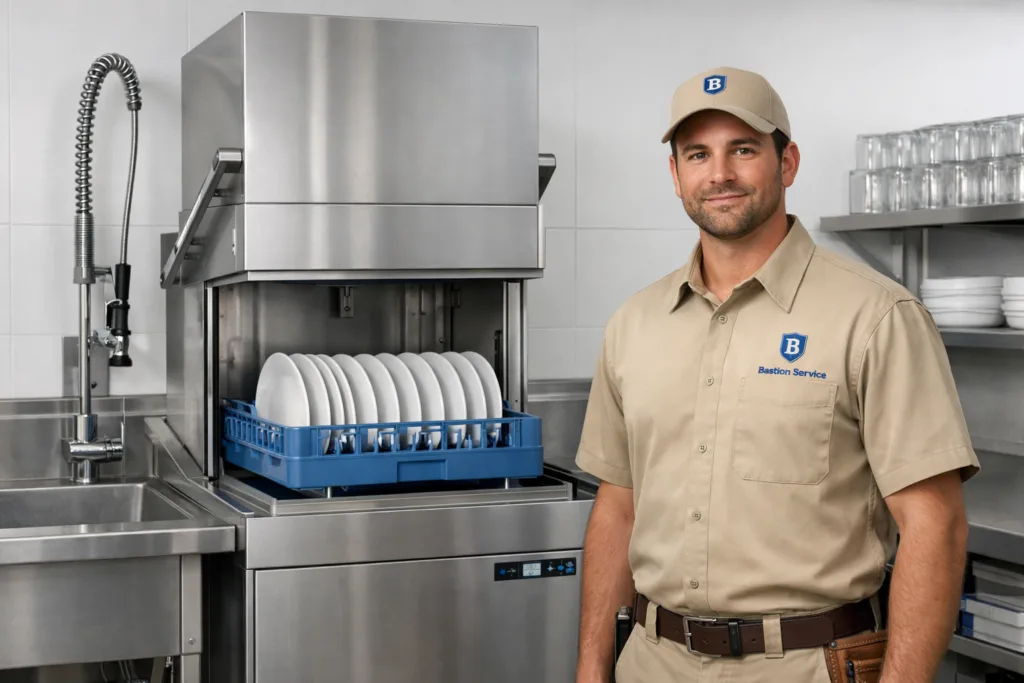




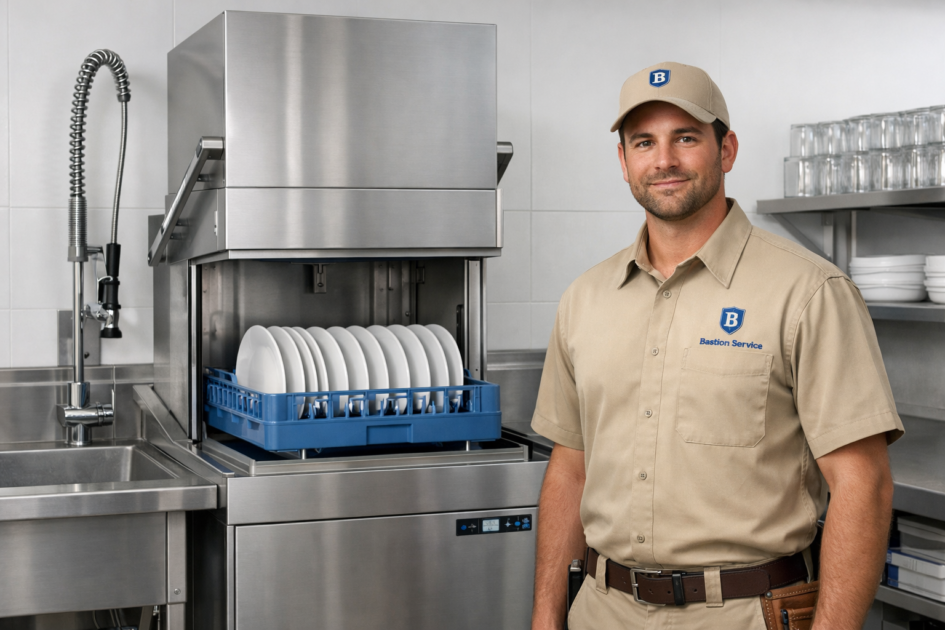
High-use dishwashing equipment tends to show trouble in stages. A machine may begin with longer cycles, inconsistent wash pressure, or occasional drain delays before moving into full shutdowns or repeat error conditions. Catching those signs early can help reduce disruption in the dish area and prevent added strain on pumps, heaters, controls, and related components.
Related commercial equipment paths in Inglewood include Commercial Refrigerator Repair in Inglewood, Commercial Freezer Repair in Inglewood, and Hobart Dishwasher Repair in Inglewood.
How commercial dishwasher issues affect operations
In a business setting, a dishwasher problem is rarely just an equipment issue. Poor wash results can slow table turnover or back-of-house workflow, standing water can interrupt sanitation routines, and leaks can create slip hazards around the unit. When cycle reliability drops, staff often have to compensate manually, which increases labor pressure and can create a bottleneck during busy periods.
That is why service should focus on the actual failure pattern rather than the visible symptom alone. A unit that stops mid-cycle, for example, may have a door switch problem, a control fault, a heating issue, or an electrical interruption. Similar symptoms can come from very different causes, and the right repair path depends on identifying the source correctly.
Common symptoms and what they may indicate
Dirty dishes or inconsistent wash results
If racks are coming out with residue, spotting, or poor rinse coverage, the issue may involve blocked spray arms, weak pump circulation, poor water fill, detergent feed problems, or low rinse temperature. In some cases, the machine still appears to complete the cycle normally while performance steadily declines. That makes this one of the easiest problems to overlook until service quality is noticeably affected.
Standing water or slow draining
Water left in the unit after a cycle often points to a drain obstruction, a failing drain pump, a restricted hose, or a valve problem. Slow drainage may also be tied to debris buildup that reduces flow over time. When drainage is ignored, the machine can develop repeat cycle interruptions, odor issues, and added wear on components that are working against trapped water.
Leaks around the dishwasher
Commercial dishwasher leaks can come from worn door gaskets, loose hose connections, damaged fittings, cracked internal parts, pump seals, or overfill conditions. Even minor leaking should be checked promptly. In a busy commercial environment, a small water escape can quickly become a safety concern and may also affect nearby flooring, walls, or adjacent equipment.
Low rinse temperature or sanitizing concerns
When the dishwasher is not reaching proper heat, items may come out wet, poorly rinsed, or not processed at expected sanitizing temperatures. Possible causes include heating element failure, thermostat issues, sensor problems, control faults, or electrical supply problems affecting the heating circuit. Temperature-related issues are important to diagnose quickly because the machine may still run while failing to deliver expected results.
Unit will not start or shuts off mid-cycle
A dishwasher that does not power on, stops unexpectedly, or behaves intermittently may have trouble with its controls, latch system, safety switches, wiring, or incoming power. Intermittent failures are especially important because they can be difficult to track without testing under operating conditions. If the issue only appears during peak use, heat buildup or load-related component failure may be part of the diagnosis.
Unusual noise during wash or drain cycles
Grinding, humming, rattling, or louder-than-normal operation may suggest motor wear, pump issues, foreign material in the wash system, fan trouble, or loose internal parts. Noise changes often give an early warning that a component is under stress, even before the dishwasher fully fails.
When service should not be delayed
Some problems are more urgent than others. Service should be scheduled promptly when the machine is leaking, tripping breakers, not draining, failing to heat, stopping in the middle of use, or producing visibly poor wash results on a repeat basis. Continued operation in those conditions can worsen the original problem and may lead to additional part failures.
- Water is pooling under or inside the machine
- Cycle times are getting longer without explanation
- The dishwasher must be restarted repeatedly to finish a load
- Wash pressure seems weaker than normal
- Rinse temperature is inconsistent
- Drain problems return after basic cleaning
When those symptoms are affecting output in Inglewood, the most helpful next step is a clear diagnosis and a practical service plan based on how the machine is actually failing in daily use.
What a diagnosis should clarify
A useful service assessment should answer more than whether the unit can be made to run again. It should identify which system is failing, whether related parts have been affected, whether continued use risks larger damage, and whether repair is likely to restore reliable operation. That information helps business owners and facility managers make better decisions about urgency, downtime, and next steps.
For example, a drain issue caused by a blockage is very different from a drain issue tied to a weak pump or an electrical control problem. A heating complaint may come from the heater itself, but it can also stem from sensors, wiring, relays, or a board-level failure. The value of diagnosis is understanding the full repair picture before costs and downtime increase.
Repair or replace?
Replacement is not always the first answer, especially when the problem is limited to a serviceable component and the rest of the machine remains in solid condition. Repairs often make sense when the issue involves a pump, switch, seal, hose, latch, heater, control part, or drain-related component that can restore normal operation without recurring problems.
Replacement becomes a more serious consideration when the dishwasher has a long history of breakdowns, multiple system failures, major internal wear, or repair needs that continue to accumulate without improving performance. The practical choice usually depends on equipment age, condition, downtime impact, and whether the machine can return to dependable service after the current repair.
Commercial service focused on real-world kitchen demands
Dishwashing equipment in commercial use does not fail under ideal conditions. Problems often show up during rush periods, staff transitions, or heavy-volume shifts when the machine is under the most stress. That is why symptom history matters. Knowing whether the unit fails only when hot, only on certain cycles, or only during high demand can help narrow the issue faster and avoid wasted repairs.
For businesses in Inglewood, commercial dishwasher repair is most effective when it is based on actual operating conditions, not guesswork. A machine that still runs but cleans poorly, drains slowly, or leaks intermittently should be treated as a developing equipment problem, not a minor inconvenience.
Signs the dishwasher may be developing a larger problem
Not every issue begins with a complete shutdown. Many larger repairs are preceded by smaller warning signs that are easy to dismiss during a busy day. Watching for these patterns can help reduce avoidable downtime:
- Results vary from one cycle to the next
- The machine sounds different under load
- There is a burnt smell, excess heat, or repeated moisture buildup
- Startup becomes less reliable over time
- Staff have to adjust routines to work around performance problems
- The dishwasher appears operational but throughput keeps dropping
When those patterns begin to affect consistency, repair is usually more straightforward before the problem spreads to additional systems.
What businesses can do before service
Before a technician arrives, it helps to note whether the issue happens every cycle or only sometimes, whether the machine fills and drains normally, and whether any recent change in performance involved heat, noise, leaks, or shutdowns. That information can make troubleshooting more efficient and help distinguish between a one-part failure and a broader operating problem.
It is also useful to stop using the machine if there is active leaking, electrical tripping, burning odor, or obvious failure to heat. Continuing to run the unit under those conditions can increase damage and extend downtime.
Commercial dishwasher repair in Inglewood
Bastion Service helps businesses in Inglewood with commercial dishwasher repair focused on identifying the source of poor wash results, drain problems, leaks, low rinse temperature, pump issues, and cycle failures. The goal is not only to restore operation, but to help determine whether the machine can return to reliable daily service without repeat interruption.