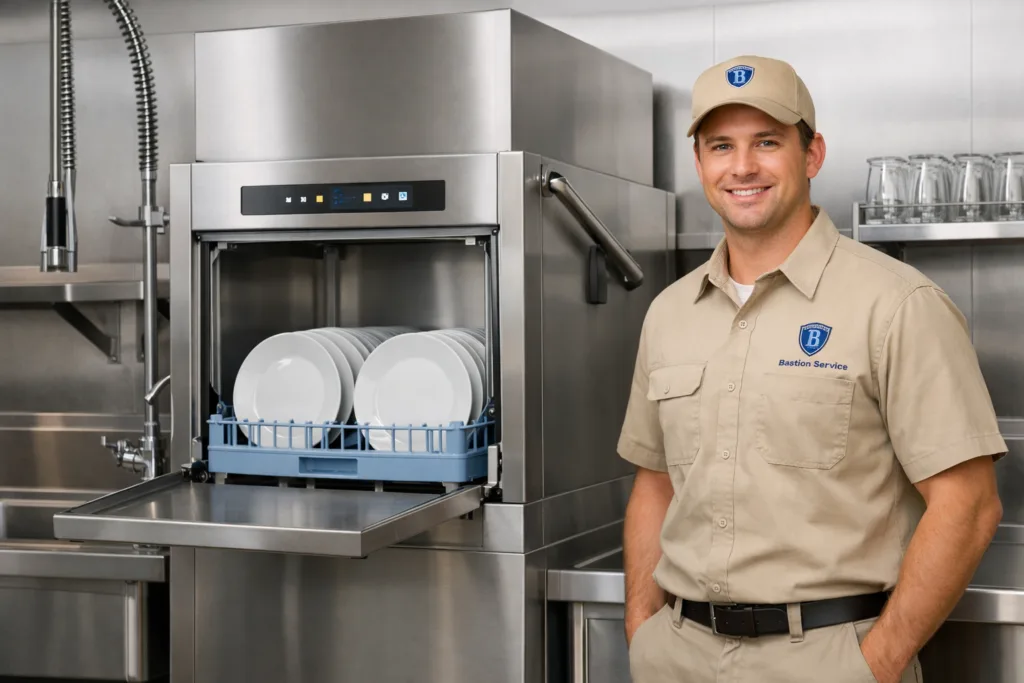




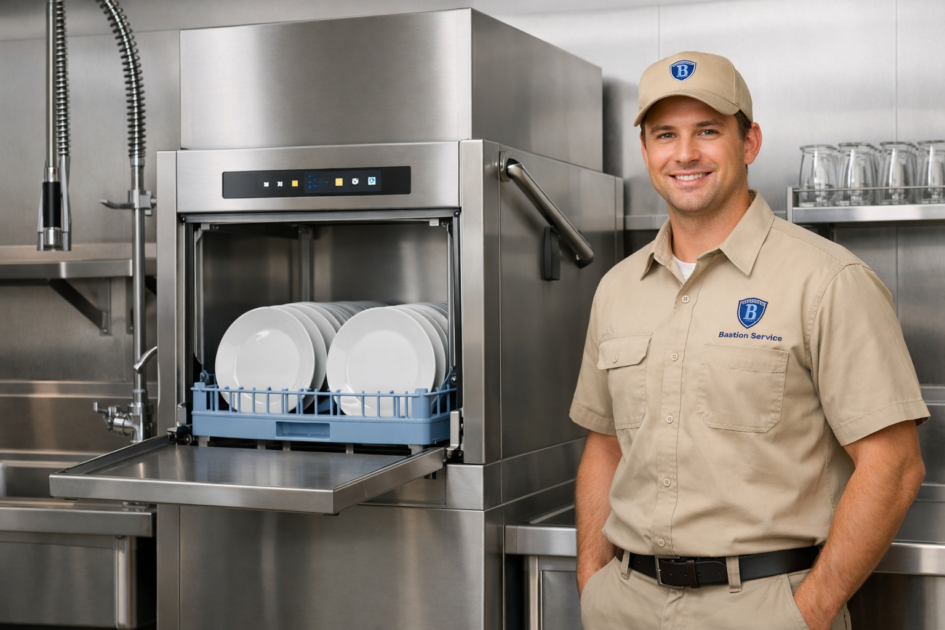
Dish-area problems rarely stay isolated for long. When a commercial dishwasher begins leaving debris on ware, draining slowly, leaking onto the floor, or failing to complete cycles, the result is usually a mix of slower turnaround, added labor, and avoidable disruption to kitchen operations. The most useful first step is identifying which system is actually failing, because similar symptoms can come from very different causes.
Related commercial equipment paths in Fairfax include Commercial Refrigerator Repair in Fairfax, Commercial Freezer Repair in Fairfax, and Hobart Dishwasher Repair in Fairfax.
Signs a commercial dishwasher needs service
Many dishwasher issues begin as performance changes instead of a total shutdown. Staff may notice that racks need to be run twice, cycle times feel inconsistent, or the machine sounds different than usual. Those early symptoms matter because they often point to wear in pumps, valves, heating components, sensors, latches, or controls before a larger failure takes the unit out of service.
In a commercial setting, common warning signs include:
- Dirty or spotted dishes after a normal cycle
- Standing water left in the machine
- Low rinse temperature or weak heating performance
- Water leaking during fill, wash, or drain
- Slow filling or failure to fill at all
- Cycle interruptions, error conditions, or no-start problems
- Grinding, humming, rattling, or unusual pump noise
Even if the unit is still operating, those symptoms usually mean the dishwasher is no longer performing at the level a business needs for steady throughput and sanitation flow.
What common symptoms can indicate
Poor wash results
If dishes come out with food soil, film, streaking, or inconsistent results, the problem may involve circulation pressure, spray arm blockage, detergent delivery, low water level, or insufficient heat. A machine can appear to be running normally while still washing poorly because the failure is inside the wash system rather than in the basic on-off function.
When staff begin sorting loads differently, rewashing racks, or extending normal procedures to compensate, that is often a sign the machine needs attention rather than an adjustment in workflow.
Drain problems and standing water
Water remaining in the tank after the cycle can point to a clogged drain path, drain pump trouble, a hose restriction, a blocked check valve, or a control issue that is not advancing the drain function correctly. Slow draining can also lead to foul water recirculation and can affect how consistently the next load is processed.
Continued use with a drainage problem can increase the chance of overflow, backup conditions, and extra stress on components that are already struggling.
Leaks around the unit
Leaks may come from worn door gaskets, loose connections, overfilling, cracked fittings, pump seals, or internal hoses. The visible water on the floor is not always the full issue. In some cases, a leak is a symptom of pressure imbalance, fill-control failure, or a drainage problem elsewhere in the machine.
Because leaking water can create slip hazards and affect surrounding equipment or flooring, it is worth addressing early rather than treating as a minor nuisance.
Low rinse temperature or heating failure
If the dishwasher is not reaching expected wash or rinse temperatures, dishes may come out wet, poorly cleaned, or inconsistent from one load to the next. Heating problems can stem from failed elements, thermostats, sensors, relays, high-limit components, or electrical supply issues affecting the heating circuit.
Temperature-related faults are especially important in commercial operations because they affect both results and the pace of dish turnover during busy periods.
Fill issues
A dishwasher that fills too slowly, does not fill enough, or does not fill at all may have an inlet valve problem, float switch issue, sensor fault, supply restriction, or control problem. Low fill volume can reduce wash performance and strain circulation components, while overfilling can lead to leaks and erratic cycle behavior.
Cycle failures or no-start conditions
When a unit will not start, shuts off mid-cycle, or stops at the same point repeatedly, the cause may involve the door latch assembly, timer, control board, wiring, safety interlocks, or incoming power issues. Intermittent faults can be especially disruptive because the dishwasher may work for part of a shift and then fail without warning.
Why continued operation can make the problem worse
Commercial dishwashers are often kept in service as long as they still “mostly work,” but that approach can increase downtime later. A weak pump may continue running under strain. A small leak can spread beyond the unit. A heating issue can lead to repeated unusable loads and wasted staff time. A drain restriction can turn into a full backup at the worst point in the day.
If employees are changing procedures to work around the machine, that usually means the equipment is already affecting operations enough to justify service. Early intervention often protects scheduling flexibility and reduces the chance of a more disruptive outage.
What diagnosis should clarify
Before approving repair, businesses usually need more than a description of the symptom. They need to know which system failed, whether the issue appears isolated or connected to broader wear, and whether using the machine before service risks larger damage. That is especially important in Fairfax facilities where dish-area uptime affects the flow of the entire operation.
A useful service assessment should help answer questions such as:
- Is the problem mechanical, electrical, control-related, or a combination of issues?
- Has one failed part caused secondary stress on other components?
- Is the machine safe to keep using until repair is completed?
- Does the expected repair match the age and condition of the dishwasher?
Repair versus replacement considerations
Repair is often the sensible choice when the problem is tied to a specific serviceable component and the rest of the dishwasher remains structurally sound. Pump-related issues, valve failures, latch problems, heating component faults, and some drain or fill issues can often be addressed without replacing the entire unit.
Replacement becomes a more serious consideration when the equipment has multiple active failures, repeated control problems, major corrosion, chronic leaking from age-related wear, or a history of downtime that keeps interrupting operations. In those cases, the decision is not just about whether the machine can run again, but whether another repair still makes business sense.
Business-focused service for commercial dishwasher repair in Fairfax
For businesses in Fairfax, dishwasher service needs to support operations, not just restore basic function for the moment. A machine that technically runs but still washes poorly, heats inconsistently, or leaks during use has not really solved the problem. The goal is to identify the actual source of the disruption and determine the repair path that best supports reliable daily use.
Bastion Service helps businesses with commercial dishwasher repair focused on symptom-based troubleshooting, practical service recommendations, and dependable local support. Whether the issue involves wash quality, drainage, heating, fill performance, pump operation, or cycle failure, the priority is getting clear information so the next decision is based on the condition of the machine rather than guesswork.