






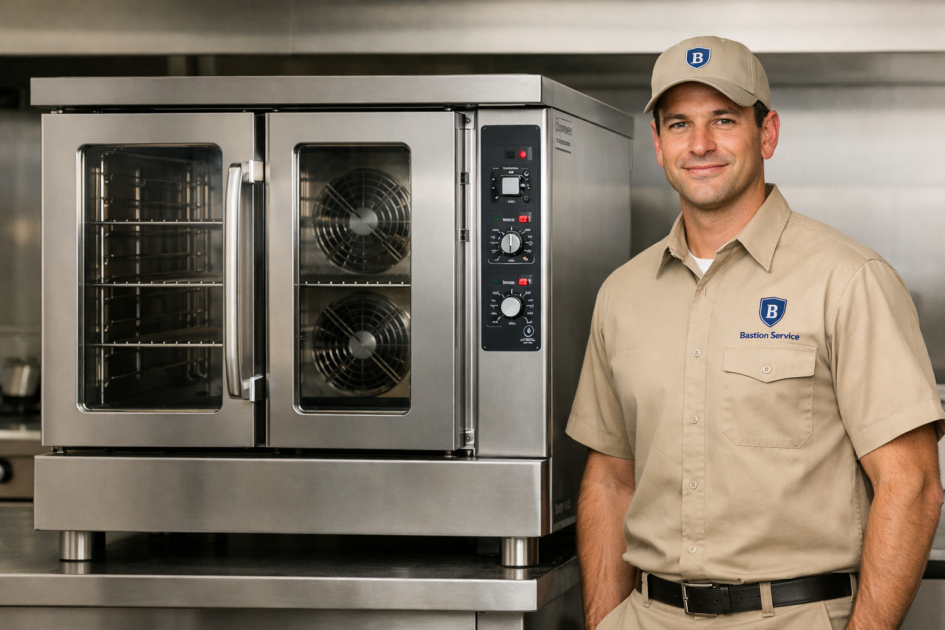
When Blodgett cooking equipment starts missing temperatures, delaying batches, or dropping out during service, the smartest next step is to get the problem inspected before a minor fault turns into a larger interruption. For businesses in Marina del Rey, repair decisions often need to happen quickly because oven performance affects ticket times, product consistency, staffing flow, and daily output. Bastion Service handles Blodgett repair work with a service-first approach that focuses on symptom review, fault isolation, repair scheduling, and reducing unnecessary downtime.
For specific equipment paths in Marina del Rey, review Blodgett Oven Repair in Marina del Rey and Commercial Appliance Repair in Marina del Rey.
While many calls begin with an oven complaint, the real issue may involve ignition, burner operation, temperature sensing, controls, airflow, electrical supply, gas delivery, or heat recovery. That is why repair planning should be based on how the equipment is behaving in actual use rather than on one assumed bad part. A proper service visit helps determine whether the unit can remain in limited operation, whether it should be taken offline, and what repair path makes the most sense for your kitchen.
Blodgett cooking equipment problems that commonly require service
Cooking equipment problems rarely stay isolated for long. A unit that seems to have a simple heating issue may also be showing early control trouble, burner instability, or shutdown risk. Looking at the full symptom pattern helps businesses in Marina del Rey make better repair decisions.
Slow heat-up and weak temperature recovery
If the equipment takes too long to preheat or struggles to recover after each load, service is usually needed before production falls further behind. Slow recovery can point to burner issues, ignition weakness, sensor problems, control faults, airflow restrictions, or wear affecting heat transfer. In daily operation, this often shows up as longer cook times, inconsistent batch timing, and growing pressure during busy periods.
Temperature swings and inconsistent results
When food finishes differently from one rack or load to the next, the problem may not be recipe-related at all. Unstable temperatures can be tied to thermostat drift, failing probes, control problems, door seal wear, burner irregularity, or circulation-related issues. Businesses often notice this first through uneven browning, overcooked edges, underfinished centers, or the need to keep adjusting settings that used to work normally.
Ignition failures and burner problems
Delayed ignition, clicking without full light-off, intermittent flame, or burners that fail during operation should be checked promptly. These symptoms can involve igniters, flame sensing components, gas valves, wiring, safety circuits, or control failures. When left alone, ignition trouble can lead to repeated restarts, unreliable heating, and more frequent shutdown events during active use.
Control faults and unexpected shutdowns
If the equipment powers off mid-cycle, resets without warning, loses programmed settings, or behaves erratically at the controls, repair is usually more urgent than it first appears. Control-related problems may come from boards, relays, switches, wiring, overheating conditions, or incoming power issues. For a busy kitchen, these failures create uncertainty because staff cannot trust that the unit will complete the next batch.
Uneven airflow or hot and cold zones
Some Blodgett cooking equipment symptoms appear as product inconsistency rather than a full breakdown. Hot spots, cold areas, and uneven chamber performance can indicate fan-related issues, blocked airflow, worn internal components, or heat distribution problems. These faults increase waste and slow production because staff start rotating pans, extending cook times, or reworking batches to compensate.
How symptom patterns help guide repair decisions
Business operators are often forced to decide whether to keep equipment running, reduce workload on the unit, or stop using it entirely. That decision is easier when symptoms are viewed together instead of one at a time.
- Heating complaint plus slow recovery: often points to a performance issue that will continue to affect output even if the unit still turns on.
- Ignition trouble plus gas-related irregularity: usually needs prompt inspection before normal use continues.
- Inconsistent cooking plus control drift: may indicate that temperature regulation is no longer reliable enough for steady production.
- Shutdowns plus error behavior: often suggests an electrical or safety-related fault that can worsen under load.
- Noise, vibration, or airflow complaints plus uneven results: may signal internal wear that is beginning to affect performance across the whole unit.
This kind of symptom-based review helps determine whether a repair is likely to be straightforward, whether parts coordination is needed, and whether continued operation is creating more risk for the business.
When continued use can make the problem worse
Some equipment can limp through a shift with limited use, but other symptoms should not be pushed. Repeated ignition failure, unstable temperatures, frequent resets, visible overheating, strong performance drop-off, or controls that do not respond consistently are all signs that continued operation may expand the repair scope. A unit that still turns on is not necessarily a unit that should stay in production.
For gas-related concerns, safety has to come first. If there is a strong or persistent gas odor, stop using the equipment and follow appropriate gas-safety procedures before arranging repair. Even without a gas smell, inconsistent ignition or delayed burner response should be treated as a service issue rather than something to work around during normal kitchen use.
Common operating impacts businesses notice before calling
Many service calls start after staff have already been compensating for the problem for days or weeks. Those workarounds can keep production moving temporarily, but they usually hide how much the fault is affecting the kitchen.
- Preheat times getting longer than normal
- Needing to adjust set temperatures more often
- Food finishing unevenly between batches
- Longer ticket times during rush periods
- More frequent restarts to complete a shift
- Equipment dropping out in the middle of production
- Staff avoiding a particular unit because it is unreliable
Once those patterns show up, it usually makes sense to schedule service before the issue becomes a full outage at the worst possible time.
Repair planning for kitchens that depend on Blodgett equipment
For restaurants, hospitality kitchens, institutions, and other food-service businesses in Marina del Rey, repair is not just about replacing a failed part. It is also about understanding how the problem affects production now and what it means for the next week of operation. Service planning may include evaluating whether the fault appears isolated, whether related components are showing wear, whether the unit can be used in a limited way, and how to schedule repair with the least disruption to service flow.
This is especially important when the same equipment handles steady daily volume. A unit with intermittent issues can be harder on operations than one that is clearly down, because it creates uncertainty around prep timing, line coordination, and finished product quality. Getting the fault identified early supports better scheduling and more informed decisions about uptime.
When repair makes sense and when replacement enters the discussion
Not every performance issue means the equipment is at the end of its useful life. In many cases, a targeted repair restores reliable operation when the underlying fault is identified soon enough. Repair is often the practical choice when the problem is confined to ignition, sensing, burner operation, controls, or another defined subsystem and the rest of the unit remains in solid working condition.
Replacement becomes a more serious discussion when breakdowns are frequent, multiple systems are failing at once, or the unit shows broader age-related wear that makes repeated repairs harder to justify. The value of a service visit is that it separates a manageable repair problem from a larger equipment decision, allowing the business to act based on condition rather than guesswork.
Scheduling Blodgett repair in Marina del Rey
If your Blodgett cooking equipment is heating unevenly, losing temperature, failing to ignite, shutting down, or causing production delays, scheduling service is the practical next move. A focused repair visit can confirm the source of the problem, clarify whether the equipment should stay in use, and help your business in Marina del Rey move forward with a realistic repair plan instead of relying on temporary workarounds.


