
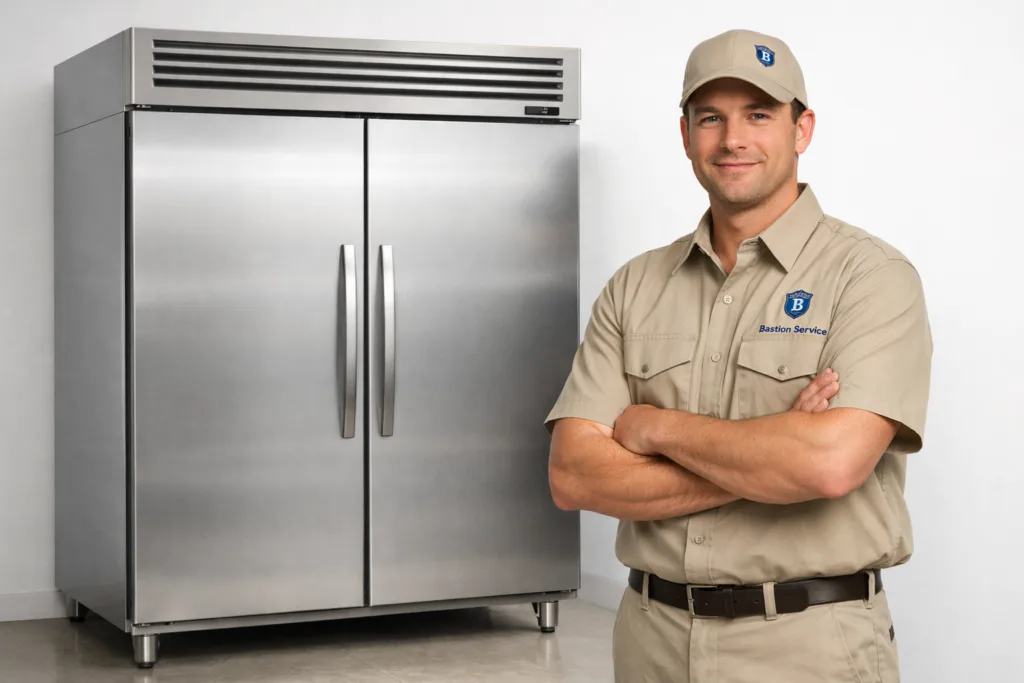




Temperature loss, recurring frost, leaks, and fan noise can interrupt kitchen workflow fast, especially when a Beverage-Air refrigerator is tied to daily prep, storage, or beverage service. In Hermosa Beach, the most useful next step is service built around the exact symptom pattern, the operating conditions around the cabinet, and how urgently the unit is affecting business operations.
Related commercial service paths in Hermosa Beach include Beverage-Air Commercial Repair in Hermosa Beach, Commercial Refrigerator Repair in Hermosa Beach, and Beverage-Air Freezer Repair in Hermosa Beach.
Bastion Service provides Beverage-Air refrigerator repair for businesses in Hermosa Beach that need a focused diagnosis, repair scheduling that fits operations, and a direct explanation of what is failing and why. Whether the issue shows up as warm product, slow recovery, excessive run time, or uneven temperatures from shelf to shelf, the goal is to identify the actual fault before a small refrigeration problem turns into broader downtime.
Why a Beverage-Air refrigerator may stop holding temperature
When a refrigerator is not holding temperature, the cause is not always the same even when the symptom looks simple from the outside. One unit may be struggling because of restricted condenser airflow, while another may have an evaporator fan issue, a sensor problem, a control fault, weak door sealing, or a refrigeration-system failure.
Temperature loss often shows up in stages. Staff may first notice longer run times, warmer corners inside the cabinet, or slower pull-down after the door is opened. As the condition worsens, the refrigerator may stay on almost constantly, form frost, or cool unevenly enough that product safety becomes harder to manage.
- Dirty or blocked condenser coils reducing heat release
- Evaporator airflow problems causing uneven cooling
- Worn door gaskets allowing warm air into the cabinet
- Control board, thermostat, or sensor issues
- Fan motor failure or weak fan performance
- Refrigerant or sealed-system problems affecting cooling capacity
Common Beverage-Air refrigerator symptoms businesses notice first
Warm cabinet or inconsistent product temperature
If the cabinet feels cool but product temperatures continue rising, airflow is often part of the problem. Air may not be circulating correctly through the evaporator section, or the refrigerator may be losing cooling efficiency under load. This is one of the more important symptoms to address quickly because it can look manageable while product temperature continues to drift.
Unit running constantly or cycling too often
A Beverage-Air refrigerator that rarely shuts off may be trying to compensate for poor airflow, a door seal leak, a sensor problem, or reduced system performance. Short cycling can point in a different direction, including control issues or electrical faults. In both cases, abnormal cycling usually means the unit is working harder than it should for the result it is delivering.
Frost buildup inside the cabinet
Frost around the evaporator area, door opening, or interior panels can indicate warm-air infiltration, moisture intrusion, or a problem affecting normal airflow and temperature balance. As frost builds, it can block air movement and create a misleading situation where some product feels cold while other areas of the cabinet run too warm.
Water leaks or excess condensation
Leaks may come from drain issues, melting frost, or cabinet conditions that cause sweating and condensation. For businesses in Hermosa Beach, this is more than a refrigeration concern. Water around the unit can create cleanup demands, floor hazards, and sanitation issues while also signaling a cooling or airflow problem that still needs repair.
Noise, vibration, or fan-related sound changes
Buzzing, rattling, scraping, clicking, or a sharper fan sound can help narrow down the fault before the refrigerator stops cooling altogether. Noise changes often point to fan motors, blade interference, mounting issues, or compressor strain. When the sound profile changes noticeably, it is usually worth scheduling service before the symptom progresses into a shutdown.
How symptom-based diagnosis helps avoid repeat downtime
Two Beverage-Air refrigerators can present the same complaint and need completely different repairs. A warm cabinet does not automatically mean a sealed-system problem, and frost does not automatically mean a defrost issue. The right repair decision usually depends on what the temperature pattern looks like, how the fans are operating, whether airflow is restricted, how well the doors are sealing, and how the system behaves during a full run cycle.
This matters because unnecessary parts replacement can stretch downtime without correcting the root issue. A service visit should narrow the problem to the component group actually causing the failure, not just the symptom everyone can see from the outside.
When to schedule service instead of continuing to monitor the unit
It is time to schedule repair when the refrigerator starts showing a consistent change in performance rather than a one-time fluctuation. Waiting too long can increase the risk of product loss and push wear onto parts that were not originally failing.
- Cabinet temperature is rising or no longer stable
- The unit struggles to recover after normal door openings
- Frost keeps returning after being cleared
- Doors are not sealing tightly or closing normally
- Condensation or leaks are showing up repeatedly
- Run time has increased noticeably
- Unusual noises have become frequent
Early service is especially important when staff is adjusting settings more often just to keep the refrigerator working through the day. Frequent setting changes can hide the real problem for a short time but rarely correct it.
Signs continued use may make the repair more involved
Some refrigerators still cool enough to appear usable even when the underlying problem is getting worse. That can create a false sense of reliability. If the cabinet is intermittently warm, icing over, leaking, or running with obvious mechanical strain, continued use may increase repair scope or lead to a complete cooling failure during business hours.
Use should be reconsidered when:
- Product temperature cannot be kept in a safe range
- Airflow is blocked by frost or ice
- The compressor area appears excessively hot
- Water leakage is recurring around the unit
- The refrigerator is making loud or worsening mechanical noise
- The unit must be reset repeatedly to resume operation
What technicians typically check on a Beverage-Air refrigerator
A proper evaluation usually looks at more than one part of the machine because refrigeration problems often overlap. A temperature complaint may involve airflow, electrical controls, door condition, and system performance all at once.
During diagnosis, attention commonly goes to:
- Cabinet temperature behavior and recovery time
- Condenser condition and airflow through the coil
- Evaporator fan operation and air movement inside the cabinet
- Door gaskets, hinges, and closure alignment
- Controls, probes, sensors, and response accuracy
- Drain path condition where leaks or frost are present
- Compressor and refrigeration-system performance indicators
This type of inspection helps determine whether the repair is likely to be a wear-component issue, an airflow correction, an electrical problem, or a more involved cooling-system fault.
Repair versus replacement considerations
Many Beverage-Air refrigerator problems are repairable when the cabinet itself is still structurally sound and the failure is limited to serviceable parts. Fan motors, gaskets, controls, sensors, drain issues, and airflow-related conditions are all examples of problems that often point toward repair rather than immediate replacement.
Replacement becomes a more serious consideration when the refrigerator has a pattern of major failures, poor reliability after previous repairs, or broader condition issues that affect confidence in day-to-day use. The decision usually comes down to age, service history, severity of the current fault, and how much downtime the business can reasonably absorb.
Preparing for a service visit in Hermosa Beach
A few details from staff can make the visit more efficient. It helps to note whether the unit is warm all the time or only during heavier use, whether frost is forming in a specific area, whether the noise is constant or intermittent, and whether doors have been closing normally. If available, recent temperature readings and the times when the issue was first noticed can also help narrow the fault faster.
For Hermosa Beach businesses, the best repair outcome usually comes from acting before the symptom turns into complete cooling loss. When a Beverage-Air refrigerator begins affecting workflow, storage reliability, or safe holding temperature, scheduling service based on the actual symptom pattern gives you the clearest path to repair decisions, downtime planning, and getting the unit back into dependable operation.


