
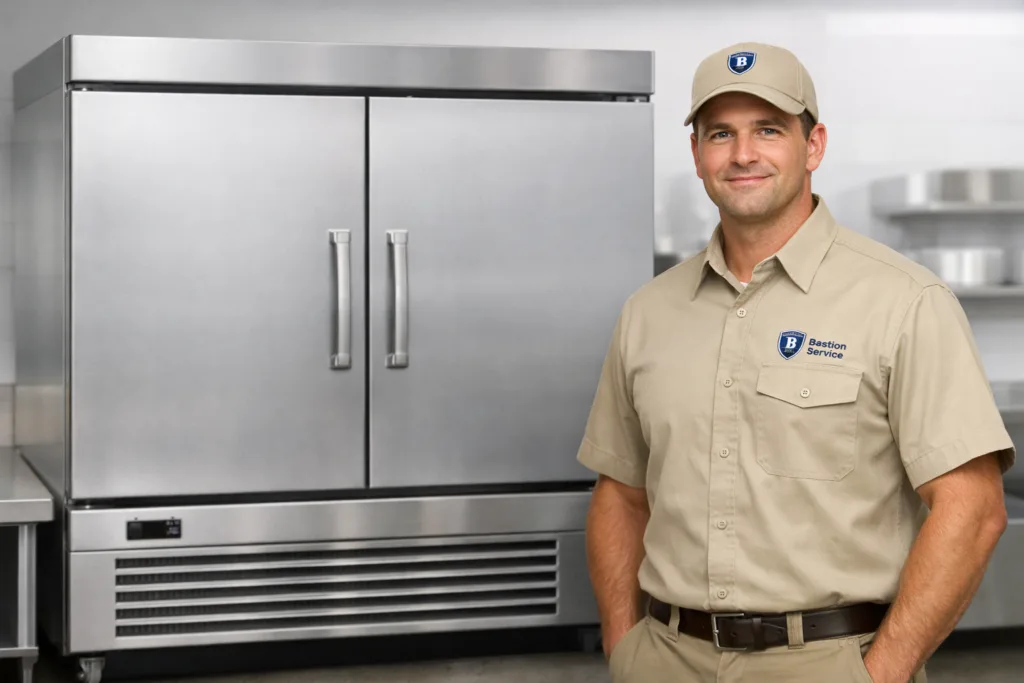




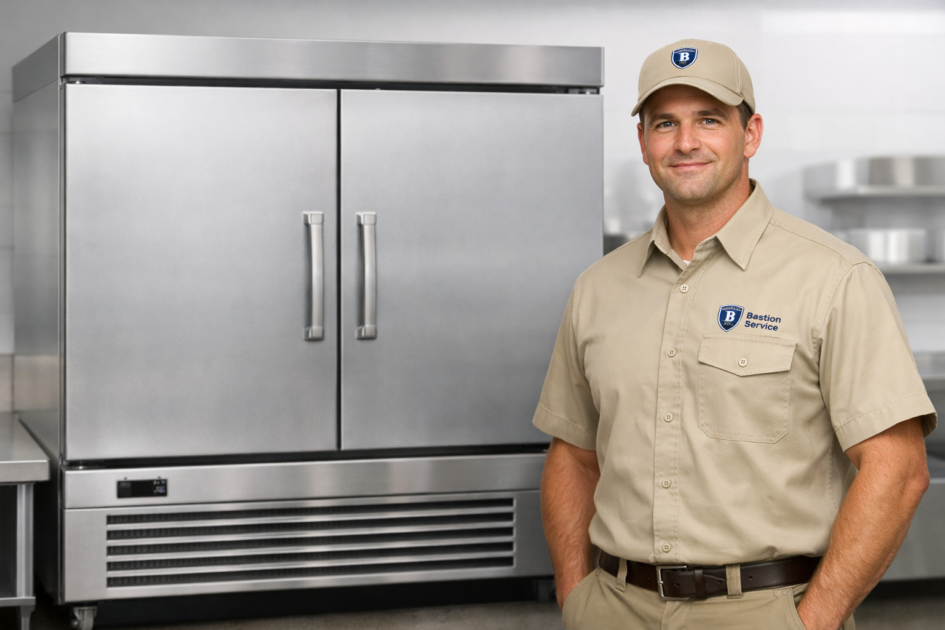
When Beverage-Air refrigeration equipment starts losing temperature stability, building frost, or leaving water on the floor, the issue usually affects more than the cabinet itself. Restaurants, bars, markets, prep kitchens, and other food-service operations in Hermosa Beach depend on refrigerators and freezers that recover quickly, hold product safely, and stay consistent through busy service periods. A service visit is most useful when it helps identify the actual fault, explains the risk of continued use, and turns that diagnosis into a repair schedule that fits day-to-day operations.
For specific equipment paths in Hermosa Beach, review Beverage-Air Fridge Repair in Hermosa Beach, Beverage-Air Freezer Repair in Hermosa Beach, and Commercial Appliance Repair in Hermosa Beach.
Bastion Service works with local businesses that need refrigerator and freezer problems evaluated without guesswork. Whether the concern is a warm reach-in, a freezer that is struggling after door openings, repeated ice buildup, or erratic cycling, the goal is to find the cause, determine whether the unit should stay in use, and map out the next repair step before downtime spreads into inventory loss or workflow disruption.
What Beverage-Air refrigeration equipment problems usually need service
Many equipment failures start as performance changes rather than a complete shutdown. A cabinet may still be running while cooling weakly, circulating air unevenly, or collecting frost that gradually reduces usable space. These symptoms can point to different faults, including fan problems, control issues, defrost failures, drainage restrictions, gasket wear, sensor faults, or sealed-system trouble.
Because the same visible symptom can come from several causes, symptom-based troubleshooting is valuable for business operators deciding how urgent the repair is and whether the equipment can remain in rotation temporarily.
Warm cabinets and drifting temperatures
If a refrigerator is not staying cold enough or a freezer is no longer holding product firmly, service should be scheduled before the problem escalates. Temperature drift often appears as soft product, warmer shelves, inconsistent readings, or long run times that do not bring the cabinet back to normal conditions. In some cases the issue is tied to airflow restrictions or a failing fan motor. In others, the fault may involve controls, sensors, defrost components, or the cooling system itself.
For operators, the key concern is not only that the unit is warm, but that it may become unreliable throughout the day. A cabinet that recovers poorly after stocking or repeated door openings can affect prep timing, product rotation, and confidence in storage conditions.
Freezers that cannot recover properly
Freezer recovery issues are especially disruptive because the unit may look functional while slowly losing performance. If product softens during normal use, interior temperatures swing too much, or the cabinet runs almost constantly, the freezer may be struggling with frost on the coil, poor circulation, control problems, or a cooling fault that requires repair.
Slow recovery is one of the more important symptoms to evaluate early. Continued operation can add strain to major components and make a manageable issue harder to correct later.
Airflow problems and uneven cooling
Not every cooling complaint begins with a high temperature alarm. Sometimes the first sign is uneven product temperature, warm spots inside the cabinet, or weak air movement near louvers and shelves. Beverage-Air refrigerator and freezer equipment relies on consistent internal circulation. When that airflow is restricted, the cabinet may cool one area while leaving another area above target range.
Common causes include evaporator fan issues, frost blocking circulation, overloaded storage patterns, damaged door seals that pull in moisture, or control-related faults that interrupt normal operation. Businesses often notice this problem when product near the top or front behaves differently from product in other sections.
Frost buildup, ice formation, and door-related moisture problems
Frost is rarely just a cosmetic issue. Light frost can develop into heavy ice that blocks airflow, reduces storage capacity, and interferes with proper door closure. Once ice begins to affect circulation, the cabinet may start showing secondary symptoms such as warming, long run times, or water leakage during partial thawing.
What frost buildup can indicate
- Defrost components are not cycling correctly
- Door gaskets are worn, torn, or not sealing evenly
- Sensors or controls are not managing normal temperature behavior
- Drainage issues are allowing moisture to remain in the cabinet area
- Frequent door openings combined with an existing airflow issue are compounding the problem
When frost is spreading across panels, forming around the evaporator area, or affecting how the door closes, it is usually time to stop treating the symptom as a minor annoyance and move toward repair planning.
Why door sealing matters
Door seal problems are often overlooked because the cabinet may still appear to cool. But even a small gasket issue can allow warm, humid air into the unit, leading to frost, excess condensation, poor temperature control, and longer compressor run times. On busy equipment used throughout the day, that extra load can quickly affect performance and operating reliability.
Leaks, pooled water, and condensation around the unit
Water on the floor near a refrigerator or freezer creates both an equipment concern and a workplace issue. In some cases, the source is a blocked drain or defrost overflow. In others, the water is a secondary symptom caused by ice melting after a cooling problem, door leak, or failed defrost function. Condensation can also become more noticeable when the cabinet is no longer managing temperature and humidity the way it should.
If the unit is leaking while also showing warm temperatures, heavy frost, or unusual cycling, the moisture should be treated as part of the larger repair picture rather than as a separate cleanup issue. A service assessment helps determine whether the problem is primarily drainage-related or tied to a broader cooling failure.
When unusual cycling and constant running need attention
Refrigeration equipment that cycles too often, runs continuously, or sounds different than usual is often signaling a performance problem before a full cooling failure occurs. A Beverage-Air refrigerator may run longer because it is fighting poor airflow, temperature loss through the door opening, dirty heat-exchange surfaces, or a part that is no longer responding correctly. A freezer that rarely shuts off may be trying unsuccessfully to reach set temperature.
These patterns matter because they usually increase wear on components and reduce operating efficiency. If the cabinet seems to run all day with little improvement in temperature, that is a strong indicator that service is warranted even before the unit stops cooling altogether.
How repair decisions are usually made for refrigerators and freezers
For business operators, the main question is often whether the issue is straightforward or a sign of something larger. The answer depends on the symptom pattern, the age and condition of the equipment, and the role that cabinet plays in daily operations. Some repairs involve accessible failures such as fans, gaskets, drains, controls, or defrost-related parts. Other situations require a closer look at cooling-system performance, repeated faults, or declining reliability over time.
A useful service visit helps clarify:
- What failed and what symptoms are directly connected to that failure
- Whether the unit can remain in limited use while repair is arranged
- Whether product should be moved to protect inventory
- How likely the repair is to restore stable operation
- Whether the current issue appears isolated or part of a broader pattern
This is especially important for Hermosa Beach operators managing kitchen flow, receiving schedules, prep volume, and storage constraints. The decision is not just about fixing a part. It is about protecting uptime and avoiding a second interruption shortly after the first one.
Symptoms that usually should not be ignored
Some equipment problems can wait for a scheduled visit. Others should move up the list quickly because they point to worsening performance or a higher risk of product loss. Refrigerator and freezer service becomes more urgent when you notice:
- Cabinet temperatures rising during normal use
- Freezer product softening or thawing at the edges
- Heavy frost returning soon after removal
- Water leaking repeatedly from the unit
- Fans not moving air normally
- The cabinet running almost nonstop
- Slow recovery after doors are opened
- Temperature differences from one area of the cabinet to another
Even when the equipment is still on, these signs often mean the unit is no longer operating with a safe margin. Addressing them early can reduce the chance of a larger failure during active service hours.
What local businesses should expect from a refrigeration service visit
A business-focused repair appointment should do more than confirm that the cabinet is not cooling correctly. It should connect the observed symptom to the likely failed system, account for how the unit is used, and help management decide on timing, continued use, and repair scope. For Beverage-Air refrigerators and freezers, that means looking at temperature behavior, airflow, frost pattern, moisture, recovery time, and operating cycle history as part of one picture rather than isolated complaints.
If your Beverage-Air refrigeration equipment in Hermosa Beach is affecting product protection, prep flow, or day-to-day reliability, the next step is to schedule service so the fault can be identified and repair planning can move forward with less uncertainty and less avoidable downtime.



